/
13 Best AI Learning Management Systems (LMS) for 2026

Quick Summary
Drawing on 20+ years of strategic technology leadership and two granted patents in AI and imaging technology, I've tested and evaluated the best AI-powered LMS platforms to help you find the right solution for personalized learning, automated content creation, and connecting training directly to measurable business outcomes.
Table of Contents
Top 10 AI-Powered LMS Shortlist
Based on features, business impact, and reviews, here's the top 10 best AI-powered LMS:

Share this article:


Managing employee training with static, one-size-fits-all content is costing you productivity and engagement.
An AI-powered LMS transforms workplace learning by delivering personalized training paths, automating content creation, and connecting learning data directly to business outcomes.
The result?
Organizations using AI-powered learning platforms report:
- 57% increase in learning efficiency through personalized training paths
- 35% boost in engagement with adaptive content recommendations
- 300% ROI from reduced training time and improved performance
But choosing the wrong AI LMS creates new problems—clunky interfaces employees ignore, AI features that feel gimmicky rather than useful, and platforms that can't prove business impact.
At Continu, I've spent two decades leading technology strategy across enterprise organizations. I've witnessed firsthand how AI capabilities separate platforms that drive measurable results from those that simply add complexity.
This guide breaks down the best AI LMS platforms for 2026—covering AI capabilities, implementation considerations, and how to select the right solution for your organization.
You Can Trust Our AI LMS Reviews
Our team has tested 50+ learning management systems, AI-powered training platforms, and enterprise learning solutions—backed by 20+ years of commercial technology leadership and strategic AI implementation across global organizations.
We've worked directly with companies implementing AI-driven learning programs that deliver measurable business impact.
Here's how we built this guide.
Independent researchers compiled data on each platform's AI capabilities, which we combined with hands-on assessments of functionality, machine learning features, personalization engines, content automation, and value for price.
Our recommendations are based solely on platform performance—not partnerships or commissions.
I personally hold two granted patents in AI and imaging technology, giving me unique insight into what distinguishes genuinely transformative AI features from marketing buzzwords.
For a deeper look at our scoring process, see our complete ranking methodology below.
This guide is updated quarterly to reflect new AI capabilities, pricing changes, and emerging intelligent learning solutions.
Last Updated: April 2026
AI-Powered Learning Management Systems (LMS) Compared
The table below summarizes our rankings that includes relevant quick info to find the ideal LMS with AI features for your organization.


4.7 (759)
No
Starts around $800–$1,000/month for up to 100 users; custom pricing for larger teams
View pricing details →

4.3 (929)
No
Custom enterprise pricing, very expensive and overkill for most companies
View pricing details →
4.6 (1982)
Yes
Plans start at $69/month (annual) for 40 users; Core plan $119/month; Pro plan $449/month
View pricing details →
4.6 (1192)
Yes
$5 per user per month for LMS module (starting; 10‑user minimum)
View pricing details →13 Best AI Learning Management Systems (LMS) Reviewed
Explore our in-depth breakdown of the top AI-powered learning solutions for businesses. We’ve compiled the most relevant information and ranked all products based on features, pricing, and its overall rating and reviews from trusted sources.


4.6 (727)
Best for enterprise-scale, AI-powered Conversational Learning™
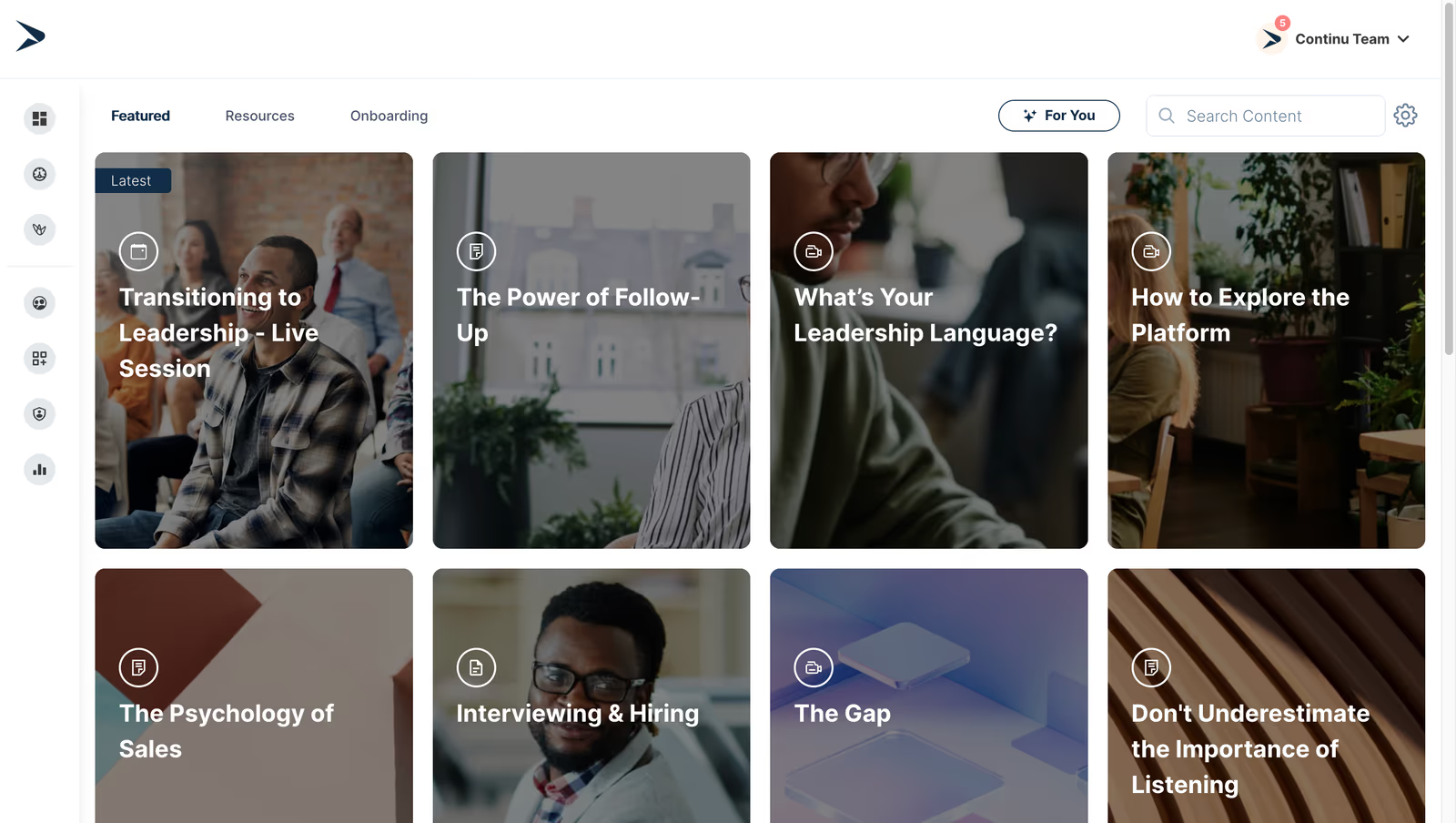
Continu uses intelligent AI to deliver microlearning at the right moment through Slack, Teams and other channels. Its conversational agent delivers instant answers, curates training, turns content into Experts and provides analytics to drive business outcomes.
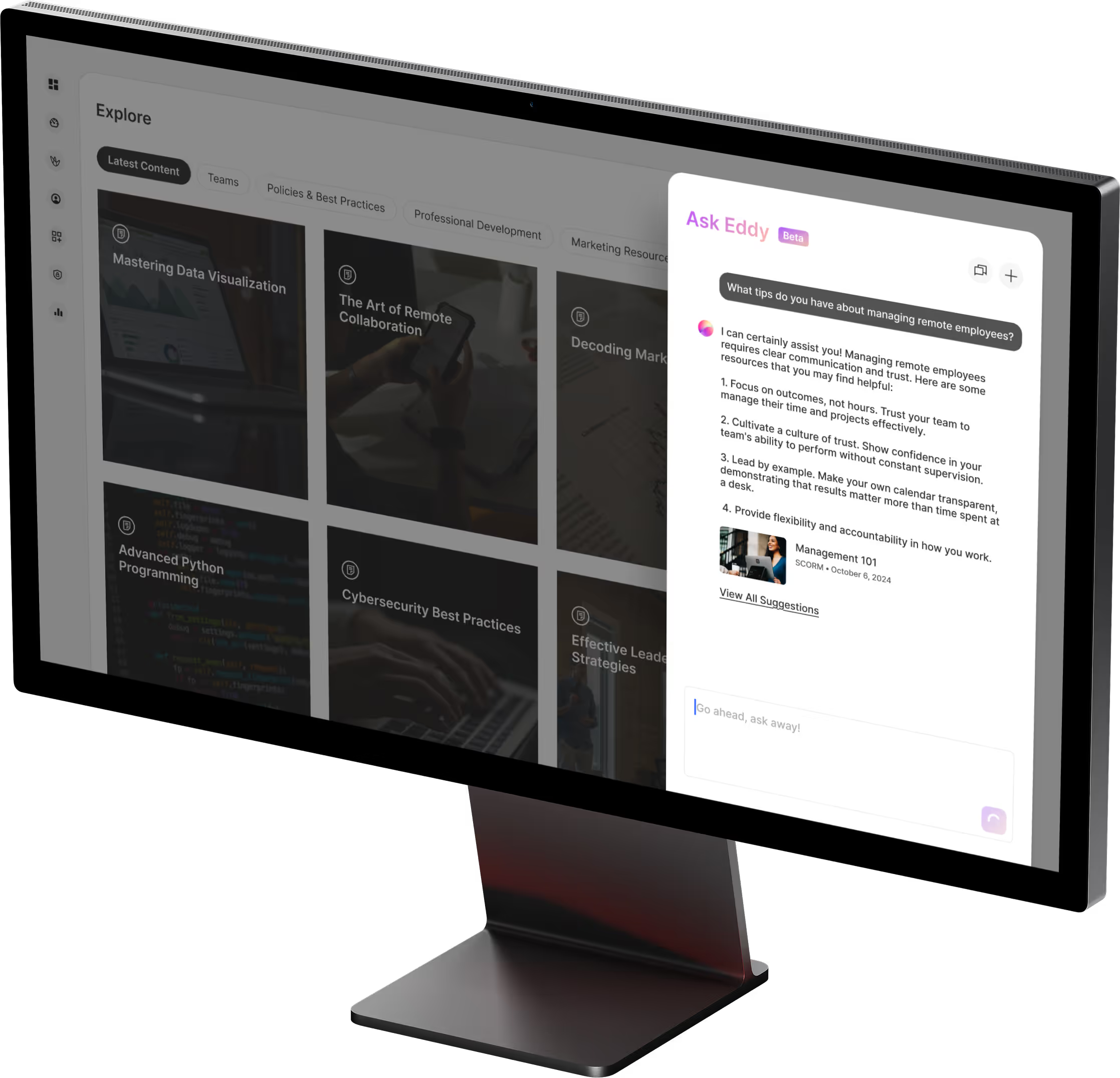
Continu earns the top spot on this AI LMS list due to its time-saving capabilities for AI content authoring and automations, as well as a powerful AI Learning Agent (Eddy) that meets learners where they are in Slack, MS Teams, and SMS - providing instant answers to their questions, improving productivity.
- Conversational AI agent delivering learning in chat
- Automated assignments & microlearning recommendations
- Seamless integrations with Slack, Salesforce, HRIS
Pros:
- AI-driven personalized learning reduces ramp time
- Conversational interface integrated into chat tools
- Strong integrations with sales and HR systems
Cons:
- Not a great fit for non-profits, governments, and educational institutions
- Requires internet access for most features
- Limitations in customizing workflows or content to fit niche requirements

4.6 (1106)
Best for collaborative AI-powered learning for peer-driven training
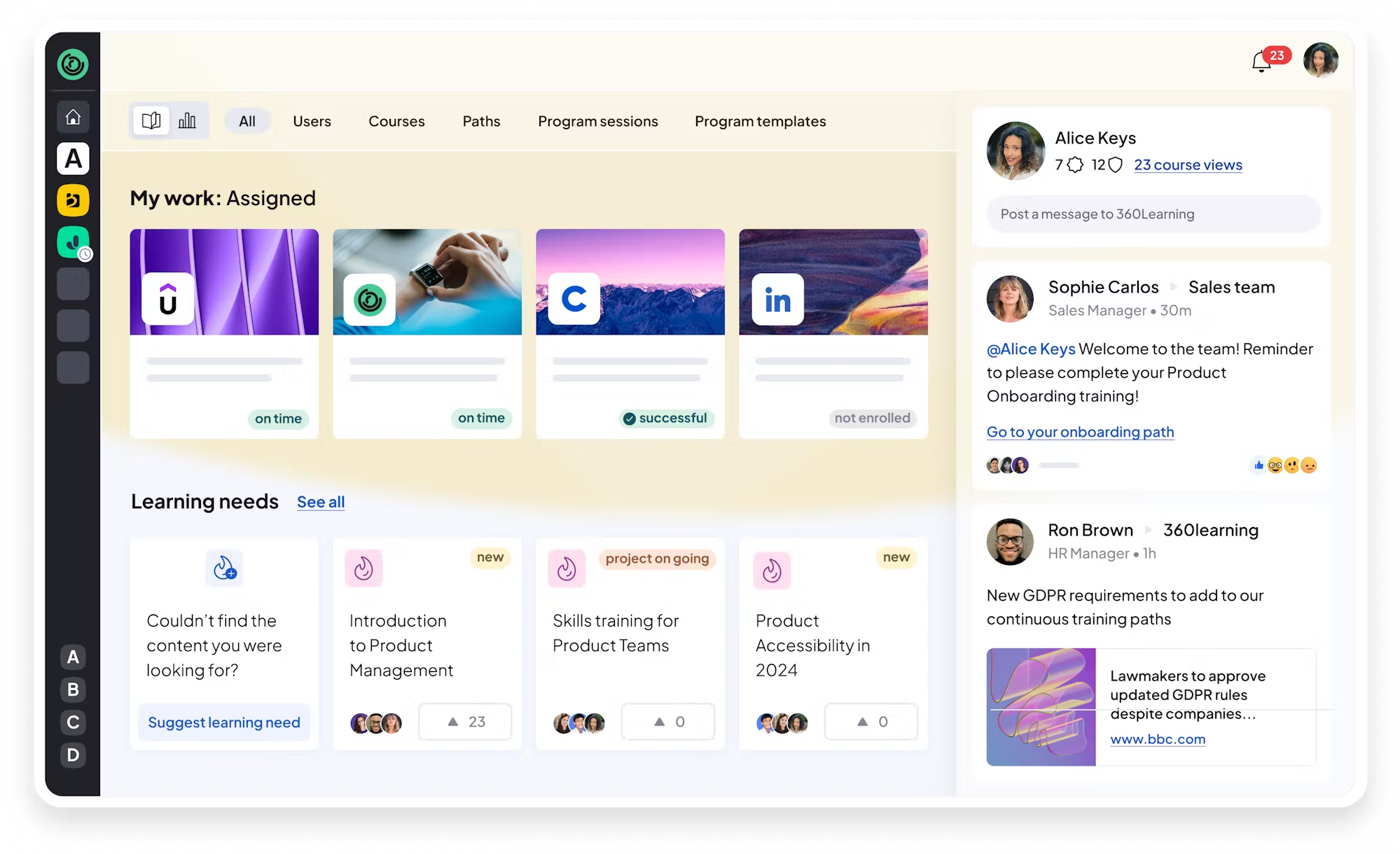
360Learning leverages AI to help subject matter experts co-create and update learning content quickly. Its platform tags skills, recommends courses, and uses collaborative tools like discussion forums and reactions to engage learners at scale.
360Learning allows subject matter experts to share knowledge while AI tags skills and recommends the right courses to employees based on their development needs.
- Collaborative authoring with peer feedback
- AI-powered skills tagging & recommendations
- Integrated social learning and analytics
Pros:
- Empowers experts to create content quickly
- AI skills tagging and recommendations
- Strong collaboration and social learning
Cons:
- Navigation issues and limited advanced analytics
- Customization limitations
- Requires SME involvement to generate content

4.6 (1443)
Best for mid-market teams that need an intuitive interface and analytics
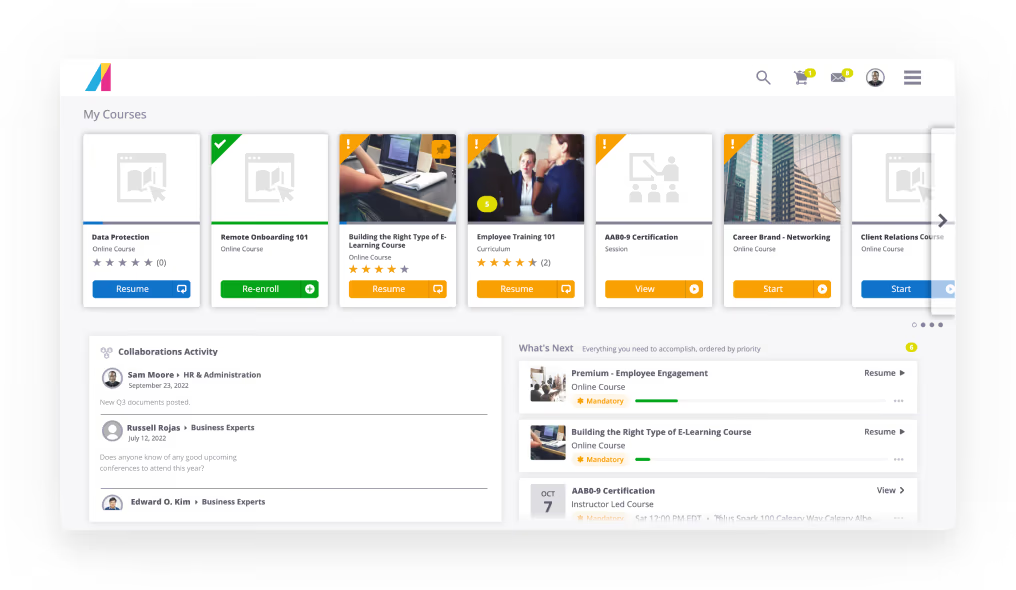
Absorb provides an easy-to-use LMS with automated enrollments, e-commerce, mobile learning, and powerful analytics. While not AI-focused, it enables organizations to deliver scalable sales and compliance training with gamification and leaderboards.
Absorb's intuitive user experience and strong analytics make it suitable for delivering consistent training across large organizations, though AI capabilities are more limited compared to other platforms.
- Intuitive learner interface and mobile app
- Automated enrollments & reporting
- E-commerce and content library
Pros:
- Modern interface and user-friendly design
- Robust reporting and automation
- Scales for enterprise use
Cons:
- Pricing not transparent; can be high
- Lacks AI-driven personalization
- Requires configuration to match brand

4.4 (1126)
Best for AI-powered workflows and personalized content recommendations
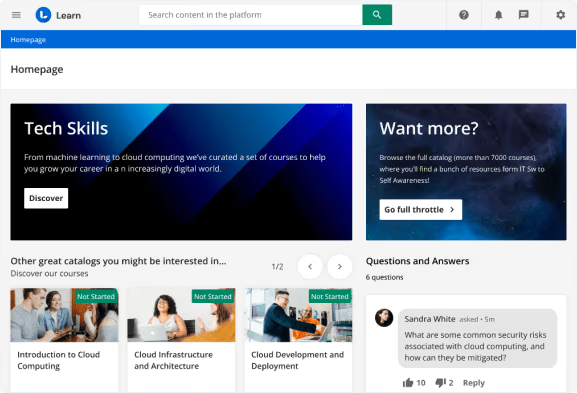
Docebo's AI-powered tools like Shape and the Virtual Coach suggest relevant content, auto-tag materials, and deliver personalized learning experiences. It supports employee, customer, and partner training at scale with multi-portal architecture.
Docebo's AI features deliver personalized training and automate assignments, making it valuable for enterprise-scale learning programs.
- AI content recommendations & virtual coach
- Multi-portal for extended enterprise
- Robust analytics and certification management
Pros:
- AI-powered recommendations personalize learning
- Supports multiple audiences and languages
- Robust analytics and scalability
Cons:
- High price with annual contracts
- Complexity may overwhelm small teams
- AI features limited to premium tiers

4.9 (104)
Best for AI-driven learning & knowledge management with generative content
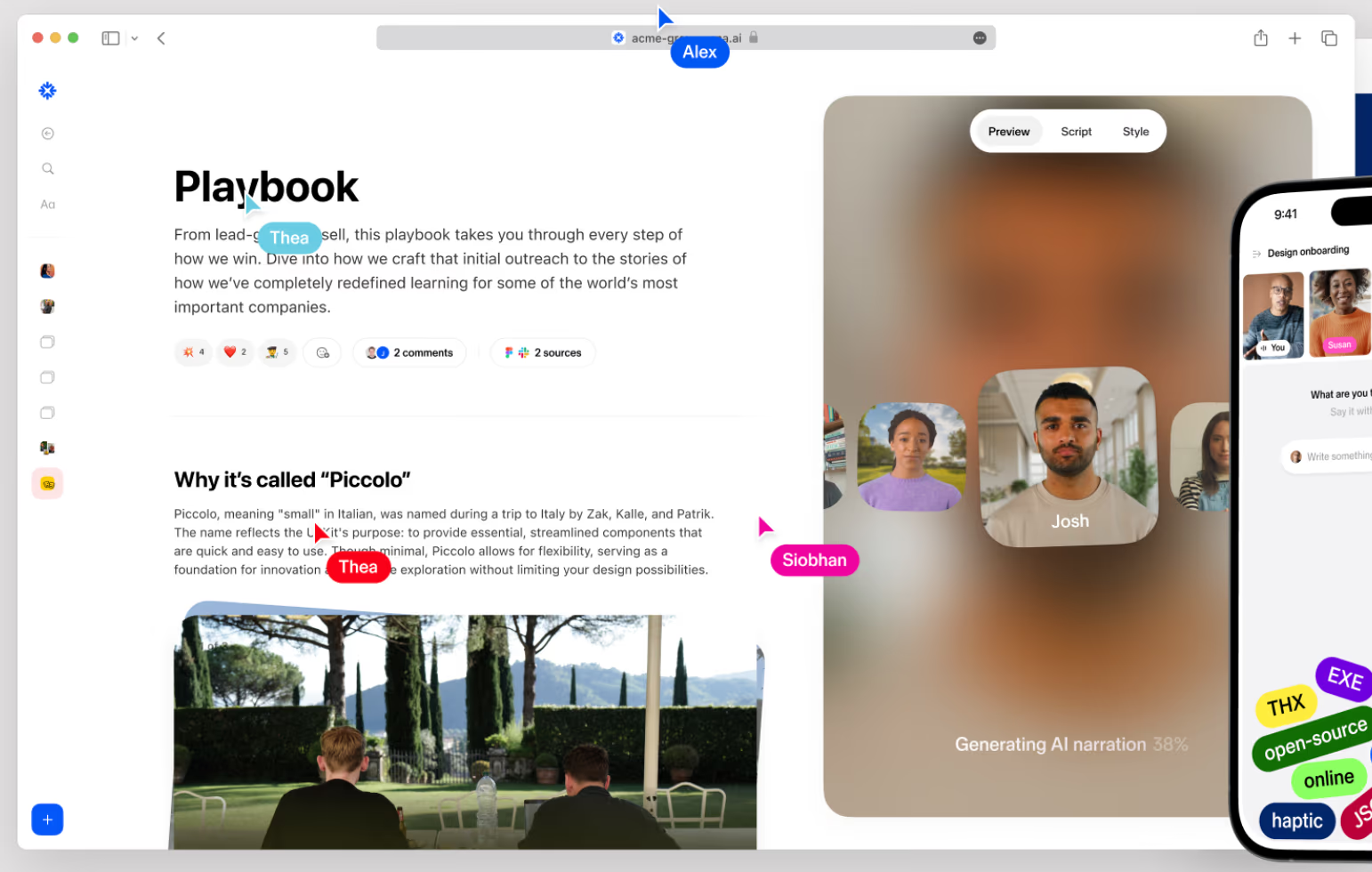
Sana's AI assistant leverages generative models to search across company knowledge, recommend resources, and automatically create courses. It allows employees to ask questions and get contextual answers while capturing knowledge. Pricing includes Core and Enterprise plans and offers API and SSO connectors.
Sana's AI assistant reduces time spent searching for information and enables quick content creation for training updates and knowledge sharing across the organization.
- AI assistant for answering questions & creating courses
- Unified knowledge base with search and analytics
- Personalized learning paths and recommendations
Pros:
- AI assistant to answer questions and create content
- Unified knowledge base and search
- Transparent pricing with free trial
Cons:
- Small review base; new platform
- Enterprise plan requires 300-seat minimum
- Limited enterprise features compared with established LMS
4.7 (759)
Best for workflow automation and strong support
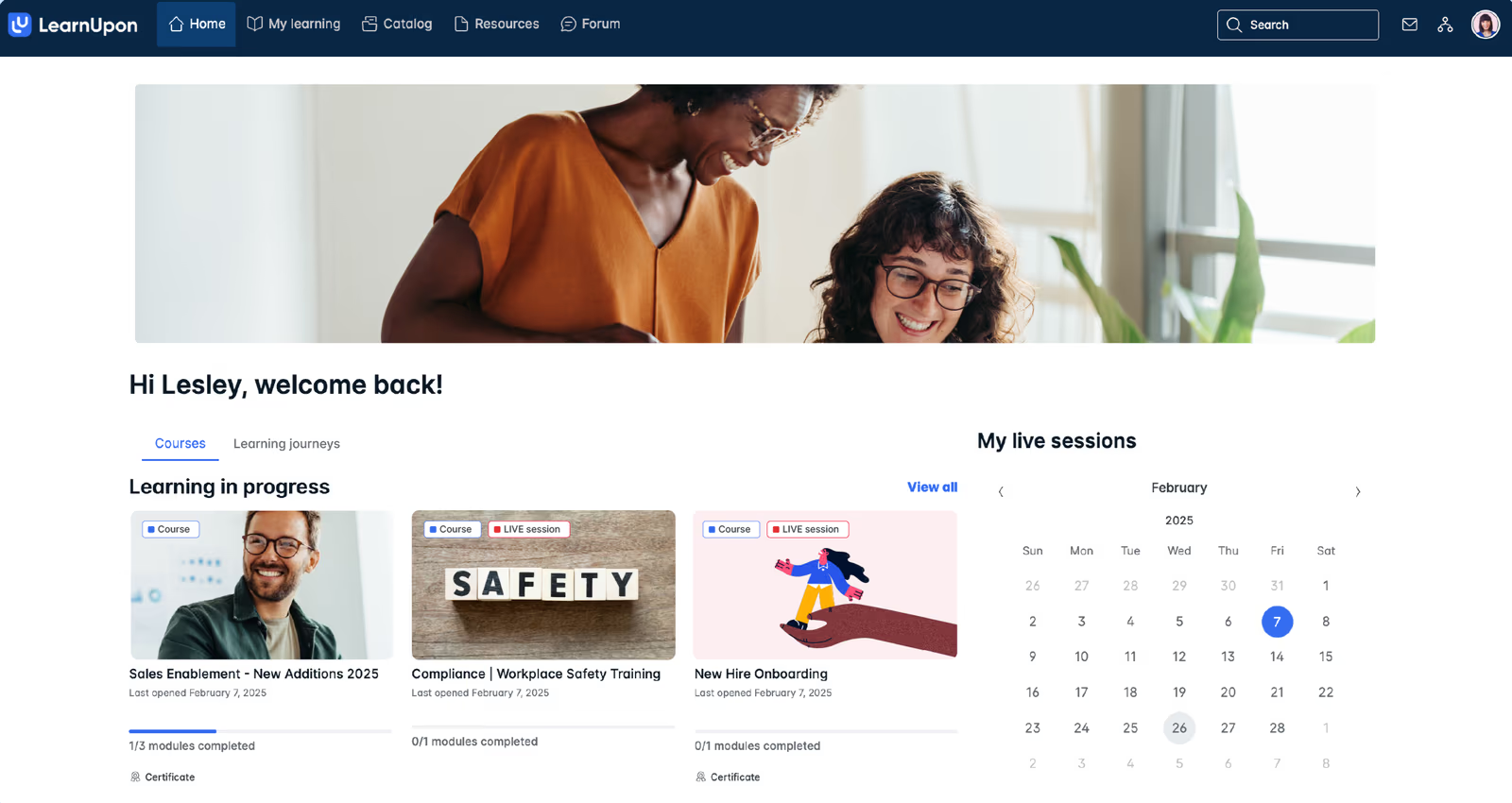
LearnUpon allows organizations to manage multiple audiences with branded portals, automate enrollments and reminders, deliver blended learning, and integrate with Salesforce and other tools. Pricing is per learner per month.
LearnUpon's multi-portal functionality and reliable support make it ideal for training teams across different regions or divisions, though AI features are not a primary strength.
- Multi-portal & branded academies
- Automated enrollment & notifications
- Integrations with Salesforce & HR systems
Pros:
- Scalable multi-portal architecture
- Automation reduces admin work
- Responsive support
Cons:
- Pricing may be high for small teams
- Limited AI personalization
- Requires admin training

4.5 (458)
Best for AI-driven adaptive learning with gamified experiences
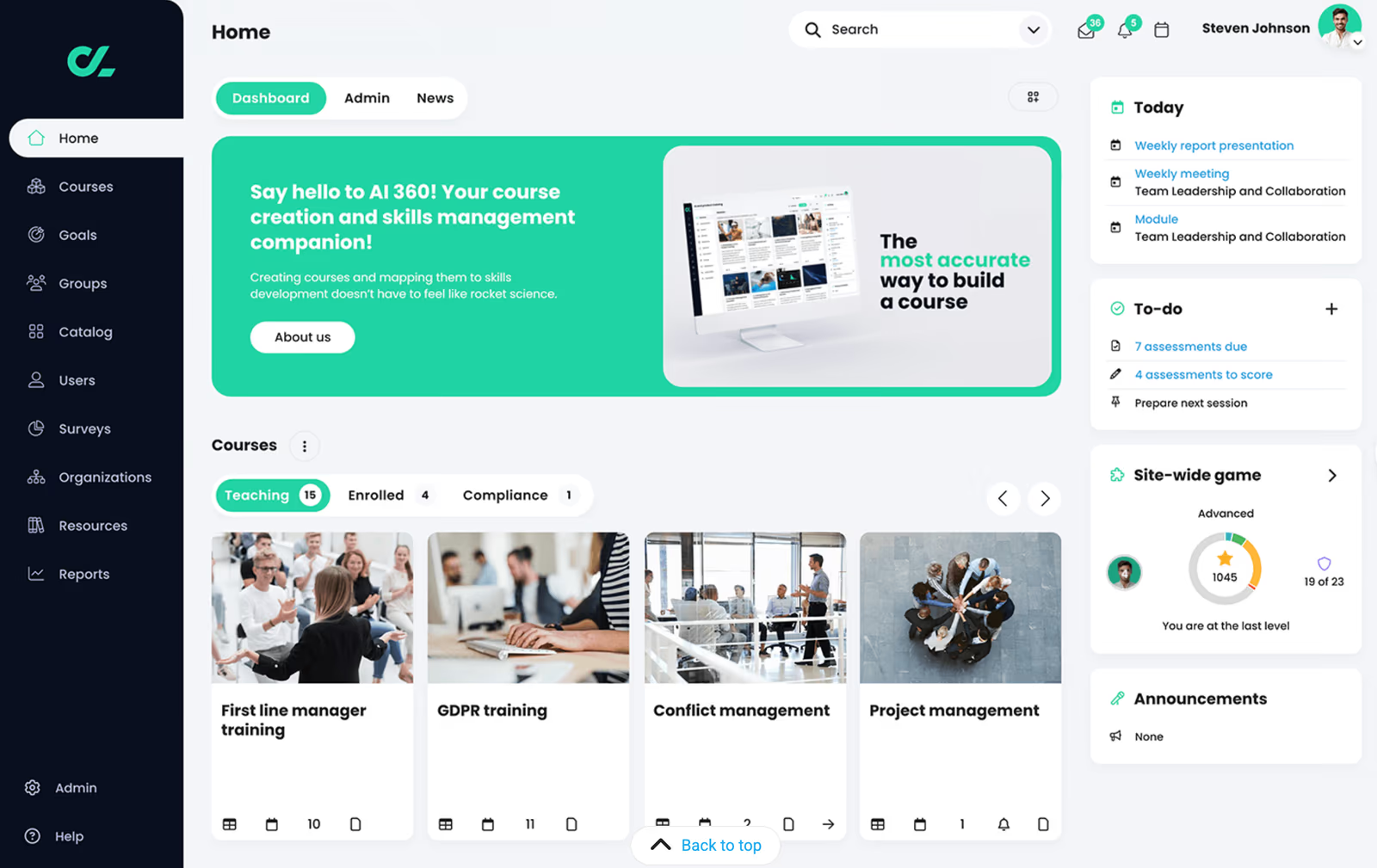
CYPHER's platform uses AI to recommend courses and adapt learning paths to each learner. It includes gamification features, skills tracking, and e-commerce capabilities. It's suitable for delivering interactive sales training and certification.
CYPHER's AI-driven adaptive learning delivers personalized training paths and gamified incentives to improve employee engagement and skill development.
- AI recommendations & adaptive learning paths
- Gamification with badges and leaderboards
- Built-in authoring and e-commerce
Pros:
- AI-adaptive learning and gamification boost engagement
- Easy to set up and manage
- E-commerce features for selling courses
Cons:
- Limited enterprise integrations compared to top tier
- Customization options may be limited
- Pricing not transparent

4.5 (691)
Best for AI-powered sales enablement content generation
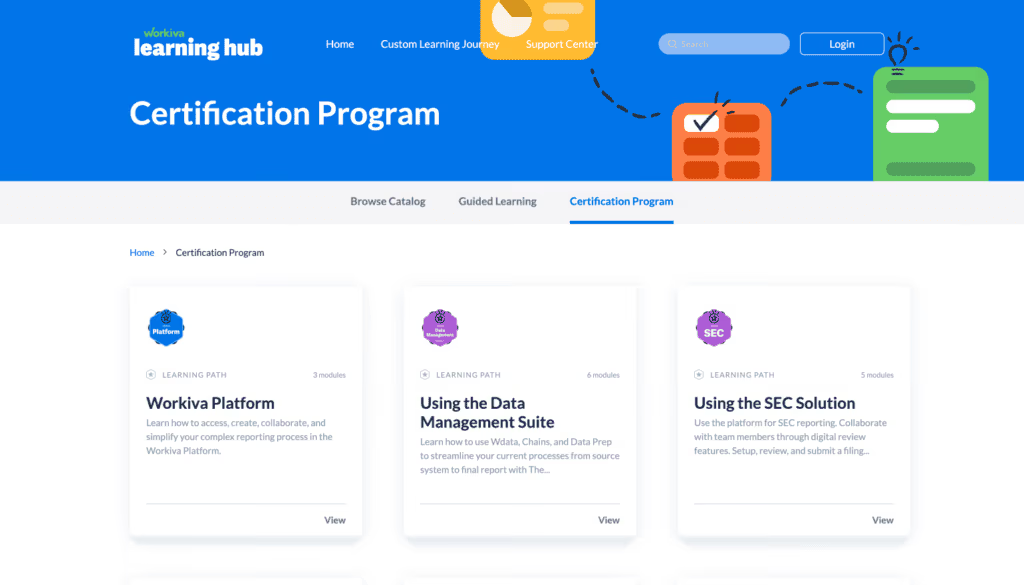
WorkRamp's dual cloud provides course authoring, SCORM support, badges, and analytics. Its AI-powered content generation turns slides, docs, and Notion pages into guided learning, enabling rapid creation of sales training modules. WorkRamp integrates with Salesforce and HRIS systems.
WorkRamp's AI content generation saves time preparing training materials, and the intuitive interface ensures high adoption rates across teams.
- AI content generation from documents
- Branded academies & dual cloud
- Integrations with Salesforce & HRIS connectors
Pros:
- AI-powered content generation saves time
- Modern, easy-to-use interface
- Customizable branded academies and analytics
Cons:
- Pricing is custom and can be expensive
- Limited AI beyond content generation
- Integration setups can be complex
4.3 (929)
Best for AI-powered talent management and learning
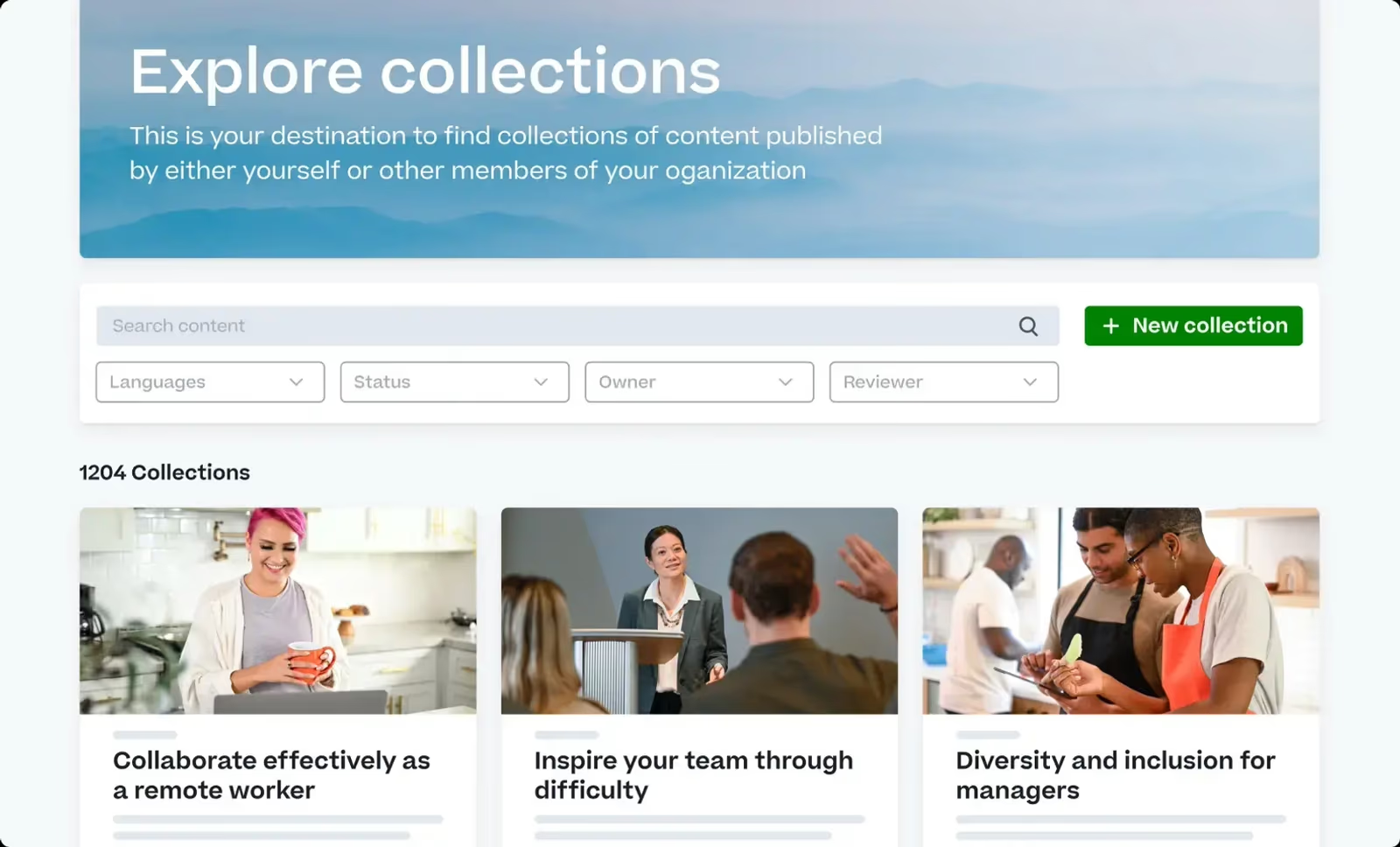
Cornerstone's AI and machine learning technologies power its skills graph, recommending content and career paths based on role and interests. It offers a robust content library, compliance tracking, and deep HR integration.
Cornerstone's AI skills engine helps align training with career development, ensuring employees acquire competencies needed for role progression.
- AI-powered skills graph & recommendations
- Extensive content library and curated playlists
- Integrated performance & learning management
Pros:
- AI-driven skills recommendations and career paths
- Vast content library and microlearning
- Integrates with HR systems
Cons:
- Complex implementation and configuration
- High cost for small teams
- User interface may feel dated compared to newer LMS
4.6 (1982)
Best for teams needing low-cast LMS with gamified content
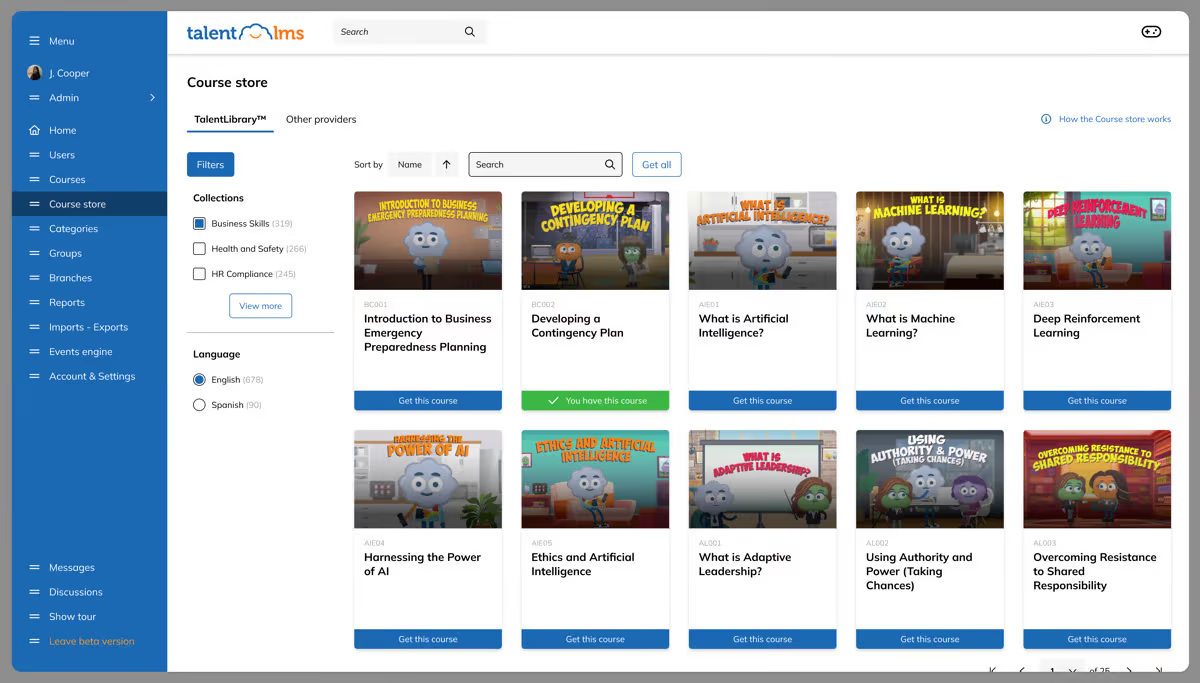
TalentLMS offers drag-and-drop course creation, quizzes, certificates, gamification, and integrations. While not AI-centric, it is easy to use and cost-effective for sales and compliance training.
TalentLMS offers an affordable solution with simple administration and gamified modules, though its AI capabilities are less advanced than enterprise-focused platforms.
- Drag-and-drop course authoring
- Gamification & badges
- Video & quiz support
Pros:
- Easy to use with intuitive interface
- Affordable with free plan
- Gamification engages learners
Cons:
- Limited AI or adaptive capabilities
- Limited customization for advanced scenarios
- Reporting features could be improved

4.5 (659)
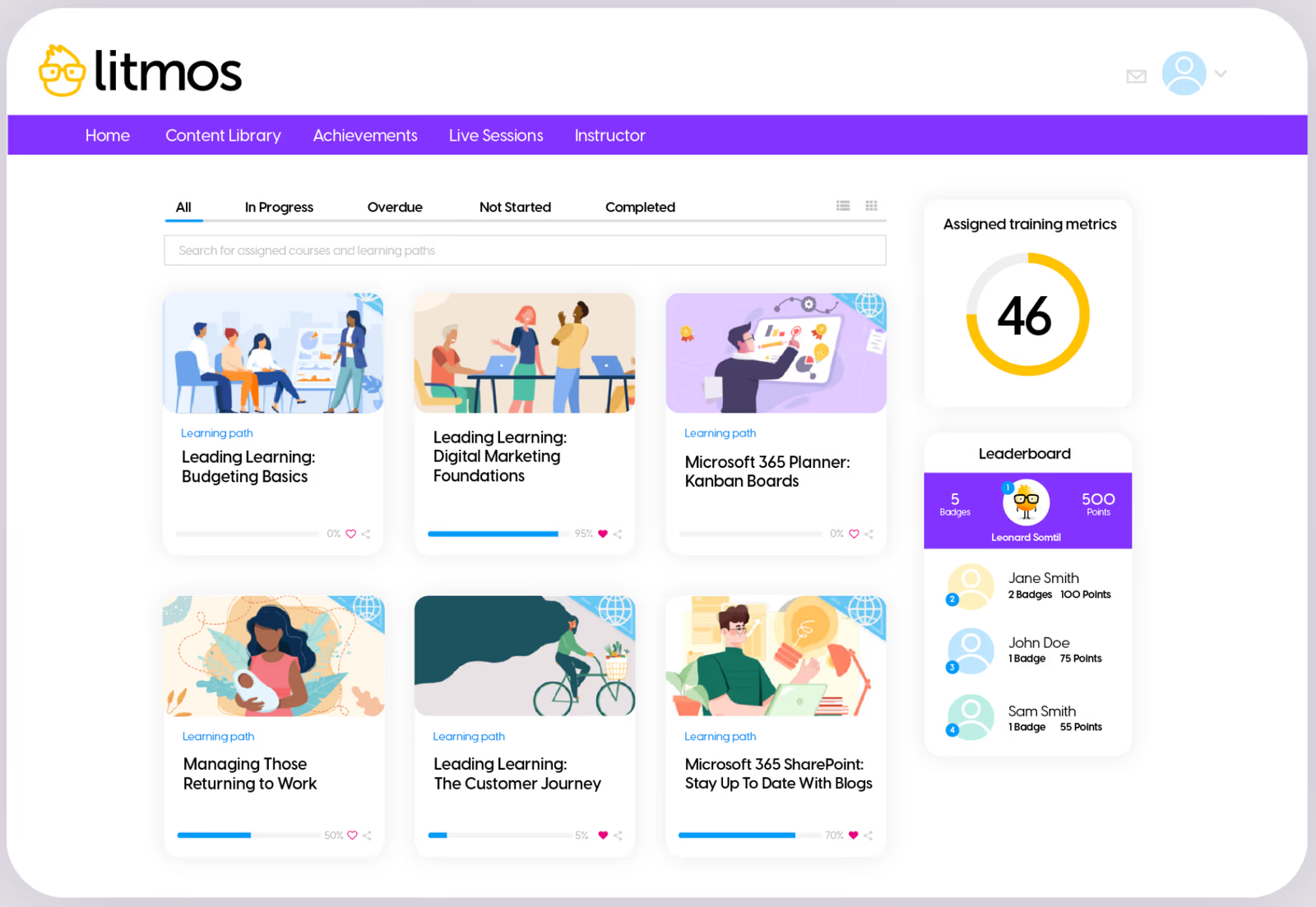
Litmos provides a large content library, course authoring tools, assessments, and gamification features. It supports e-commerce and integrates with leading HR and CRM systems. There are no widely known AI features.
Litmos' ready-made content library helps accelerate onboarding and ensure compliance, though AI personalization features are more basic.
- Extensive content library & course authoring
- Gamification & leaderboards
- Mobile and offline access
Pros:
- Large content library reduces development time
- Gamification engages learners
- Mobile-friendly and easy to deploy
Cons:
- Limited AI or adaptive features
- User interface may be dated
- Reporting capabilities could be more robust
4.6 (1192)
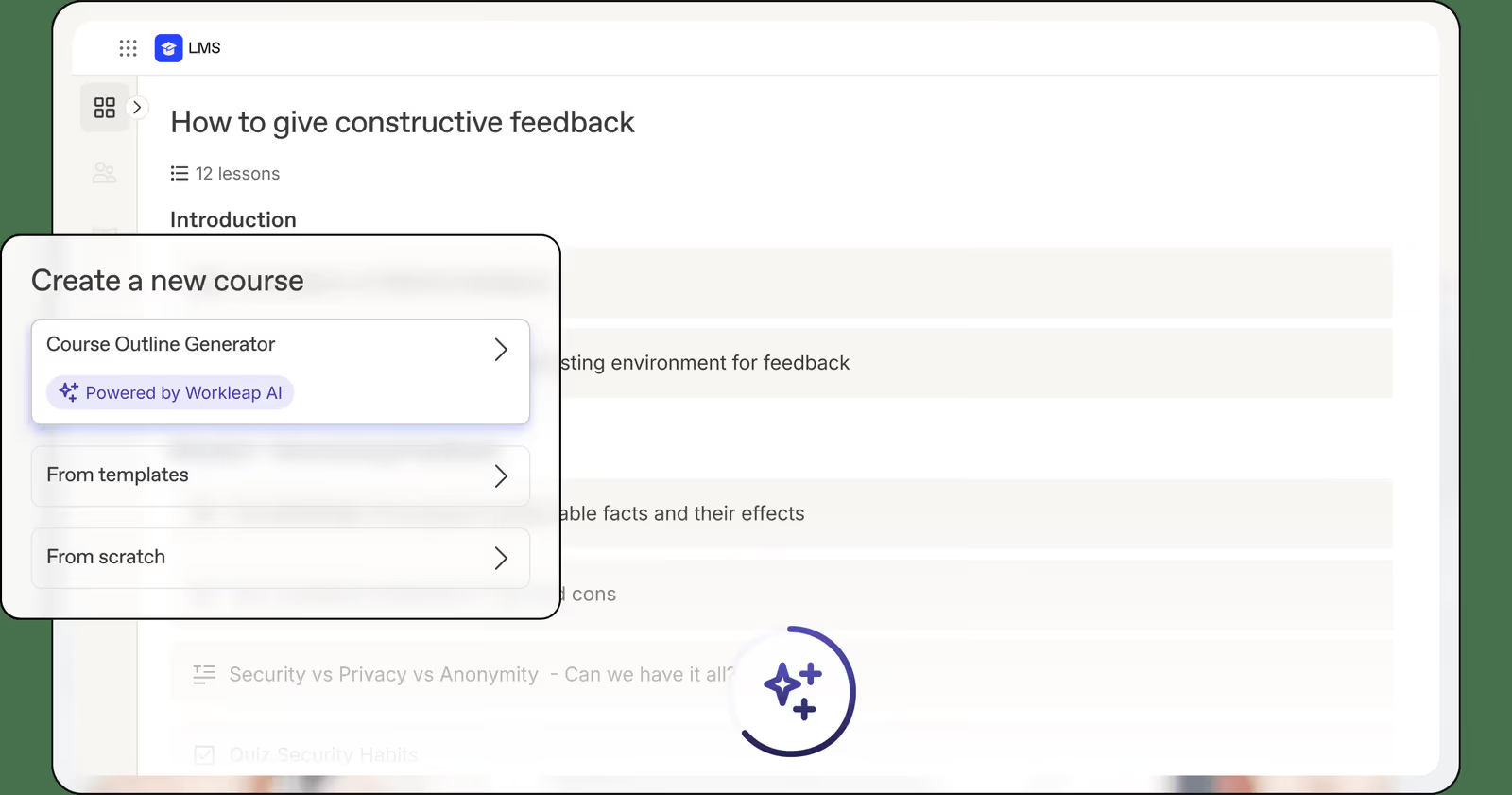
Workleap LMS provides a streamlined platform to create and distribute courses, track progress, and certify learners. It integrates with payment and HR tools. There is little publicly available information about AI features.
SkyPrep serves smaller organizations needing a simple LMS with minimal setup, but lacks advanced AI capabilities found in enterprise platforms.
- Simple course management
- Progress tracking and quizzes
- Payment integration
Pros:
- Easy to use with minimal setup
- Affordable for small teams
- Provides payment integration for selling courses
Cons:
- Limited advanced features
- No AI-driven personalization
- Not suited for large enterprise requirements


4.2 (250)

Paradiso includes course authoring, virtual classroom, social learning, gamification, and robust integrations. It supports e-commerce to sell courses, and multi-language user interface. AI features are not widely publicised.
Paradiso's flexibility, e-commerce capabilities and multi-language support make it suitable for global training programs, though AI functionality is limited.
- Customizable course authoring and gamification
- Multi-language & multi-tenant support
- E-commerce for selling courses
Pros:
- Highly customizable and multilingual
- E-commerce features enable monetization
- Wide integration options
Cons:
- User interface not as polished
- Support and documentation vary
- Lacks AI-driven personalization
How We Evaluate AI LMS Platforms
Selecting an AI LMS requires evaluating capabilities that traditional learning platforms simply don't offer.
You need a solution that personalizes learning at scale, automates time-intensive workflows, and uses predictive analytics to close skill gaps before they impact performance.
Our evaluation methodology reflects these priorities.
Why These Criteria Matter for AI LMS Platforms
AI capabilities aren't all created equal.
Some platforms slap "AI-powered" on basic recommendation algorithms that have existed for years. Others leverage advanced machine learning to genuinely transform how employees learn and retain knowledge.
That's why we weighted AI Capabilities & Intelligence highest at 30%.
This criterion determines whether a platform delivers true adaptive learning that responds to individual learner behavior—or simply offers glorified content tagging.
Learning Effectiveness (20%) measures what matters most: does the AI actually improve outcomes?
Personalization means nothing if employees don't retain knowledge or apply new skills on the job. We evaluated platforms based on their ability to demonstrate measurable performance improvements tied to AI-driven learning experiences.
For a detailed breakdown of each product's performance across these criteria, see the individual reviews in our complete ranking.
What is an AI-Powered Learning Management System?
An AI-powered learning management system (AI LMS) is a training platform that uses artificial intelligence, machine learning, and natural language processing to personalize learning experiences, automate content creation, and deliver adaptive training that responds to individual learner behavior and performance in real-time.
Unlike traditional learning management systems that deliver static content to all users, AI-driven LMS platforms analyze learner data to create individualized training paths, predict skill gaps, recommend relevant content, and continuously optimize learning effectiveness.
Who Uses AI Learning Management Systems
AI-powered LMS platforms are used by L&D professionals, HR teams, training managers, and business leaders across virtually every industry.
Organizations leverage these systems to onboard employees faster, maintain compliance certifications with automated tracking, develop critical skills through personalized pathways, and prepare workforces for future challenges through predictive analytics.
Primary Use Cases for AI-Powered Learning Platforms
Common applications of AI learning management systems include:
- Personalized Employee Development: Create individualized learning paths based on role requirements, career goals, skill gaps, and learning preferences—accelerating capability building across diverse teams
- Automated Compliance Training: Intelligently assign mandatory training based on job roles and locations, track certification expirations, and predict compliance risks before they occur
- Rapid Content Creation: Generate training materials, assessments, and interactive modules from existing documents in minutes rather than weeks—enabling rapid response to changing business needs
- Skills Gap Forecasting: Use predictive analytics to identify future capability requirements based on organizational growth, market trends, and individual career trajectories—proactively developing needed skills
- Conversational Learning Support: Provide 24/7 assistance through AI chatbots that answer questions, offer guidance, and help learners navigate training programs without instructor intervention
- Performance-Based Recommendations: Automatically suggest next steps for employee development based on demonstrated competencies, areas for improvement, and organizational priorities
How AI-Powered LMS Works
AI learning management systems collect data on learner interactions, performance, preferences, and progress. Machine learning algorithms analyze this data to identify patterns, predict outcomes, and optimize training delivery.
The platform creates personalized learning paths by matching individual needs with available content. As learners progress, AI continuously adjusts recommendations, difficulty levels, and content formats based on real-time performance. Natural language processing enables conversational interfaces where employees can ask questions and receive instant, contextual responses.
Behind the scenes, AI automates administrative workflows—enrolling learners, tracking completions, generating reports, managing certifications, and updating content based on usage patterns and feedback.
Industry Context
The AI-powered learning platform market is experiencing explosive growth. The global LMS market reached $27.09 billion in 2025 and is projected to grow to $82 billion by 2032—representing a compound annual growth rate of 17.1%.
This growth is driven by organizations recognizing that traditional training approaches can't keep pace with rapid skill requirements changes. By 2024, 47% of LMS tools are enabled by AI capabilities, with 30% of L&D teams already using AI-powered tools and 91% planning to increase AI usage.
The shift toward AI-driven learning reflects broader workforce development trends—remote work requiring flexible training delivery, skills-based hiring creating demand for continuous upskilling, and executive pressure to demonstrate measurable training ROI.
7 Benefits of AI-Powered Learning Platforms for Businesses
Implementing an AI LMS delivers measurable returns across productivity, engagement, and business performance.
Here are seven benefits that matter most for organizations building or scaling intelligent learning programs.
1. Hyper-Personalized Learning Paths
AI-powered learning management systems analyze employee behavior, performance data, and career goals to create individualized training programs.
Instead of forcing every team member through identical courses, AI algorithms recommend specific content based on skill gaps, learning preferences, and role requirements.
The result? Personalized AI learning systems boost employee productivity by 57%—enabling organizations to achieve more with existing resources. Employees complete training faster and retain information longer when content aligns precisely with their needs.
2. Automated Content Creation and Curation
Traditional course development takes weeks or months.
AI-powered learning platforms generate training content in minutes—transforming text documents into interactive modules, automatically creating assessments, and even producing video content with AI avatars.
Organizations using AI content generators report reducing content development time by 50% while maintaining quality standards. AI can also curate relevant external resources, keeping training libraries current without manual effort.
3. Adaptive Learning That Responds in Real-Time
Static courses deliver the same experience regardless of learner comprehension.
AI-powered adaptive learning adjusts content difficulty, pacing, and format based on real-time performance. If an employee struggles with a concept, the system provides additional examples, alternative explanations, or remedial resources automatically.
Research shows adaptive learning improves engagement by up to 60% and boosts learning outcomes by 30%. Learners stay challenged without becoming overwhelmed, maintaining momentum throughout training programs.
4. Predictive Analytics for Proactive Skill Development
AI doesn't just track what employees know today—it predicts what they'll need tomorrow.
Machine learning algorithms analyze industry trends, organizational changes, and individual career trajectories to forecast future skill requirements. This enables L&D teams to proactively address capability gaps before they impact business performance.
AI can identify engagement patterns that predict success—helping organizations focus training investments on employees most likely to apply new knowledge effectively.
5. Dramatic Reduction in Administrative Burden
Manual tasks consume 40-60% of L&D team time: enrolling learners, tracking completions, updating content, generating reports, managing certifications.
AI-powered LMS platforms automate these workflows. Smart enrollment rules assign courses based on job roles, locations, or compliance requirements. Automated notifications keep learners on track. AI-generated reports surface insights without manual data analysis.
Organizations implementing AI learning platforms expect 20-30% cost savings in L&D operations by eliminating time-intensive administrative tasks.
6. Data-Driven Insights Connecting Training to Business Outcomes
Most LMS platforms track course completions. AI-powered systems connect learning data to performance metrics that matter—productivity increases, sales quota attainment, support ticket reduction, customer satisfaction scores.
Machine learning identifies which training programs drive measurable business impact. Companies using learning analytics report a 24% boost in employee performance.
This capability transforms L&D from a cost center into a strategic driver of business results.
7. Continuous Learning That Fits Workflow
Traditional training interrupts work. AI-powered platforms integrate learning into daily workflow.
Conversational AI assistants answer questions in Slack or Teams. Microlearning modules appear when employees need specific knowledge. Just-in-time resources surface during relevant tasks.
30% of L&D teams already use AI-powered tools, with 91% planning to increase usage. Organizations adopting AI learning see faster skill acquisition, better knowledge retention, and higher application rates on the job.
Key Features of AI Learning Management Systems (LMS)
The right AI-powered LMS includes capabilities that traditional learning platforms simply can't deliver.
Here are the essential features to evaluate when comparing AI learning solutions.
Intelligent Content Recommendations
AI-powered recommendation engines analyze learner behavior, performance, and role requirements to automatically suggest relevant training content when employees need it most.
Adaptive Learning Pathways
Adaptive learning automatically adjusts training difficulty, pacing, and content format based on real-time learner progress.
This keeps every employee appropriately challenged—fast learners skip known material while struggling learners receive additional support automatically.
Automated Content Generation
AI-powered content generation creates training materials from existing documents, generates assessments automatically, and produces interactive content including video modules with AI avatars—reducing development time by 50% or more.
Conversational AI and Virtual Assistants
AI-powered learning assistants and virtual mentors answer learner questions, provide explanations, and offer personalized guidance 24/7—eliminating wait times for instructor availability.
Effective systems understand natural language queries, escalate complex questions to humans when needed, and integrate with messaging platforms like Slack and Teams to deliver learning support within workflow tools employees already use.
Predictive Analytics and Skills Gap Forecasting
Machine learning models analyze performance data, industry trends, and organizational changes to predict future skill requirements and identify at-risk learners before they fall behind.
Intelligent Assessment and Validation
AI-powered assessments adapt difficulty in real-time, validate both hard and soft skills, and use natural language processing to evaluate written responses beyond multiple choice tests.
These systems adjust question difficulty based on previous responses, evaluate complex submissions like essays and code with detailed feedback, and validate skills through realistic simulations that measure application ability rather than memorization.
Advanced Learning Analytics and ROI Measurement
AI-driven analytics connect learning data to business KPIs, measuring training impact on productivity, sales performance, and customer satisfaction to transform L&D from cost center to strategic driver.
Multi-Language Support and Auto-Translation
AI-powered translation converts training content into multiple languages automatically while adapting cultural context appropriately—enabling rapid deployment of consistent training worldwide without the delays and costs of manual localization.
How to Choose the Right AI-Powered LMS
Finding the right AI learning management system requires evaluating capabilities that go beyond traditional LMS features.
You need a platform that delivers genuine AI-driven value—not just marketing buzzwords.
Here's a step-by-step framework for selecting the best AI-powered LMS for your organization.
Step 1: Define Your AI Learning Objectives
Start by clarifying what you want AI to accomplish.
Different AI capabilities solve different problems. Some organizations need personalized learning paths to engage diverse skill levels. Others require automated content generation to scale training rapidly. Still others want predictive analytics to forecast skill gaps.
Write down your specific goals: faster onboarding, improved knowledge retention, reduced administrative burden, measurable performance improvement, or proactive capability development.
Your objectives determine which AI features are must-haves versus nice-to-haves.
Step 2: Assess Your Current Learning Maturity
AI-powered platforms deliver maximum value when you have foundational systems in place.
Evaluate your current state honestly. Do you have existing training content that AI can enhance? Clean learner data that machine learning can analyze? Clear performance metrics that connect training to business outcomes?
Organizations without these foundations should focus on platforms that help build them while introducing AI capabilities progressively—not advanced systems requiring data science expertise to implement.
Step 3: Identify Must-Have AI Capabilities
Based on your objectives and maturity level, determine which AI features are non-negotiable.
Common must-haves for AI-powered learning include:
- Personalized content recommendations based on role and performance
- Automated course enrollment and certification management
- Adaptive learning that adjusts to individual progress
- Conversational AI for learner support
- Predictive analytics connecting training to business metrics
- Content generation tools for rapid course development
Separate these from experimental features that sound interesting but don't address immediate needs.
Step 4: Evaluate AI Transparency and Control
Not all AI is created equal—and opaque algorithms can undermine trust.
Look for platforms that explain why AI makes specific recommendations. Learners should understand why they're seeing particular content. Administrators need visibility into how algorithms make decisions.
Ensure you can override AI recommendations when needed. The best systems augment human judgment rather than replacing it entirely.
Ask vendors directly: How does your AI work? What data does it use? Can we customize algorithms for our organization? What happens if AI makes inappropriate recommendations?
Step 5: Consider Implementation Complexity
AI-powered platforms range from plug-and-play solutions to systems requiring data science expertise.
Assess your technical capabilities realistically. Do you have staff who can configure machine learning models? IT resources to manage complex integrations? Time to train administrators on AI-specific features?
Platforms with strong out-of-the-box AI capabilities and intuitive interfaces enable faster value realization than systems requiring extensive customization—even if the latter offer more advanced features theoretically.
Step 6: Test AI Features with Real Content and Learners
Demos showcase capabilities in ideal conditions with curated data.
Request pilot access using your actual content and a representative learner group. This reveals how AI performs with your specific training materials, learner behaviors, and organizational context.
During pilots, evaluate:
- Recommendation quality—does AI suggest genuinely relevant content?
- Adaptation speed—how quickly does the system personalize to new users?
- Content generation results—can AI create acceptable training materials?
- Analytics usefulness—do insights actually inform decisions?
- Learner experience—do employees find AI features helpful or intrusive?
Pilots uncover limitations that don't appear in vendor presentations.
Step 7: Understand Total Cost of AI Capabilities
AI-powered platforms typically cost more than traditional LMS systems—but pricing models vary significantly.
Some vendors charge premium rates for AI features. Others include AI capabilities in base pricing. A few offer AI as optional add-ons.
Beyond subscription costs, factor in:
- Data preparation expenses to enable AI features
- Integration costs connecting AI insights to business systems
- Training investments helping staff leverage AI effectively
- Ongoing optimization as you refine algorithms
- Potential savings from automation and efficiency gains
Request detailed pricing for your anticipated use case—including learner counts, content volume, and AI feature usage.
Step 8: Verify Vendor AI Expertise
Marketing teams label everything "AI-powered" now.
Assess vendor credibility by asking specific technical questions: What machine learning models power your recommendations? How do you train algorithms? What data is required for AI features to work effectively? How do you prevent algorithmic bias?
Research vendor backgrounds. Do they have AI specialists on staff? Patents or publications demonstrating genuine innovation? Long-term commitment to AI development versus recent pivots chasing market trends?
True AI platforms continuously improve through algorithmic updates—not just feature additions.
Step 9: Plan for Ongoing AI Optimization
AI learning systems improve over time—but only with proper maintenance.
Algorithms require training data. Machine learning models need performance feedback. Recommendations improve as the system analyzes more learner interactions.
Ensure your vendor provides guidance on optimizing AI performance. Look for platforms with built-in feedback loops that continuously refine algorithms based on actual outcomes—not just usage patterns.
Budget time and resources for ongoing AI optimization. The most effective implementations treat AI as an evolving capability requiring continuous attention—not a one-time implementation.
Step 10: Connect AI Capabilities to Business Outcomes
AI features are tools, not goals themselves.
Establish clear metrics connecting AI-powered learning to business results before implementation. Define what success looks like: reduced time-to-productivity, improved performance scores, higher certification rates, measurable skill acquisition, or documented ROI.
Choose platforms that enable this measurement natively. The best AI learning management systems connect training data to performance systems automatically—providing continuous visibility into whether AI capabilities actually deliver promised benefits.
Without this connection, you'll struggle to justify ongoing investment in AI-powered learning regardless of how impressive the features seem.
Find Your AI Learning Management System
AI-powered learning management systems have evolved from experimental features to essential platforms that personalize training at scale, automate administrative workflows, and connect learning data directly to business performance.
The platforms in this guide represent the leading edge of intelligent learning technology—each solving different aspects of workforce development with proven AI capabilities. Your choice depends on specific priorities: conversational AI integration, rapid content generation, advanced adaptive learning, or predictive analytics.
Organizations choosing AI learning platforms today should prioritize vendors actively investing in machine learning capabilities rather than those adding AI labels to existing features. The best systems continuously improve through algorithmic refinement, delivering increasing value over time as they learn from more data.
Ready to see how AI transforms workplace learning?
Continu's conversational learning platform uses AI to deliver personalized experiences that drive measurable business impact—get a demo to experience the difference intelligent learning makes for your organization.
Share this article:
Author
Keith Martin
President
AI LMS FAQs
What is the best AI-powered LMS for enterprise businesses?
Continu is the best AI-powered learning management system for enterprise businesses because it unifies conversational learning, automated training paths, and business impact analytics into a single platform. The system features an AI Learning Agent named Eddy that integrates directly into workplace tools like Slack and Microsoft Teams, allowing employees to receive instant answers and personalized content recommendations without leaving their daily workflow. By using natural language processing to deliver training at the point of need, Continu achieves significantly higher engagement rates and connects training completion directly to measurable performance outcomes and ROI.
How does AI improve employee learning outcomes?
Artificial intelligence improves learning outcomes by replacing one-size-fits-all courses with personalized delivery paths that adapt to an individual’s specific needs, learning style, and knowledge gaps. Research indicates that these personalized systems can boost employee productivity by up to 57% and increase engagement by 60% compared to traditional methods. Furthermore, AI-driven platforms accelerate skill acquisition by providing just-in-time resources and instant feedback through conversational interfaces, which adjust content difficulty in real-time based on a learner's comprehension level to ensure better long-term knowledge retention.
What ROI can organizations expect from AI-powered learning platforms?
Organizations implementing AI-powered learning systems typically realize a 20-30% reduction in operational costs by automating time-intensive tasks such as content development, learner support, and data analysis. When factoring in gains from improved employee performance and reduced training time, these platforms can deliver a 250-300% return on investment over a two-to-three-year period. The most significant ROI comes from the ability to link learning data directly to business KPIs—such as sales performance and customer satisfaction—with companies reporting up to a 24% boost in overall employee performance.
How much does an AI-powered LMS cost compared to traditional platforms?
AI-powered learning management systems generally cost 20-40% more than traditional platforms, with prices ranging from $3 to $8 per user per month for entry-level personalization up to $25 or more for advanced enterprise systems with custom machine learning models. Mid-tier solutions with comprehensive AI capabilities typically fall within the $10 to $20 per user monthly range. While the initial subscription price is higher, the total cost of ownership is often offset by the significant reduction in course development time—often cut by 50%—and the decreased need for manual administrative oversight.
This is what AI in an LMS should look like.
No AI hype. Just faster onboarding, smarter training, and hours back for your team.