The 10 Best Alternatives to Impartner in 2026

By Keith Martin | Updated on April 23, 2026
Impartner alternatives are ranked using first-hand research from our advisory team and data from G2, Capterra, and Gartner Peer Insights. No paid placements.
Quick Summary
As a B2B GTM leader who's evaluated 50+ enterprise channel partner enablement platforms, I've analyzed the best Impartner alternatives to help you find partner relationship management (PRM) and training software that fits your budget, technical requirements, and partner enablement goals without the customization limitations or feature restrictions that frustrate growing teams.
Organizations switching from Impartner avoid limited customization flexibility while gaining advanced workflow configuration, faster implementation timelines, and more intuitive platform navigation—without sacrificing the robust partner management features that drive results.
Table of Contents
Top 5 Alternatives Shortlist
If you’re thinking of switching from Impartner, here are the top options based on features, overall ratings, and user reviews:
1. Continu — Best for AI-powered, enterprise-scale learning focused on business results
2. Skilljar — Best for branded customer and employee training academies
3. Northpass — Best for launching branded customer academies quickly for SMBs
4. AcademyOcean — Best for dynamic partner academies with AI-driven personalization
5. Thought Industries — Best for externally-focused learning ecosystems with strong community support
Impartner has built a strong reputation in partner relationship management and channel marketing automation.
With 4.5/5 stars across 606+ reviews, unified PRM and training capabilities, and powerful partner lifecycle management features, it's a solid platform for teams prioritizing comprehensive partner ecosystem management.
But here's what we discovered after analyzing hundreds of user reviews and interviewing L&D leaders who've migrated away:
Customization limitations restrict business-specific workflows - The platform's limited flexibility makes it difficult for organizations with unique partner management needs to configure workflows, portal experiences, and data structures without complex workarounds that slow implementation.
Navigation complexity creates usability friction - Users report a steep learning curve for administrators configuring the platform, with interface design that can feel dated and unintuitive compared to modern SaaS solutions, leading to extended training requirements.
Feature readiness and documentation gaps delay value - Organizations frequently encounter purchased features that aren't fully ready for production use, combined with inadequate technical documentation that makes troubleshooting and configuration more time-consuming than expected.
The good news?
The partner enablement software landscape has evolved dramatically.
Modern platforms deliver partner enablement and relationship management capabilities at 40-60% lower costs, with faster implementation, deeper customization, and more intuitive user experiences.
Below, you'll find 10 alternatives to Impartner ranging from affordable team solutions to enterprise platforms—each evaluated across pricing transparency, migration ease, feature completeness, and user experience.
Whether you're a 50-person startup or a 5,000-employee enterprise, there's a better-fit option here.
What is Impartner?
Impartner is a Partner Relationship Management (PRM) and Through-Channel Marketing Automation (TCMA) platform designed to manage diverse partner ecosystems. The solution enables organizations to streamline partner engagement, onboarding, and activation from resellers and distributors to MSPs, systems integrators, ISVs, OEMs, and affiliate partners.
With robust usage reporting and analytics capabilities, Impartner provides insights into partner asset performance and engagement metrics, helping optimize partner marketing and sales processes. The platform emphasizes customizable partner portals and integration capabilities with third-party vendors for seamless ecosystem management at scale.
Founded as a specialist in partner relationship management, the platform serves technology companies and channel-focused businesses managing complex partner networks.
Core Philosophy
Impartner combines partner relationship management with training modules to streamline partner onboarding, enablement and performance. The platform ties training directly to partner performance through integrated lead distribution, pipeline management, and marketing automation capabilities.
Key Features and Capabilities
Integrated Partner Training & Certification: The platform supports creating courses, lessons, quizzes and certification programs integrated into the broader PRM suite. This unified approach reduces complexity by managing partner learning alongside relationship management and performance tracking.
Comprehensive Partner Lifecycle & Pipeline Management: Impartner provides modules for lead distribution, pipeline management, and partner performance tracking throughout the entire partner journey. Organizations gain visibility into partner engagement metrics and sales activities from a centralized dashboard.
Marketing Automation & Analytics: Built-in marketing automation capabilities enable channel marketing campaigns, content distribution, and co-marketing activities with partners. Robust reporting and analytics provide insights into partner asset performance, campaign effectiveness, and engagement patterns across the partner ecosystem.
The platform integrates with Salesforce, Microsoft Dynamics, Marketo, HubSpot, and Zendesk to connect partner data with existing CRM and marketing technology stacks.
Common Use Cases
Organizations typically deploy Impartner for:
Partner Onboarding and Enablement: Technology companies use Impartner to streamline new partner onboarding by combining training certification requirements with partner portal access, ensuring partners are properly enabled before selling products. The integrated approach ties enablement directly to partner activation milestones.
Channel Partner Ecosystem Management: Businesses with diverse partner types (resellers, distributors, MSPs, system integrators) leverage Impartner to manage multiple partner tiers from a single platform. Organizations segment partners by type, region, or performance level while maintaining centralized visibility.
Multi-Audience Partner Training: Channel-focused organizations deploy Impartner to deliver training programs across their entire partner ecosystem—from initial product training for new resellers to advanced certification programs for strategic partners. The platform ties training completion to partner tiers and performance incentives.
Biggest Strengths of Impartner
Impartner earns praise for several capabilities:
1. Unified Partner Management: The platform's integration of training, relationship management, and marketing automation into one solution simplifies partner operations. Organizations avoid juggling separate systems for partner onboarding, training delivery, and performance tracking.
2. Powerful Pipeline Visibility: Partner managers value Impartner's comprehensive view of partner-driven pipeline activity, lead distribution, and deal registration. The analytics provide insights into which partners drive revenue and which need additional enablement support.
3. Responsive Support Team: Users consistently highlight Impartner's support organization as helpful and responsive when configuring the platform or troubleshooting technical issues. The team provides hands-on assistance during implementation and ongoing optimization.
Pricing Structure
Impartner uses a subscription-based pricing model with tiered modules starting at approximately $2,000/month. Advanced features and capabilities may require higher tiers or custom enterprise quotes.
The platform does not offer a free trial. Organizations typically engage in a demo process before purchasing, with implementation timelines varying based on ecosystem complexity and customization requirements.
For teams managing partner ecosystems, monthly costs can range from $24,000 to $60,000+ annually depending on the number of partners, required features, and integration needs—making budget planning essential during evaluation.
Impartner Review Platform Source
 View Impartner’s reviews on G2 →
 View Impartner’s reviews on Capterra →
 View Impartner’s reviews on Gartner Peer Insights →
*Impartner’s overall rating and reviews pulled from these sources may have changed since this article was created. Data was pulled early December 2025 and will be updated quarterly.
Why Look for an Impartner Alternative?
Despite Impartner's strengths in partner relationship management, organizations frequently encounter limitations that prompt them to evaluate alternatives. Based on analysis of 600+ user reviews across G2, Capterra, and Gartner Peer Insights, here are the three most commonly cited challenges:
1. Limited Customization and Workflow Flexibility
Impartner's platform architecture restricts organizations' ability to customize workflows, portal configurations, and data structures to match unique business requirements. Teams with specialized partner management needs often discover the platform's out-of-the-box configurations don't align with their processes.
"We needed to customize our partner portal experience based on different partner tiers, but ran into significant limitations in what could be configured without extensive custom development," reports a Channel Operations Manager at a mid-market technology company. "Basic workflow modifications that seemed straightforward ended up requiring workarounds that added complexity instead of reducing it."
The customization constraints force organizations into two difficult positions: either adapt their partner management processes to fit Impartner's rigid structure, or invest in expensive custom development work that increases total cost of ownership.
For companies with unique partner models—such as those managing multiple partner types with distinct requirements—these limitations slow time-to-value and create ongoing operational friction.
Organizations report spending additional months configuring workarounds for processes that should be standard features, delaying partner program launches and reducing team productivity during critical growth phases.
2. Navigation Complexity and Steep Learning Curve
Both administrators and partners struggle with Impartner's interface design and navigation structure. The platform's admin configuration requires extensive training, while partners accessing the portal often report confusion finding resources and completing required actions.
"The administrative backend feels outdated compared to modern SaaS platforms we use," explains a Partner Enablement Director. "Simple tasks like setting up new partner cohorts or configuring training assignments take longer than expected because the interface isn't intuitive. Our partners also struggled initially—we received frequent support requests about where to find training materials or how to complete certifications."
The usability challenges create a ripple effect across partner operations. Internal teams require longer training periods to become proficient with the platform, increasing onboarding costs and reducing administrative efficiency.
Partner-side friction leads to lower engagement rates, incomplete training, and higher support volume—exactly the opposite of what a partner enablement platform should deliver.
Companies report dedicating 2-3x more time to user training than anticipated, with some needing to create extensive custom documentation and video walkthroughs to supplement Impartner's materials. This hidden cost significantly impacts the true ROI of the platform.
3. Feature Readiness and Documentation Gaps
Organizations purchasing Impartner frequently discover that advertised features aren't fully developed or production-ready at the time of implementation. The lack of comprehensive technical documentation compounds this issue, making it difficult to troubleshoot problems or optimize configurations independently.
"We bought Impartner specifically for certain field-level security capabilities we needed for our complex partner hierarchy," shares a Sales Operations Leader at an enterprise software company. "During implementation, we learned those features weren't as robust as described in the sales process. The documentation was minimal, so we spent weeks in back-and-forth with support trying to make it work for our use case."
These readiness gaps create budget and timeline risks that are difficult to predict during evaluation. Organizations planning to leverage specific capabilities for their partner programs may need to delay launches, invest in workarounds, or scale back program ambitions while waiting for features to mature.
The documentation deficiencies force companies to rely heavily on Impartner's support team for guidance that should be self-serviceable, creating dependencies that slow iteration and make it harder to optimize partner programs over time.
For teams operating in fast-moving markets where partner enablement is competitive differentiator, these delays translate directly to lost revenue opportunities.
Better Alternatives Exist
For organizations needing flexible partner training without the PRM overhead, modern learning platforms like Continu deliver intuitive interfaces, extensive customization options, and white-glove implementation at 50-70% lower total cost. You gain the ability to configure workflows precisely to your partner model without expensive customization projects.
For teams seeking better usability, platforms like LearnUpon provide straightforward navigation that reduces training time for both administrators and learners. Partners can find and complete required training independently, reducing support volume while improving completion rates.
For companies requiring production-ready features, solutions like Skilljar offer mature partner education capabilities with comprehensive documentation and transparent feature roadmaps. You can plan partner programs confidently knowing the features you need are fully functional on day one.
Impartner Alternatives Comparison Table
The table below summarizes our list of the best alternatives, ranked using our advisory team’s first-hand research and data from trusted sources like G2, Capterra, and Gartner Peer Insights.

1. Continu

4.6 (727 reviews)
Yes
Custom quotes based on number of learners and tier
View pricing details →
2. Skilljar

4.6 (141)
No
Annual subscription starting at ~$30k/year plus per user fees
View pricing details →
3. Northpass
4.6 (150)
No
Plans start around $600/month; custom enterprise pricing
View pricing details →The Top 10 Alternatives Reviewed
Explore our in-depth breakdown of the top alternatives to Impartner, ranked by their impact on your organization’s learning compared to Impartner’s platform.
1. Continu
4.6 (727 reviews)
Best for AI-powered, enterprise-scale learning focused on business results
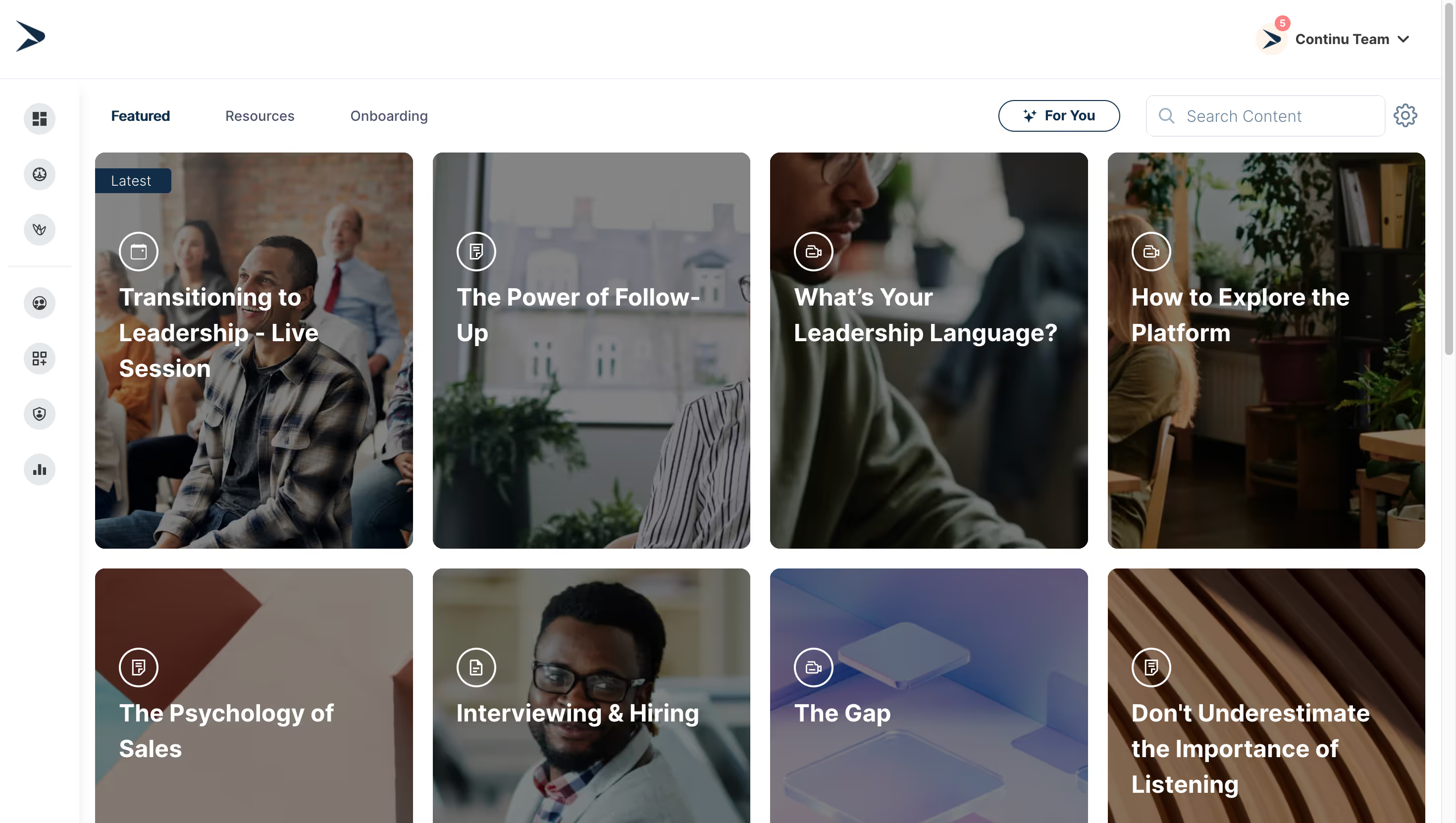
Continu is a modern all-in-one learning platform that helps mid to large-size organizations centralize employee, customer and partner training. It combines content authoring, workshops, journeys and assessments with smart automations and AI-powered analytics to boost engagement, reduce ramp-up time and save administrators hours.
Why I picked Continu
Continu is the top-ranked alternative thanks to its deep integrations with workplace tools, robust AI-powered reporting, ease-of-use for admins and learners, enterprise-grade features, and the ability to centralize learning for employees, customers, and partners into a single platform.
Continu is ideal for:
Mid-market & enterprise organizations training over 500 total users (employees, customers, and/or partners).
2. Skilljar
4.6 (141)
Best for branded customer and employee training academies
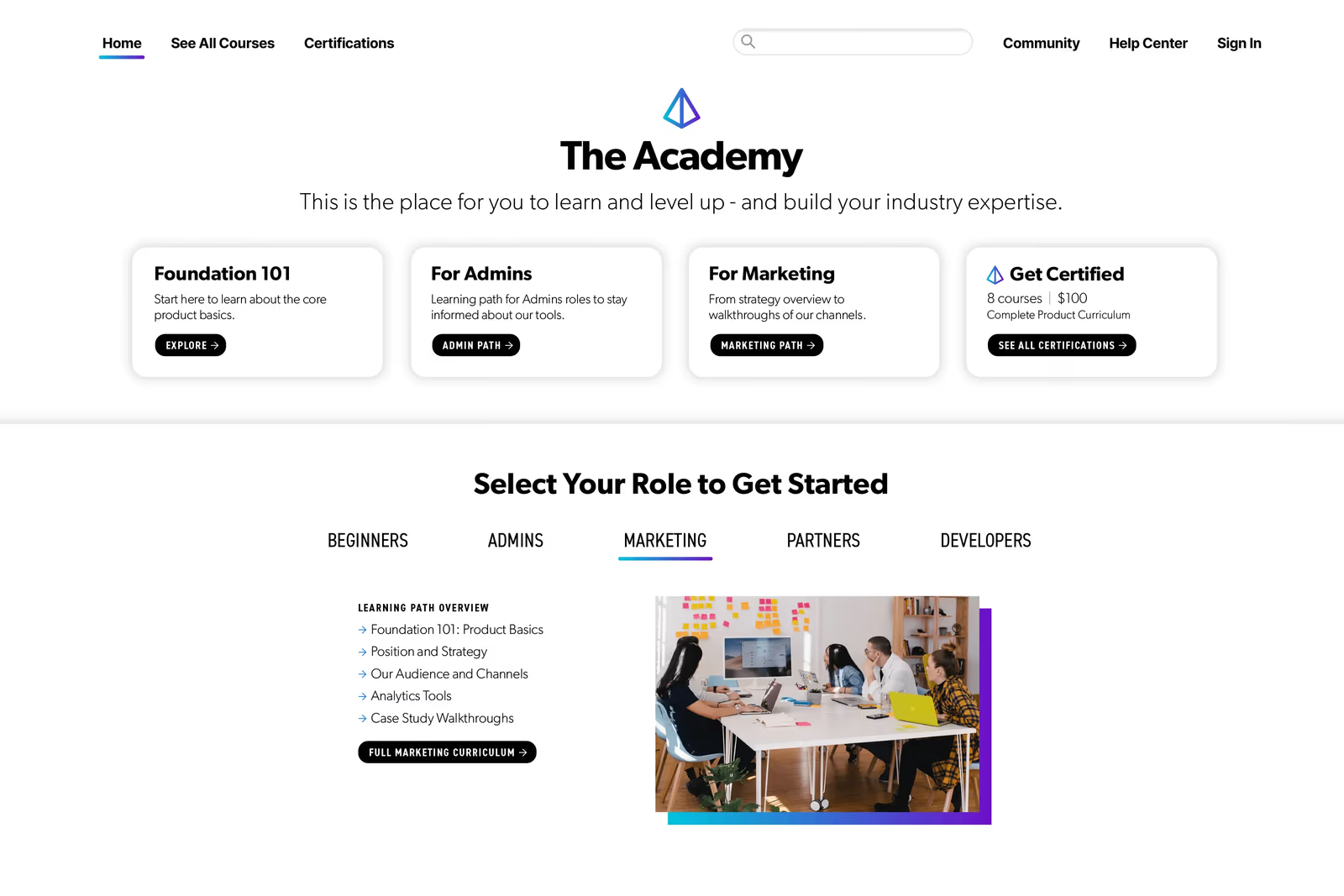
Enterprise-grade customer training platform with customizable academies and certifications
Why I picked Skilljar
Skilljar is a strong alternative that delivers highly customizable branded academies while providing robust CRM integrations and analytics.
Skilljar is ideal for:
Mid-sized to large B2B companies investing in customer education
3. Northpass
4.6 (150)
Best for launching branded customer academies quickly for SMBs

Modern LMS for customer and partner education with intuitive course creation and analytics
Why I picked Northpass
Northpass is a compelling option for teams seeking fast set-up and user-friendly course creation and branded customer academies.
Northpass is ideal for:
Small to mid-sized SaaS companies launching customer training

4. AcademyOcean

4.9 (45)
Best for dynamic partner academies with AI-driven personalization

AI-powered LMS enabling customized partner training with dynamic content and high user satisfaction
Why I picked AcademyOcean
AcademyOcean stands out as a better option for organizations needing AI-driven personalization and dynamic content and multiple branded academies.
AcademyOcean is ideal for:
Medium to large organizations training multiple partners

5. Thought Industries

4.3 (242)
Best for externally-focused learning ecosystems with strong community support

Scalable customer training platform with multi-portal architecture and commerce
Why I picked Thought Industries
Thought Industries ranks as a top option for its multi-portal architecture and strong e-commerce and monetization features.
Thought Industries is ideal for:
Large enterprises and high-growth companies
6. Channeltivity
4.6 (76)
Best for streamlined partner and channel management

PRM platform with training and certification module for partners
Why I picked Channeltivity
Channeltivity proves to be a solid choice with user-friendly partner management and training and responsive support and ease of use.
Channeltivity is ideal for:
Medium-sized organizations

7. Trainn
4.7 (70)
Best for AI-driven interactive customer training content

Simple platform to create interactive videos, guides and knowledge hubs for customer training
Why I picked Trainn
Trainn stands out as a good option for organizations needing video-based tutorials improve engagement and understanding and self-service guides reduce support workload.
Trainn is ideal for:
SaaS startups and SMBs

8. Docebo
4.4 (1126)
Best for enterprise organizations training internal and external teams
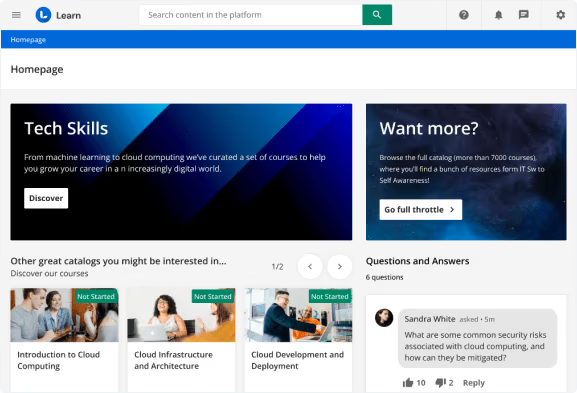
An AI-powered enterprise suite that automates personalized training delivery across multiple audiences
Why I picked Docebo
Docebo is a solid choice thanks to its enterprise-grade, highly customizable, scalable platform, and AI-driven automation.
Docebo is ideal for:
Mid-size to large enterprises with 250+ active learners

9. Absorb LMS
4.6 (1443)
Best for scalable, AI-powered strategic learning
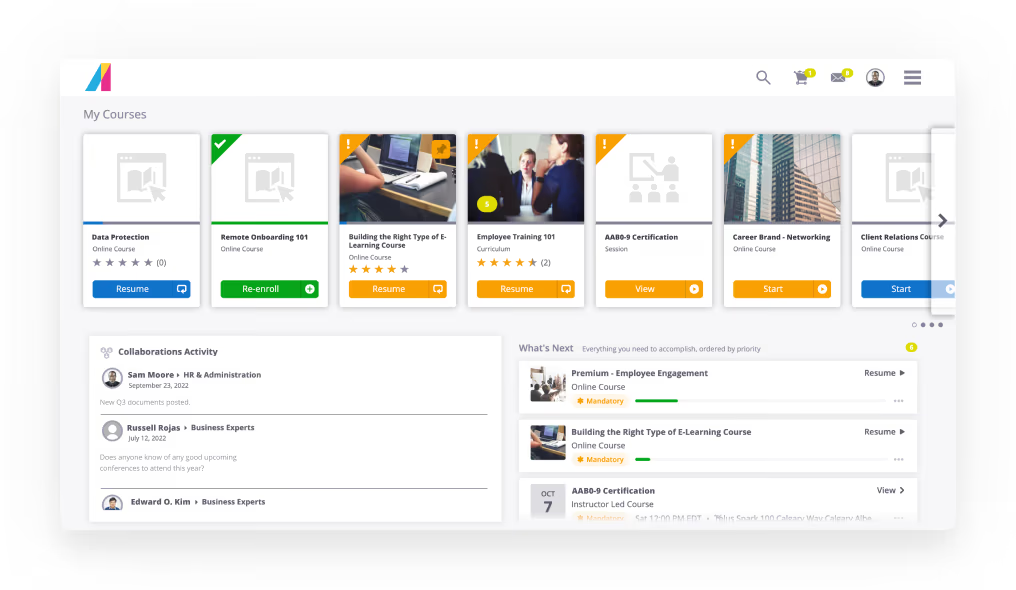
A cloud-based LMS combining AI-driven skills, personalized paths and multi-tenancy for global training.
Why I picked Absorb LMS
Absorb LMS is a solid choice thanks to its user-friendly interface and intuitive navigation and comprehensive features including advanced reporting, content library and eCommerce.
Absorb LMS is ideal for:
Businesses of all sizes, especially SMBs and enterprises

10. Intellum
4.3 (148)
Best for organizations prioritizing AI-driven learning and course creation

Unified platform for customer education, combining courses, documentation, and community engagement
Why I picked Intellum
Intellum deserves consideration as an alternative thanks to all-in-one platform and robust analytics and customizable branding.
Intellum is ideal for:
Large enterprises and organizations investing in customer education
Choosing the Right Partner Enablement Tool
Switching from Impartner doesn't mean compromising on partner training quality or relationship management visibility—it means finding a platform that balances capabilities with usability, customization, and cost-effectiveness.
The alternatives in this guide deliver:
- Faster implementation timelines through intuitive setup processes that don't require extensive configuration expertise
- Greater workflow flexibility with customization options that adapt to your specific partner model without custom development costs
- Lower total cost of ownership through transparent per-user pricing instead of high base subscriptions that can exceed $24,000+ annually
- Production-ready features backed by comprehensive documentation that enables self-sufficient optimization
- Modern user experiences that reduce training requirements and increase partner engagement rates
Our Top 3 Recommendations
1. Continu – Best Overall Alternative to Impartner
For organizations seeking a modern learning platform with extensive partner training capabilities, Continu delivers the customization flexibility and intuitive experience Impartner users frequently request. The platform provides white-label partner portals, advanced workflow automation, and seamless integrations with existing CRM and marketing tools—all with transparent pricing starting at a fraction of Impartner's base cost.
Continu's AI-powered learning agent "Eddy" enables partners to get instant answers from your training content through Slack, Teams, or SMS—meeting learners where they work instead of forcing portal logins. Implementation typically completes in under two weeks with dedicated success support.
Why Organizations Love It: "If you’re in need of an incredible eLearning platform that has features and capabilities that can support a global workforce both internally and externally, I think Continu is a great solution." - Cohen Mitoshi Summers, Sr. Director, Global Training & Education at GoPro.
Read the GoPro customer story →
2. Skilljar – Best for Dedicated External Training
Companies focused specifically on partner and customer education without needing full PRM capabilities should evaluate Skilljar. The platform specializes in external training with robust analytics, flexible branding, and transparent pricing based on active learners rather than base subscriptions.
Skilljar provides mature certification management, course marketplace capabilities, and dedicated customer success support. Organizations gain comprehensive documentation and a proven implementation methodology that reduces risk.
3. Thought Industries – Best for Learning Commerce and Monetization
For organizations looking to monetize partner training or generate revenue from certification programs, Thought Industries specializes in learning commerce with sophisticated e-commerce capabilities. The platform excels at selling courses, creating tiered access models, and managing partner subscriptions with built-in payment processing.
Thought Industries provides robust white-labeling, advanced analytics, and native integrations with business systems. Companies that want to turn partner education into a revenue stream while maintaining professional branded experiences find Thought Industries purpose-built for this use case.
Ready to Make the Switch?
The best Impartner alternative depends on your specific needs—whether you prioritize lower costs, faster implementation, greater customization, or specialized partner education features.
Most platforms offer demos and pilots that let you evaluate fit before committing. During evaluation, test workflows that match your actual partner processes, involve both administrators and partner users in assessments, and request transparent pricing that includes all features you need.
See how Continu simplifies partner training with flexible workflows, intuitive experiences, and transparent pricing that scales with your program. Book a personalized demo to explore how leading companies are enabling partners more effectively at lower total cost.
Frequently Asked Questions
What is the best alternative to Impartner for partner training and enablement?
Why do companies switch from Impartner?
How much does Impartner cost compared to alternatives?
What features should I look for in an Impartner alternative?