The 10 Best Alternatives to Thinkific in 2026

By Keith Martin | Updated on April 23, 2026
Thinkific alternatives are ranked using first-hand research from our advisory team and data from G2, Capterra, and Gartner Peer Insights. No paid placements.
Quick Summary
As a B2B GTM leader who's evaluated 20+ enterprise learning platforms, I've analyzed the best Thinkific alternatives to help you find learning commerce software that fits your organization's needs without the customization limitations, outdated features, or manual administrative tasks that frustrate growing teams.
Organizations switching from Thinkific avoid limited advanced features and manual workflows while gaining enterprise-grade analytics, deeper customization capabilities, and more robust automation tools—without sacrificing the ease of use that drives results.
Table of Contents
Top 5 Alternatives Shortlist
If you’re thinking of switching from Thinkific, here are the top options based on features, overall ratings, and user reviews:
1. Continu — Best for AI-powered, enterprise-scale learning focused on business results
2. Learnworlds — Best for creating engaging interactive courses with video-based training
3. Absorb LMS — Best for scalable, AI-powered strategic learning
4. TalentLMS — Best for cheap, scalable, and user-friendly learning management
5. Docebo — Best for enterprise organizations training internal and external teams
Thinkific has built a strong reputation in the learning commerce and LMS space.
With a 4.4 rating across 594+ reviews, an intuitive drag-and-drop course builder, and interactive features like quizzes and communities, it's a solid platform for teams prioritizing course creation and delivery with monetization capabilities.
But here's what we discovered after analyzing hundreds of user reviews and interviewing L&D leaders who've migrated away:
Advanced features remain limited for enterprise needs: Organizations with complex requirements struggle with basic analytics, constrained layout flexibility, and outdated quiz functionality. Teams requiring sophisticated reporting, advanced certifications, or deep compliance tracking often find Thinkific's tools insufficient for enterprise-grade learning programs.
Customization restrictions force design compromises: While the drag-and-drop builder handles basic course creation well, teams encounter significant limitations when attempting to match corporate branding, customize page layouts, or build unique learning experiences. Organizations requiring white-label flexibility beyond Thinkific's templates frequently hit roadblocks that require workarounds or force brand inconsistencies.
Manual administrative tasks consume team resources: Many routine processes—from enrollment management to certification renewals—require manual intervention that more modern platforms automate. L&D teams report spending thousands of hours annually on repetitive tasks that should be systematically handled, while also facing platform restrictions on large file uploads and SCORM content support.
The good news?
The LMS landscape has evolved dramatically.
Modern learning platforms deliver e-commerce and enterprise LMS capabilities at 40-60% lower costs, with faster implementation, deeper customization, and more stable performance.
Below, you'll find 10 alternatives to Thinkific ranging from affordable team solutions to enterprise platforms—each evaluated across pricing transparency, migration ease, feature completeness, and user experience.
Whether you're a 50-person startup or a 5,000-employee enterprise, there's a better-fit option here.
What is Thinkific?
Thinkific is a course platform that empowers organizations to build and deliver engaging training programs using a drag-and-drop course builder, multimedia content such as videos, quizzes and surveys, communities and discussions, and mobile-responsive design. It supports unlimited courses, learners, white-label branding and integrates with marketing and business tools. Employees can learn anytime, anywhere and share knowledge via discussions; managers can track progress and issue certificates.
The platform serves organizations across education, SaaS, and professional services sectors. Thinkific's accessible pricing starts with a free plan and scales through tiered options as teams grow.
Core Philosophy
Thinkific positions itself as a learning commerce and LMS platform focused on helping educators, creators, and businesses create, deliver, market, and sell online courses, communities, memberships, and digital products—with tools for marketing automation, analytics, payment/commerce features, and learner engagement.
Key Features and Capabilities
Drag-and-drop course builder with multimedia content: Thinkific's visual builder enables teams to structure courses without coding, incorporating videos, documents, quizzes, and assignments. This reduces the technical barrier for subject matter experts who need to transform their knowledge into structured learning experiences quickly.
Communities and discussion forums for peer learning: Built-in social learning tools allow learners to ask questions, share insights, and collaborate with peers within the platform. These features foster knowledge sharing and create a more engaged learning environment where employees can learn from each other's experiences.
Unlimited courses with custom branding and analytics: Organizations can create as many courses as needed while applying their brand identity through logos, colors, and custom domains. The analytics dashboard tracks learner progress, completion rates, and engagement metrics to help managers understand training effectiveness.
Thinkific integrates with essential business tools including Stripe, PayPal, Zoom, Zapier, and Mailchimp to streamline workflows and connect learning data with existing systems.
Common Use Cases
Organizations typically deploy Thinkific for:
Customer Education and Product Training: SaaS companies and technology providers use Thinkific to create product academies that teach customers how to maximize value from their software. These programs reduce support tickets while improving customer retention through structured onboarding and feature adoption training.
Employee Onboarding and Development: Growing organizations leverage Thinkific's unlimited course capacity to build comprehensive onboarding programs that introduce new hires to company culture, processes, and role-specific knowledge. The platform's community features facilitate peer mentorship during the critical first months.
Monetized Learning Programs: Consultants, training companies, and professional service firms use Thinkific's e-commerce capabilities to sell courses, memberships, and digital products. The built-in payment processing and subscription management make it straightforward to generate revenue from expertise while maintaining branded learning experiences.
Thinkific's Biggest Strengths
1. Intuitive drag-and-drop course creation: Thinkific's visual builder requires no technical expertise, making it accessible for instructional designers, subject matter experts, and small training teams who need to create content quickly. The straightforward interface reduces training time and accelerates course development cycles.
2. Interactive features like quizzes, discussions and communities: Beyond passive content consumption, Thinkific provides engagement tools that transform courses into interactive experiences. Discussion boards foster peer learning while quizzes enable knowledge validation—creating more memorable and effective training programs.
3. Unlimited courses and flexible branding: Organizations aren't restricted by course limits, allowing teams to build expansive learning libraries without worrying about hitting platform caps. Custom branding ensures the learning experience feels like a natural extension of the organization rather than a third-party tool.
Pricing and Plans
Thinkific offers a free plan for getting started, with paid tiers designed to scale with organizational needs:
Free Plan: Basic course creation with essential features for individuals and small teams testing the platform.
Basic Plan ($49/month): Includes custom domain, coupons, and drip content for growing training programs.
Start Plan ($99/month): Adds assignments, community features, and advanced integrations for more sophisticated learning experiences.
Grow Plan ($199/month): Unlocks advanced customization, priority support, and enhanced analytics for organizations with complex requirements.
Plus Plan (Custom pricing): Enterprise features with dedicated support, migration assistance, and custom integrations for large-scale deployments.
Pricing Considerations: While the entry-level pricing appears accessible, organizations often find costs escalate quickly as they need advanced features. Additional transaction fees apply for payment processing, and some integrations require premium plans. Organizations report that reaching full functionality often requires the higher-tier plans, making the true cost of ownership significantly higher than initial estimates.
Thinkific Review Platform Source
 View Thinkific’s reviews on G2 →
 View Thinkific’s reviews on Capterra →
 View Thinkific’s reviews on Gartner Peer Insights →
*Thinkific’s overall rating and reviews pulled from these sources may have changed since this article was created. Data was pulled early December 2025 and will be updated quarterly.
Why Look for an Alternative to Thinkific?
While Thinkific serves course creators and small training teams well, several limitations drive organizations to explore alternatives:
1. Limited Advanced Features
Thinkific's analytics remain basic, with reporting that shows surface-level metrics but lacks the depth required for enterprise decision-making. The quiz functionality feels dated compared to modern assessment tools, and certification workflows lack the sophistication needed for compliance-heavy industries.
L&D teams struggle to prove ROI to executives when they can't connect training data to business outcomes. Organizations in healthcare, finance, or manufacturing face audit risks when certification tracking doesn't support automated renewals, expiration alerts, or role-based compliance requirements.
One training director at a financial services firm explained: "We needed to track continuing education credits across multiple regulatory bodies, but Thinkific's certification system couldn't handle the complexity. We were maintaining separate spreadsheets to ensure compliance, which defeated the purpose of having an LMS."
Better alternatives: Modern platforms like Continu provide enterprise-grade analytics with customizable dashboards, AI-powered insights, and direct connections to business systems. Advanced assessment engines support adaptive testing, scenario-based evaluations, and granular skill tracking. Compliance features include automated certification renewals, regulatory reporting templates, and audit trails that satisfy even the strictest requirements.
Organizations that prioritize data-driven learning strategies benefit from platforms offering predictive analytics, skill gap identification, and ROI calculators that quantify training impact in revenue or productivity terms. For example, TalentLMS provides more robust reporting at mid-tier pricing, while Absorb LMS delivers enterprise-grade compliance tracking for regulated industries.
2. Customization Limitations Force Workarounds
Thinkific's templates and design tools offer limited flexibility beyond basic branding adjustments. Organizations wanting unique page layouts, custom learning pathways, or branded mobile experiences quickly hit platform restrictions. The page builder constrains creative freedom, forcing teams to accept generic designs that don't match corporate standards.
Enterprise buyers frequently list customization as their primary switching trigger. Training programs that feel disconnected from corporate branding reduce learner trust and engagement. Partner and customer-facing academies require seamless brand integration to maintain professionalism, yet Thinkific's limitations often result in obviously templated experiences.
A marketing operations leader shared: "Our brand guidelines are strict—specific color palettes, typography, and layout principles. Thinkific gave us logos and basic colors, but we couldn't truly make the learning experience feel like our product. Prospects noticed the disconnect and questioned whether training was actually provided by us."
Better alternatives: Platforms prioritizing white-label capabilities offer complete design control. Continu's Extend feature enables organizations to create fully branded, multi-tenant learning portals with custom domains, tailored navigation, and audience-specific experiences—all while maintaining centralized management.
Organizations requiring extensive brand customization should evaluate platforms with flexible CSS/HTML access, custom theme builders, and mobile app white-labeling. LearnUpon excels at creating branded learning experiences for external audiences, while Docebo's multi-domain architecture supports complex brand requirements for enterprises managing multiple business units or partner channels.
3. Manual Administrative Tasks Drain Resources
Thinkific automates some basic workflows, but many routine administrative tasks require manual intervention. Enrollment management, due date adjustments, certification renewals, and user role changes often demand individual attention rather than systematic automation. Large file uploads face restrictions, and SCORM content support limitations force workarounds for organizations with existing e-learning libraries.
Training administrators report spending 10-15 hours weekly on tasks that modern platforms handle automatically. Manual enrollment processes slow down onboarding, while lack of intelligent content routing means admins manually assign courses based on job roles or departments. These inefficiencies compound as organizations scale, turning manageable tasks into full-time jobs.
An L&D operations manager described their frustration: "Every time we hired 20 new employees, I spent hours manually enrolling them in the right courses, setting due dates, and notifying managers. Then I'd get pulled into fixing exceptions—someone needs an extension, someone needs a different track. It consumed my week when I should have been focused on improving our programs."
Better alternatives: Modern LMS platforms leverage intelligent automation to eliminate repetitive tasks. Continu's Smart Segmentation™ and automation workflows dynamically assign content based on user attributes like department, role, or location. Rules-based automation handles enrollment, reminders, completions, and even manager notifications—saving thousands of administrative hours annually.
Organizations seeking operational efficiency should prioritize platforms with robust automation engines. WorkRamp offers smart content routing for customer-facing training, while 360Learning's collaborative approach reduces admin burden by enabling peer-driven course creation and curation. For maximum automation, Continu's AI-powered features include conversational learning through Eddy, automated reporting, and intelligent content recommendations that scale without proportional increases in administrative overhead.
Thinkific Alternatives Comparison Table
The table below summarizes our list of the best alternatives, ranked using our advisory team’s first-hand research and data from trusted sources like G2, Capterra, and Gartner Peer Insights.

1. Continu

4.6 (727 reviews)
Yes
Custom quotes based on number of learners and tier
View pricing details →
2. Learnworlds

4.7 (573)
Yes, 30‑day free trial
Starter $29/mo, Pro Trainer $99/mo, Learning Center $299/mo
View pricing details →
4. TalentLMS
4.6 (1982)
Yes
Plans start at $69/month (annual) for 40 users; Core plan $119/month; Pro plan $449/month
View pricing details →
8. Skilljar
4.6 (141)
No
Annual subscription starting at ~$30k/year plus per user fees
View pricing details →
9. Skyprep
4.7 (244)
No
Plans typically range from $500 to $1,500 per month depending on user counts
View pricing details →The Top 10 Alternatives Reviewed
Explore our in-depth breakdown of the top alternatives to Thinkific, ranked by their impact on your organization’s learning compared to Thinkific’s platform.
1. Continu
4.6 (727 reviews)
Best for AI-powered, enterprise-scale learning focused on business results
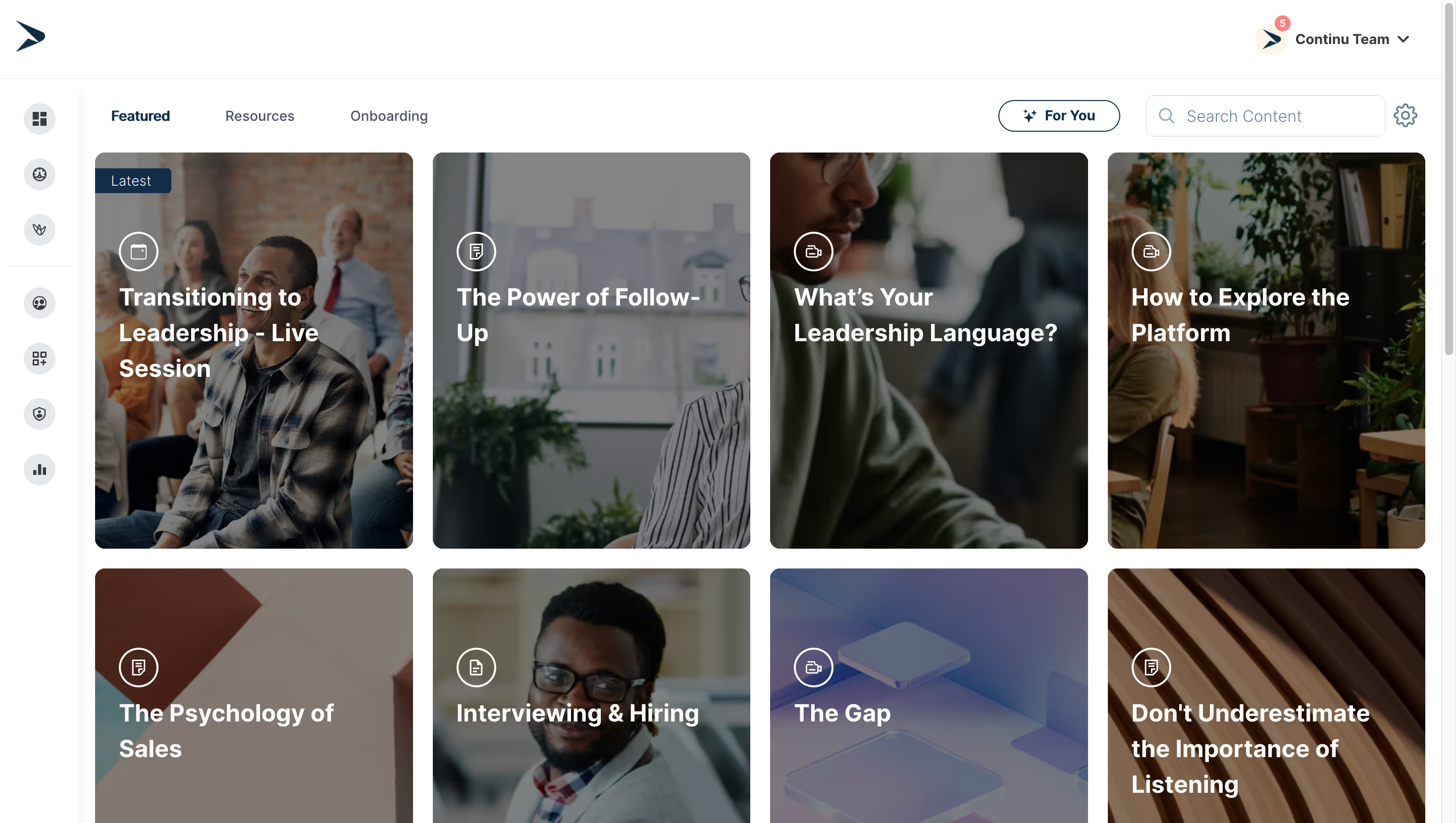
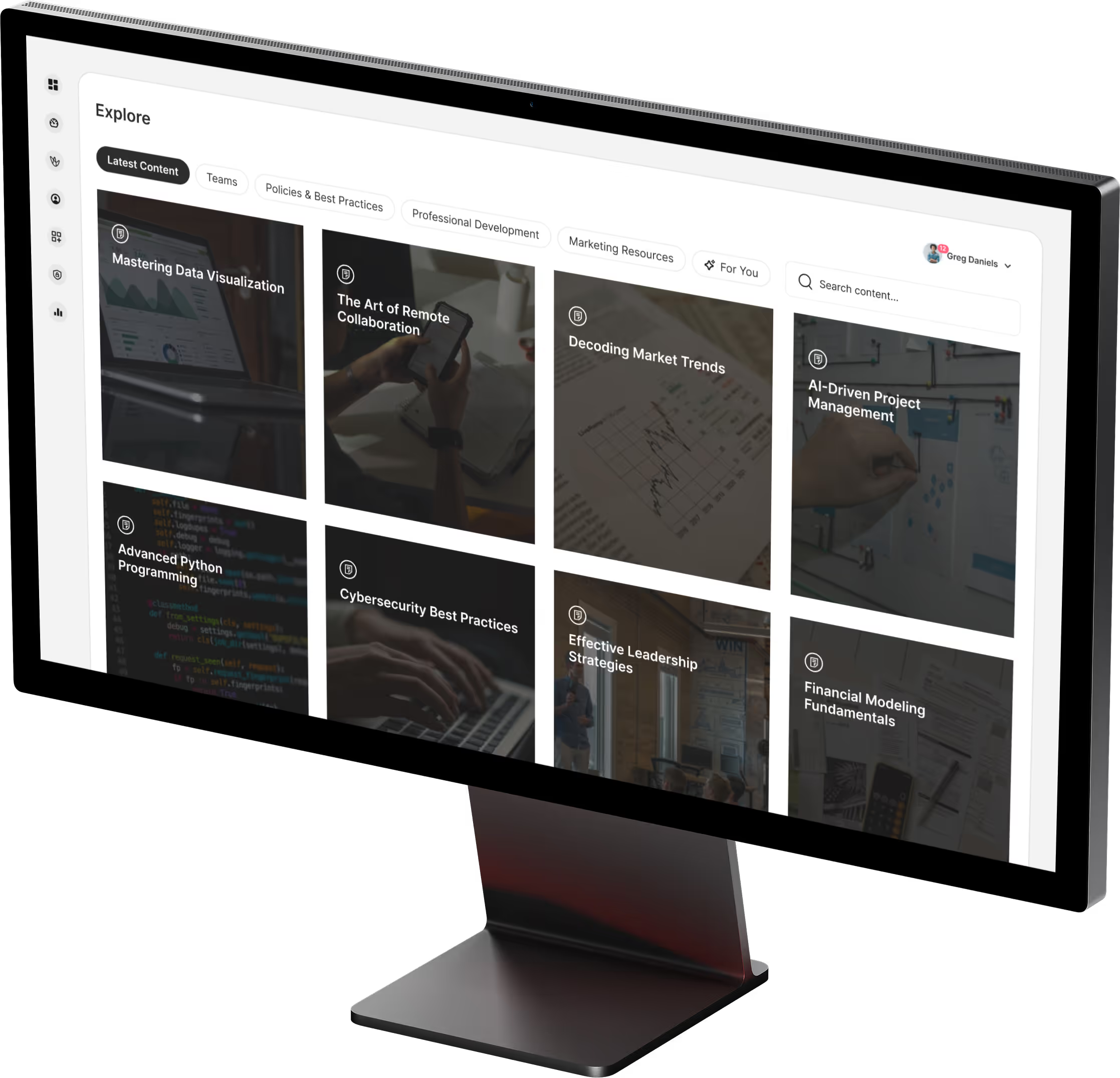
Continu is a modern all-in-one learning platform that helps mid to large-size organizations centralize employee, customer and partner training. It combines content authoring, workshops, journeys and assessments with smart automations and AI-powered analytics to boost engagement, reduce ramp-up time and save administrators hours.
Why I picked Continu
Continu is the top-ranked alternative thanks to its deep integrations with workplace tools, robust AI-powered reporting, ease-of-use for admins and learners, enterprise-grade features, and the ability to centralize learning for employees, customers, and partners into a single platform.
Continu is ideal for:
Mid-market & enterprise organizations training over 500 total users (employees, customers, and/or partners).
2. Learnworlds
4.7 (573)
Best for creating engaging interactive courses with video-based training
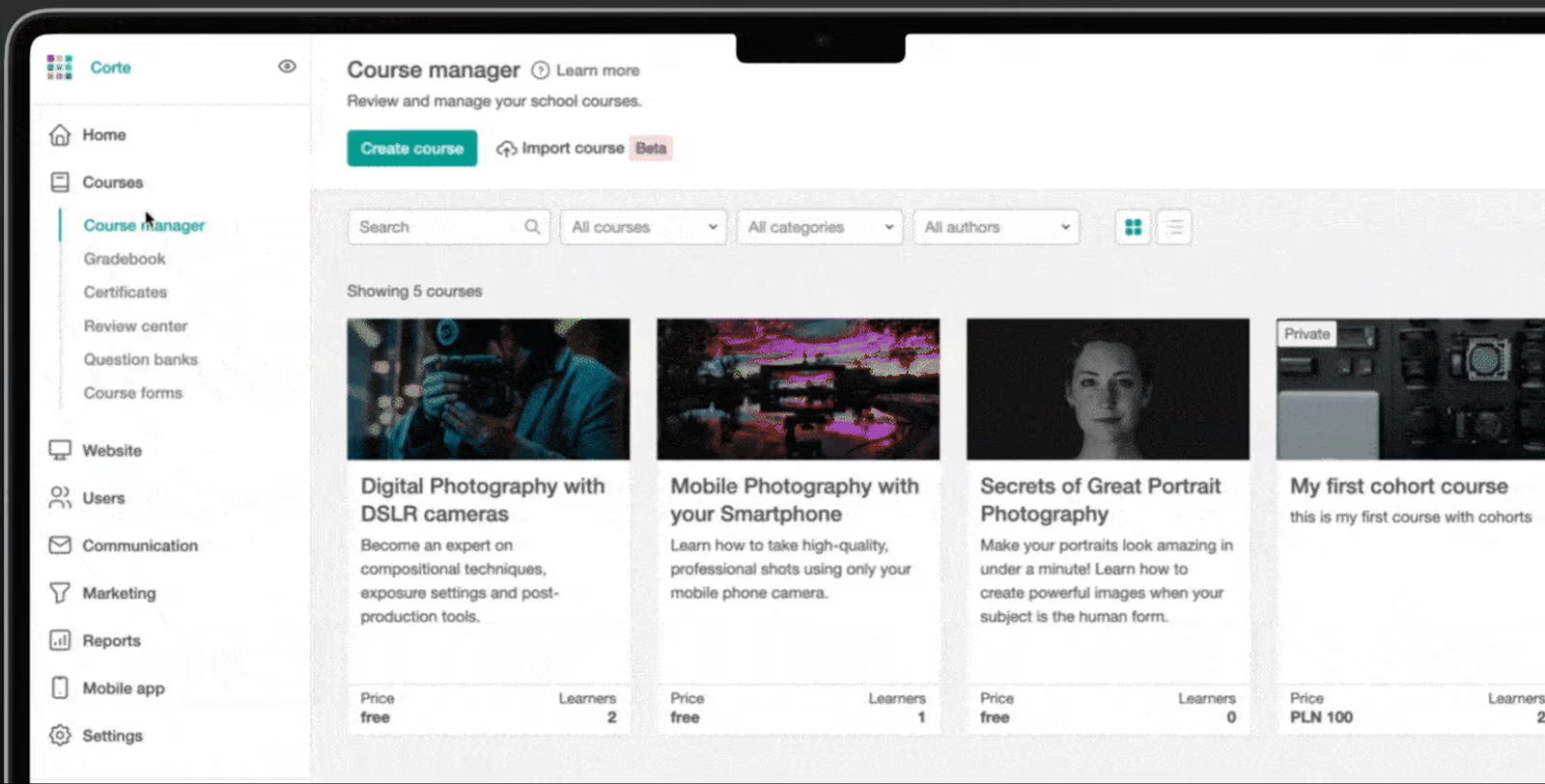
Course platform enabling organizations to design interactive video-based training and digital academies
Why I picked Learnworlds
Learnworlds earns its spot by offering powerful interactive video and multimedia course tools alongside customizable, branded learning portals and community features.
Learnworlds is ideal for:
Course creators, SMBs and educational organizations
3. Absorb LMS
4.6 (1443)
Best for scalable, AI-powered strategic learning
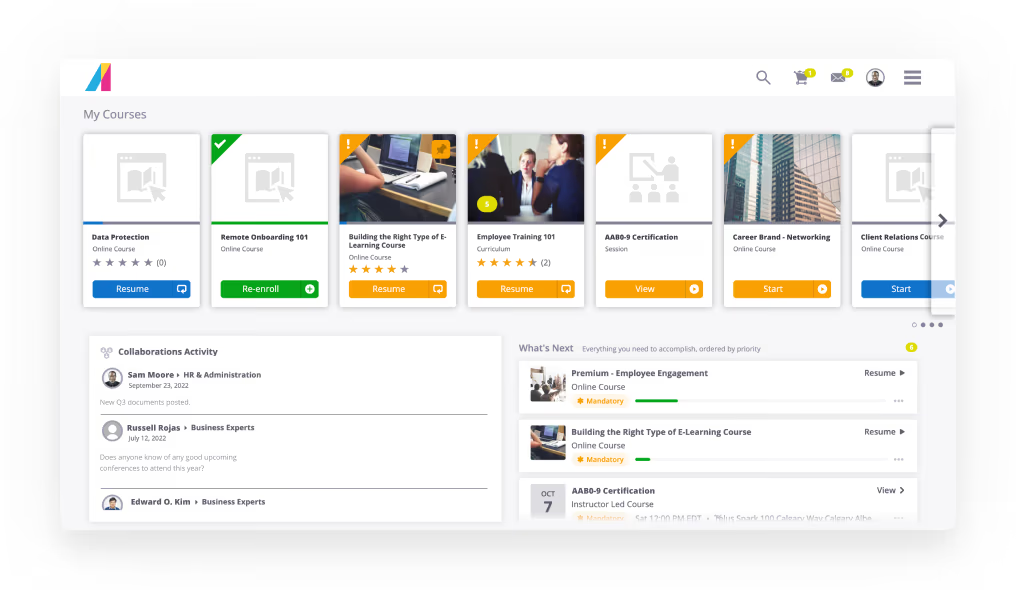
A cloud-based LMS combining AI-driven skills, personalized paths and multi-tenancy for global training.
Why I picked Absorb LMS
Absorb LMS is a solid choice thanks to its user-friendly interface and intuitive navigation and comprehensive features including advanced reporting, content library and eCommerce.
Absorb LMS is ideal for:
Businesses of all sizes, especially SMBs and enterprises
4. TalentLMS
4.6 (1982)
Best for cheap, scalable, and user-friendly learning management
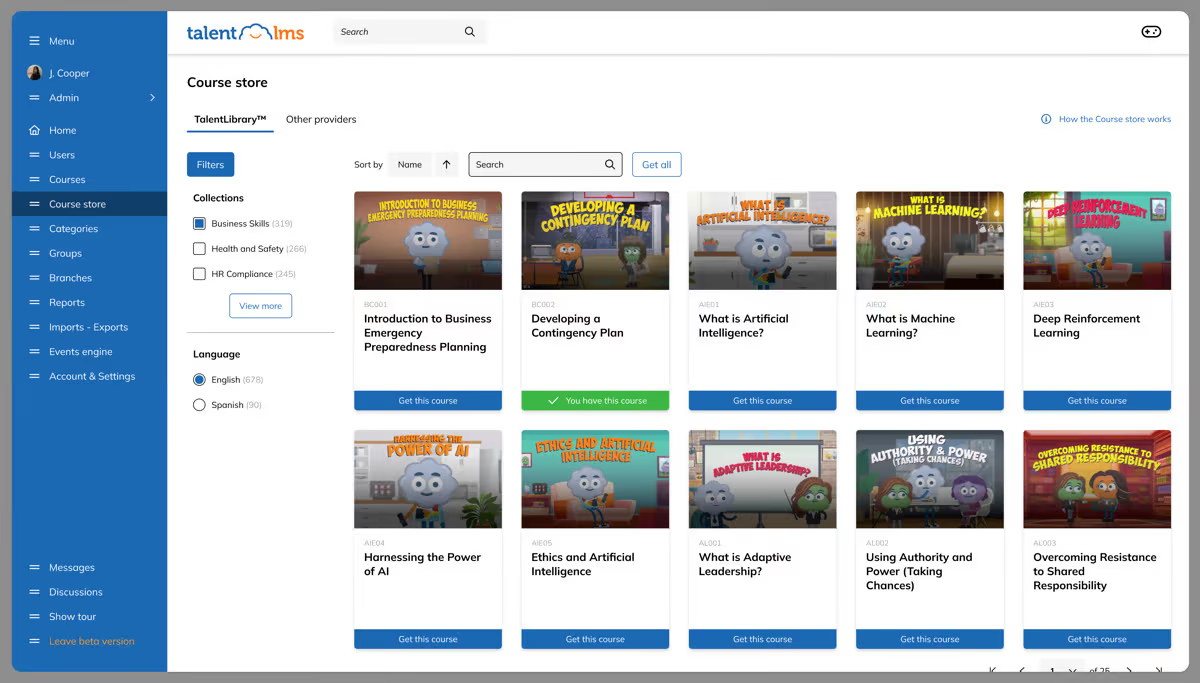
A cloud LMS with a forever free plan, AI course builder and built-in content library
Why I picked TalentLMS
TalentLMS is an excellent option for teams seeking affordable pricing and responsive customer support and large course library/AI course builder.
TalentLMS is ideal for:
Small to mid-sized teams (5–500 users) and growing businesses

5. Docebo

4.4 (1126)
Best for enterprise organizations training internal and external teams
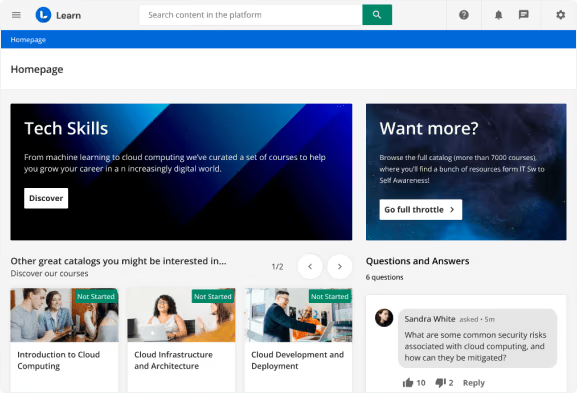
An AI-powered enterprise suite that automates personalized training delivery across multiple audiences
Why I picked Docebo
Docebo is a solid choice thanks to its enterprise-grade, highly customizable, scalable platform, and AI-driven automation.
Docebo is ideal for:
Mid-size to large enterprises with 250+ active learners
6. 360Learning
4.6 (1106)
Best for AI-powered collaborative learning
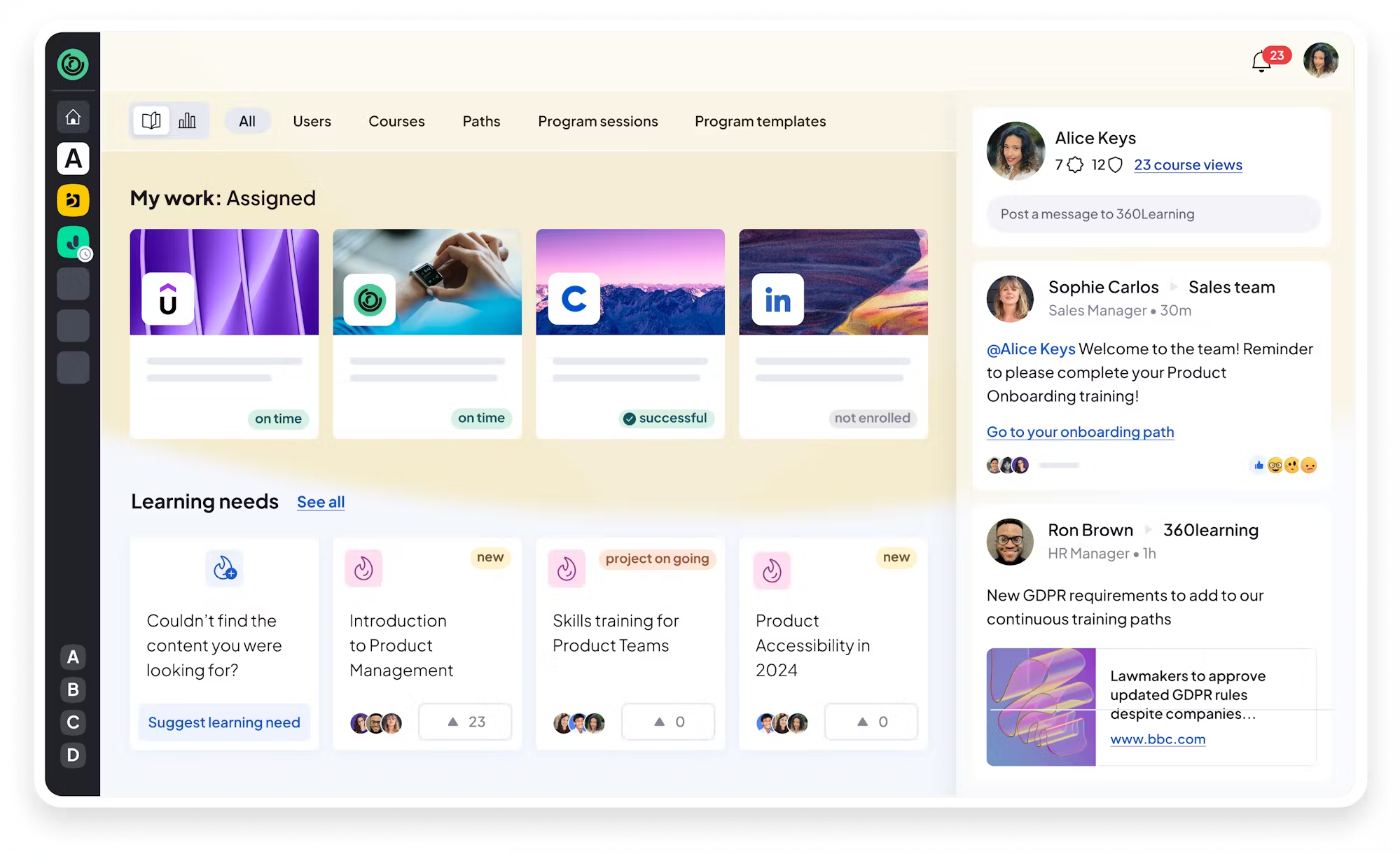
A collaborative LMS that turns subject-matter experts into course creators with real-time social learning.
Why I picked 360Learning
360Learning made the list as a great alternative because it combines user-friendly interface and intuitive authoring with engaging social learning features.
360Learning is ideal for:
Small to mid-market teams and scalable to enterprise
7. Tovuti
4.6 (497)
Best for AI-enabled course creation and user-friendly learning management
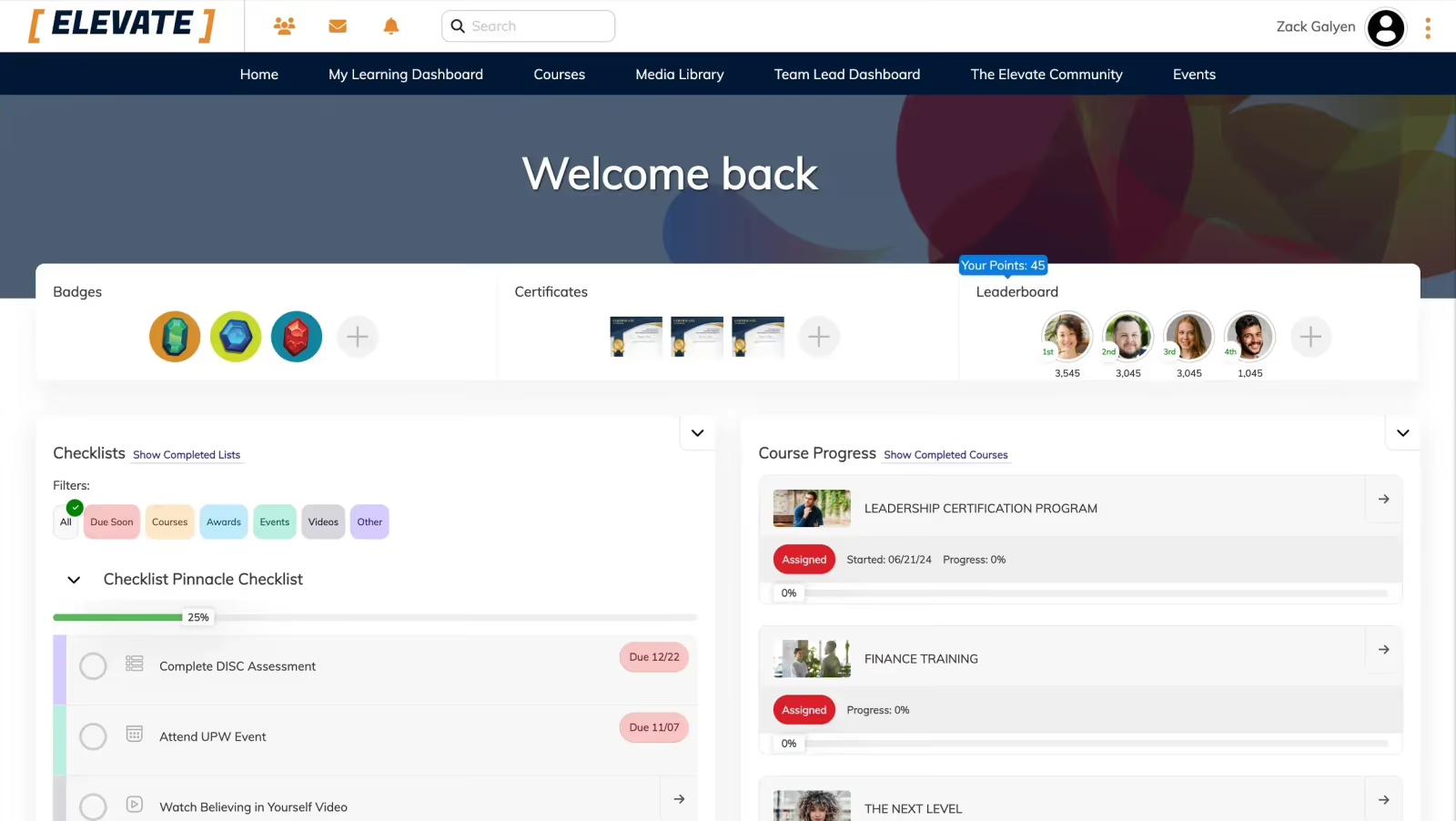
A cloud LMS with built-in authoring offering 40+ interactive content types and social learning
Why I picked Tovuti
Tovuti is a solid choice thanks to its integrated authoring tools and rich content library eliminate need and highly engaging interactive and gamified courses.
Tovuti is ideal for:
Mid-sized to enterprise organizations (50–5,000+ users)
8. Skilljar
4.6 (141)
Best for branded customer and employee training academies
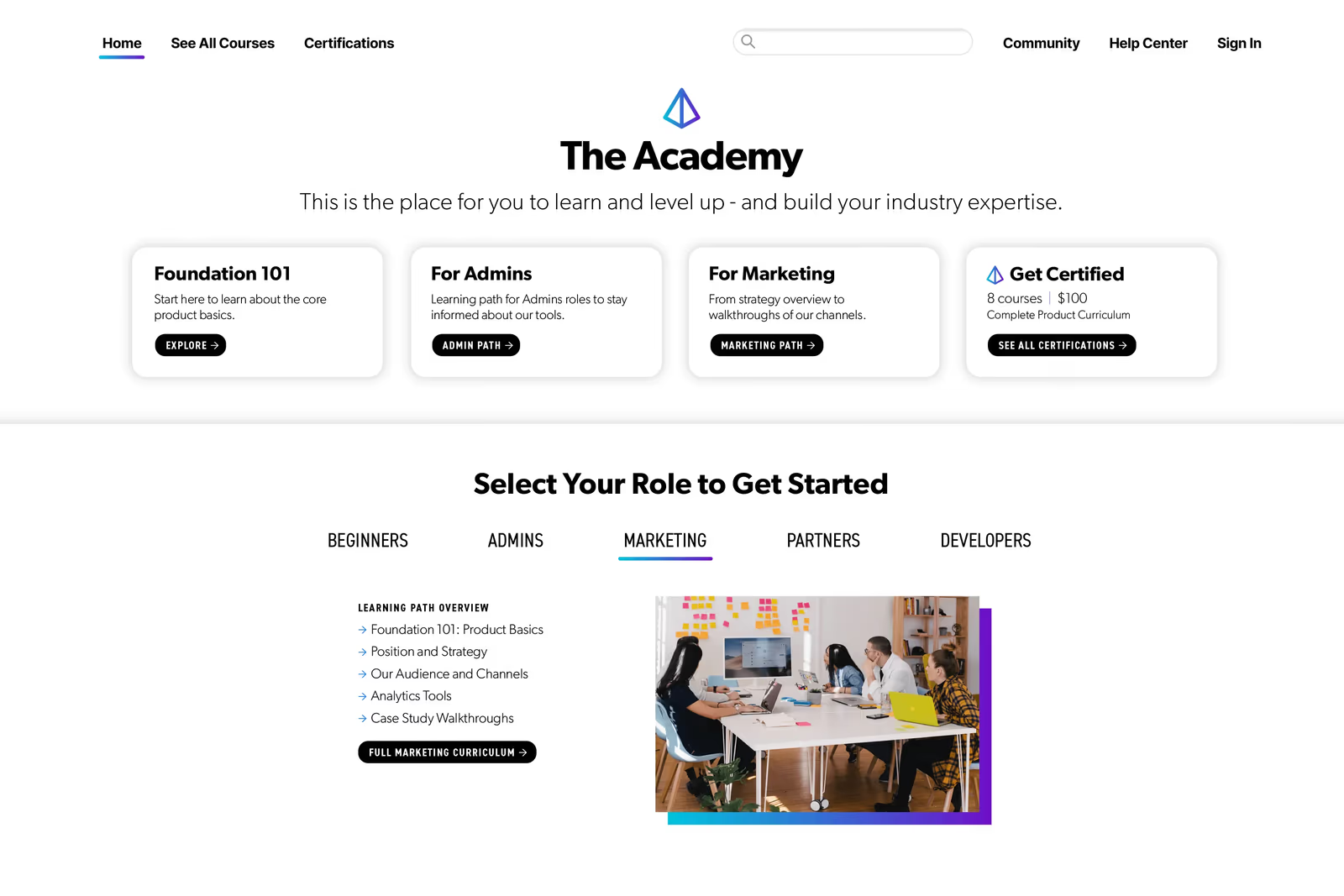
Enterprise-grade customer training platform with customizable academies and certifications
Why I picked Skilljar
Skilljar is a strong alternative that delivers highly customizable branded academies while providing robust CRM integrations and analytics.
Skilljar is ideal for:
Mid-sized to large B2B companies investing in customer education
9. Skyprep
4.7 (244)
Best for easy-to-use, quick-to-deploy training
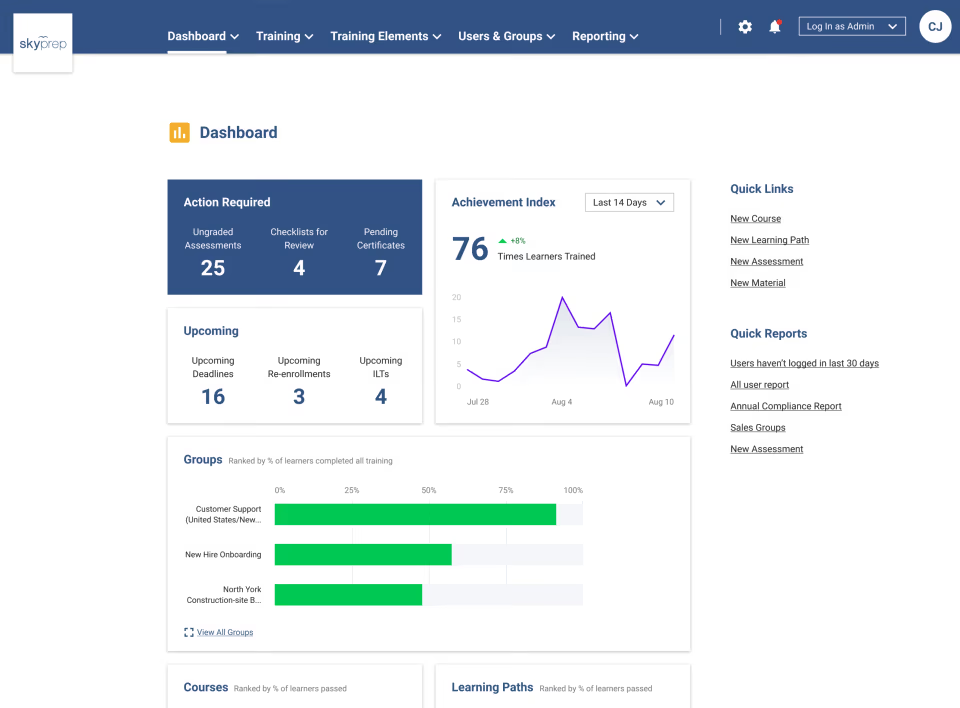
A cloud LMS with intuitive course creation and fully integrated virtual classrooms.
Why I picked Skyprep
Skyprep proves to be a solid choice with user-friendly interface and quick setup simplify course creation and administration and gamification and virtual classroom features enhance learner engagement.
Skyprep is ideal for:
Small to mid-sized businesses (up to 500 users)
10. Paradiso LMS

4.2 (250)
Best for AI-powered, customizable learning management

Flexible LMS with multi-tenant architecture, e-commerce and integration options
Why I picked Paradiso LMS
Paradiso LMS deserves consideration as an alternative thanks to highly customizable and multilingual and e-commerce features enable monetization.
Paradiso LMS is ideal for:
SMBs to mid-sized businesses
Choosing the Right Thinkific Alternative
The right Thinkific alternative depends on your organization's priorities. If you've outgrown basic course creation tools and need enterprise-grade capabilities, better options exist across the pricing spectrum.
Organizations switching from Thinkific typically gain immediate value through stronger automation (reducing admin time by 40-60%), deeper analytics (enabling data-driven program improvements), and more flexible customization (creating brand-consistent learning experiences).
Modern platforms also deliver faster implementation, better mobile experiences, and native integrations that reduce reliance on workarounds.
Top 3 Alternatives to Consider:
1. Continu – Best for Enterprise Organizations with Multiple Audiences
Continu delivers the comprehensive feature set Thinkific lacks while maintaining comparable ease of use. The platform's AI-powered conversational learning (through Eddy), Smart Segmentation™ for automatic content routing, and extensive white-label capabilities address every major limitation driving teams away from Thinkific.
Unlike Thinkific's basic course platform, Continu provides full learning commerce capabilities alongside enterprise LMS features—meaning organizations can monetize training through tiered subscriptions and one-time purchases while maintaining the advanced analytics, compliance tracking, and automation tools required for internal training programs. The unified platform approach eliminates the need for separate systems for employee training and external customer education.
Organizations consistently report 30,000+ hours saved annually through Continu's automation, 95%+ compliance completion rates, and significantly higher learner engagement. Implementation typically completes in under two weeks, with dedicated customer success support ensuring smooth migration from Thinkific.
2. TalentLMS – Best for Mid-Size Teams Prioritizing Simplicity
TalentLMS offers a cleaner, more intuitive experience than Thinkific with stronger automation and better reporting at similar pricing. The platform excels at internal employee training while maintaining the ease of use that made Thinkific appealing initially. Organizations appreciate transparent per-user pricing and faster time-to-value for straightforward learning programs.
Consider TalentLMS when you need reliable core LMS functionality without enterprise complexity or when budget constraints require cost-effective solutions that still improve on Thinkific's limitations.
3. Absorb LMS – Best for Compliance-Heavy Industries
Absorb LMS provides the enterprise-grade compliance, certification management, and audit capabilities that Thinkific fundamentally lacks. Organizations in healthcare, finance, manufacturing, or other regulated industries benefit from Absorb's sophisticated certification tracking, automated renewals, and regulatory reporting features.
Choose Absorb when compliance requirements are non-negotiable and you need an LMS purpose-built for industries where training documentation directly impacts operational licenses and legal standing.
Take the Next Step
Don't let Thinkific's limitations constrain your learning strategy. Modern LMS platforms deliver better outcomes at lower total costs—without sacrificing the ease of use that matters to your team.
Ready to see the difference? Book a demo to see how Continu can turn training into revenue.
Frequently Asked Questions
What is the best alternative to Thinkific?
Why do companies switch from Thinkific?
Is Thinkific good for enterprise organizations?
What is the process like when switching from Thinkific?