The 10 Best Alternatives to LearnUpon in 2026

By Keith Martin | Updated on April 23, 2026
LearnUpon alternatives are ranked using first-hand research from our advisory team and data from G2, Capterra, and Gartner Peer Insights. No paid placements.
Quick Summary
As a B2B GTM leader who's evaluated 20+ enterprise learning platforms, I've analyzed the best LearnUpon alternatives to help you find AI-assisted, corporate learning management software that fits your customization needs, mobile requirements, and budget without the feature limitations and pricing opacity that frustrate growing teams.
Organizations switching from LearnUpon avoid customization constraints and mobile performance issues while gaining deeper branding capabilities, transparent pricing, and advanced analytics—without sacrificing the ease of use and responsive support that drives results.
Table of Contents
Top 5 Alternatives Shortlist
If you’re thinking of switching from LearnUpon, here are the top options based on features, overall ratings, and user reviews:
1. Continu — Best for AI-powered, enterprise-scale learning focused on business results
2. 360Learning — Best for AI-powered collaborative learning
3. Absorb LMS — Best for scalable, AI-powered strategic learning
4. Docebo — Best for enterprise organizations training internal and external teams
5. CYPHER Learning — Best for personalized, user-friendly skills-based learning
LearnUpon has built a strong reputation in the corporate learning management space.
With 4.7/5 across 759+ reviews, outstanding customer support, and an intuitive multi-portal interface, it's a solid platform for teams prioritizing ease of use and structured training delivery.
But here's what we discovered after analyzing hundreds of user reviews and interviewing L&D leaders who've migrated away:
Customization constraints force workarounds. Organizations requiring tailored interfaces or unique workflows find LearnUpon's structural limitations restrict branding and administrative flexibility—especially without upgrading to higher-priced tiers.
Mobile app performance lags behind expectations. Remote teams relying on mobile learning report limited functionality and occasional performance issues that disrupt training completion and learner engagement.
Advanced analytics require premium pricing. Teams needing deep reporting capabilities or complex enterprise features discover these require expensive tier upgrades, making total costs harder to predict.
The good news?
The LMS landscape has evolved dramatically.
Modern platforms deliver AI-assisted learning capabilities at 40-60% lower costs, with faster implementation, deeper customization, and more stable mobile performance.
Below, you'll find 10 alternatives to LearnUpon ranging from affordable team solutions to enterprise platforms—each evaluated across pricing transparency, migration ease, feature completeness, and user experience.
Whether you're a 50-person startup or a 5,000-employee enterprise, there's a better-fit option here.
What is LearnUpon?
LearnUpon is a scalable learning management system that centralizes employee, customer and partner training across multiple portals. Its intuitive interface and responsive customer success team make it easy to onboard quickly. LearnUpon supports blended learning, webinars and SCORM content, with automation rules, reporting and integrations to manage training for internal and external audiences.
Core Philosophy
LearnUpon is designed for small to midsize organizations that prioritize structured training delivery across multiple audiences and regions. The platform emphasizes ease of use with a learner-centric design, offering personalized learning portals and strong customer service.
Key Features and Capabilities
Multi-Portal Architecture with Central Administration: LearnUpon allows organizations to create dedicated training portals for different audiences—employees, customers, partners—while maintaining centralized control. This enables tailored learning experiences without duplicating administrative effort across business units.
Blended Learning and Automation: The platform combines self-paced courses, webinars, and SCORM content with dynamic rules that automate assignments and reminders. L&D teams reduce manual work by setting triggers that enroll learners, send notifications, and track completion automatically.
Responsive Customer Support and Easy Implementation: LearnUpon is known for fast deployment and hands-on support. Organizations typically launch within weeks rather than months, with dedicated success managers guiding configuration and rollout.
The platform integrates with Zoom, Microsoft Teams, Salesforce, Slack, and Workday to connect training with existing workflows.
Common Use Cases
Organizations typically deploy LearnUpon for:
Employee Onboarding and Development: Companies use LearnUpon to standardize new hire training across locations, combining orientation content, compliance modules, and role-specific learning paths into automated journeys.
Customer Education: SaaS companies and professional services firms create customer-facing portals that deliver product training, certification programs, and support resources to drive adoption and reduce churn.
Partner Enablement: Organizations with channel partners or franchisees use dedicated portals to train external stakeholders on products, processes, and compliance requirements while maintaining brand consistency.
Biggest Strengths
Organizations can expect to see the following benefits of using LearnUpon:
Outstanding Customer Service and Support: LearnUpon's support team consistently earns praise for responsiveness, proactive guidance, and genuine partnership during implementation and ongoing operations.
Intuitive Interface with Multi-Portal Flexibility: The learner and admin experiences prioritize simplicity, reducing training time and driving higher adoption rates across diverse user groups.
Powerful Automation and Reporting Features: Dynamic rules automate repetitive tasks while built-in reporting provides visibility into completion rates, engagement metrics, and compliance status.
Pricing and Free Trial
Pricing Structure:
- Starts around $800–$1,000/month for up to 100 users
- Custom subscription pricing based on active learners, portals, and feature tier
- Enterprise pricing requires custom quotes for larger teams
Free Trial: Demo only—no self-service trial available.
Important Note: Pricing requires custom quotes, and several users report that advanced features and customization options require higher-tier plans, making total costs difficult to predict upfront.
LearnUpon Review Platform Source
 View LearnUpon’s reviews on G2 →
 View LearnUpon’s reviews on Capterra →
 View LearnUpon’s reviews on Gartner Peer Insights →
*LearnUpon’s overall rating and reviews pulled from these sources may have changed since this article was created. Data was pulled early December 2025 and will be updated quarterly.
Why Look for an Alternative to LearnUpon?
Organizations don't casually research LearnUpon alternatives.
You're here because something isn't working—whether it's budget constraints, customization limitations, or technical friction slowing your training programs.
After analyzing 759+ user reviews across G2, Capterra, and Gartner Peer Insights, clear patterns emerge.
Here's what drives L&D teams to evaluate other platforms:
The 3 Biggest LearnUpon Limitations
1. Limited Customization and Feature Gating
Organizations requiring tailored interfaces, unique workflows, or deep branding capabilities frequently hit walls with LearnUpon. The platform's customization options are restricted at lower pricing tiers, forcing teams to either accept rigid structures or pay significantly more for flexibility. For enterprises with complex training requirements, these limitations create frustrating workarounds.
What Users Report:
"We couldn't match the platform to our corporate branding standards without upgrading to a tier that doubled our costs."
"Every time we needed a custom workflow, we were told it required the enterprise plan or wasn't possible at all."
Teams discover that features advertised during sales demos often require premium pricing to unlock, creating budget surprises after initial implementation.
Better Alternative: Platforms like Continu offer extensive white-labeling and workflow flexibility at transparent pricing tiers, eliminating the feature gating that LearnUpon restricts.
2. Mobile App Performance and Functionality Gaps
Remote teams and field workers depending on mobile learning face significant friction with LearnUpon's mobile experience. The app has limited functionality compared to the desktop version, and performance lags disrupt training completion. For organizations with distributed workforces, this gap directly impacts learning outcomes.
What Users Report:
"Our field technicians kept abandoning mobile courses because the app would freeze or lose their progress."
"The mobile app feels like an afterthought—basic features from the desktop version just aren't there."
Organizations report that learner engagement drops when mobile experiences don't match desktop quality, particularly for deskless workers who rely exclusively on phones or tablets.
Better Alternative: Platforms like TalentLMS and Absorb LMS deliver native mobile apps with full functionality and offline access that LearnUpon's mobile experience lacks.
3. Pricing Opacity and Cost Escalation
LearnUpon's custom pricing model makes budgeting difficult. Starting costs of $800–$1,000/month seem reasonable for 100 users, but scaling beyond that point often brings unexpected increases. Advanced analytics, additional portals, and enterprise features all carry premium pricing that isn't transparent upfront.
What Users Report:
"We planned our budget around the initial quote, then discovered the reporting features we needed cost 40% more."
"Getting a straight answer on what our costs would look like at 500 users took three weeks of back-and-forth."
Small and midsize organizations frequently discover that LearnUpon's total cost exceeds competitors offering similar capabilities at published per-user rates.
The Bottom Line
If you're experiencing any of these challenges, the alternatives below address these specific pain points.
Use our comparison table to identify which platforms solve your unique concerns while maintaining the ease of use and support features that drew you to LearnUpon initially.
The right alternative delivers customization flexibility, mobile performance, and pricing transparency without sacrificing the intuitive experience your team values.
LearnUpon Alternatives Comparison Table
The table below summarizes our list of the best alternatives, ranked using our advisory team’s first-hand research and data from trusted sources like G2, Capterra, and Gartner Peer Insights.

1. Continu

4.6 (727 reviews)
Yes
Custom quotes based on number of learners and tier
View pricing details →
7. TalentLMS

4.6 (1982)
Yes
Plans start at $69/month (annual) for 40 users; Core plan $119/month; Pro plan $449/month
View pricing details →
10. Sana

4.9 (104)
No
$13/user/month with 300-user minimum; enterprise custom pricing
View pricing details →The Top 10 Alternatives Reviewed
Explore our in-depth breakdown of the top alternatives to LearnUpon, ranked by their impact on your organization’s learning compared to LearnUpon’s platform.
1. Continu
4.6 (727 reviews)
Best for AI-powered, enterprise-scale learning focused on business results
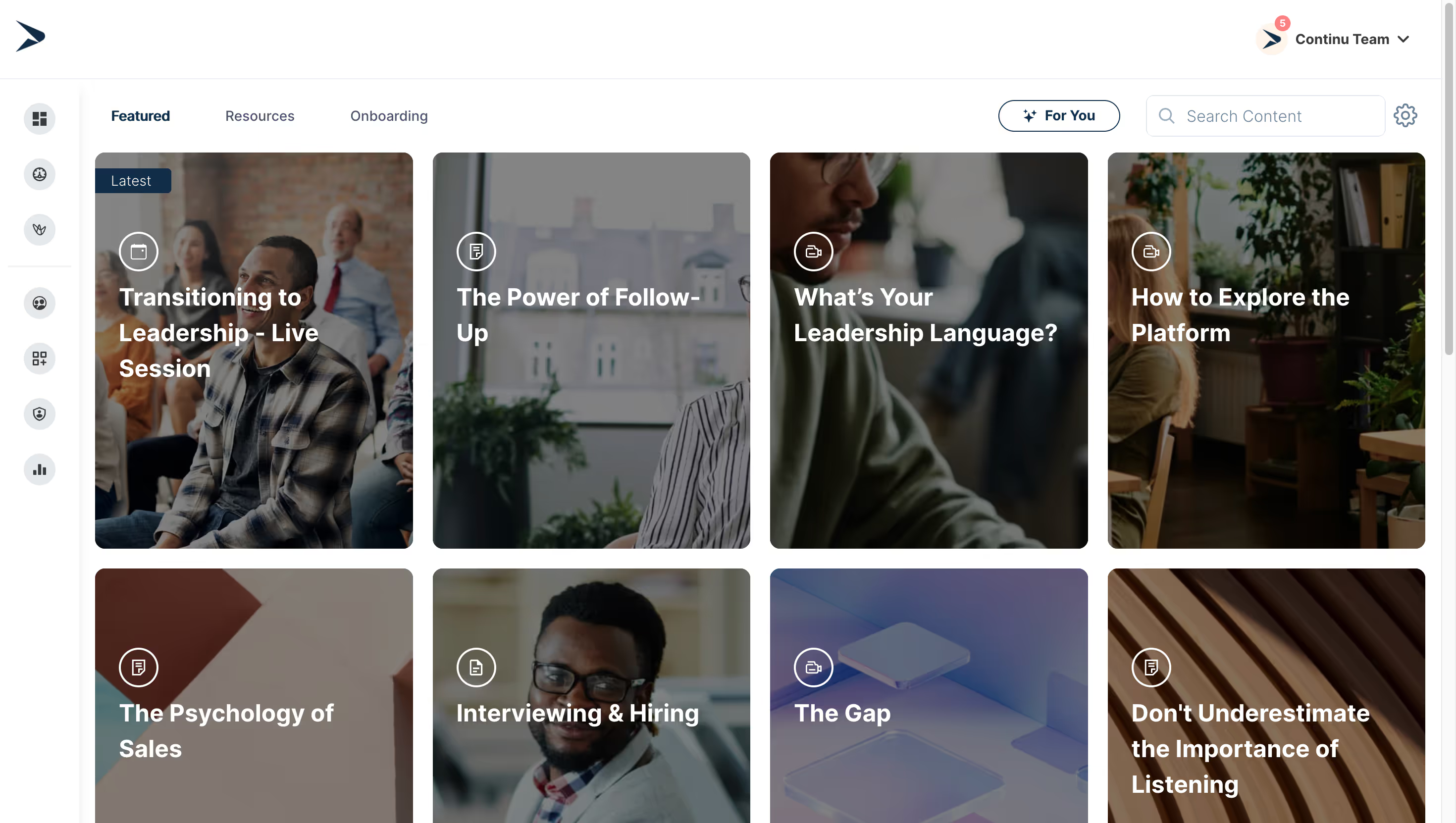
Continu is a modern all-in-one learning platform that helps mid to large-size organizations centralize employee, customer and partner training. It combines content authoring, workshops, journeys and assessments with smart automations and AI-powered analytics to boost engagement, reduce ramp-up time and save administrators hours.
Why I picked Continu
Continu is the top-ranked alternative thanks to its deep integrations with workplace tools, robust AI-powered reporting, ease-of-use for admins and learners, enterprise-grade features, and the ability to centralize learning for employees, customers, and partners into a single platform.
Continu is ideal for:
Mid-market & enterprise organizations training over 500 total users (employees, customers, and/or partners).

2. 360Learning
4.6 (1106)
Best for AI-powered collaborative learning
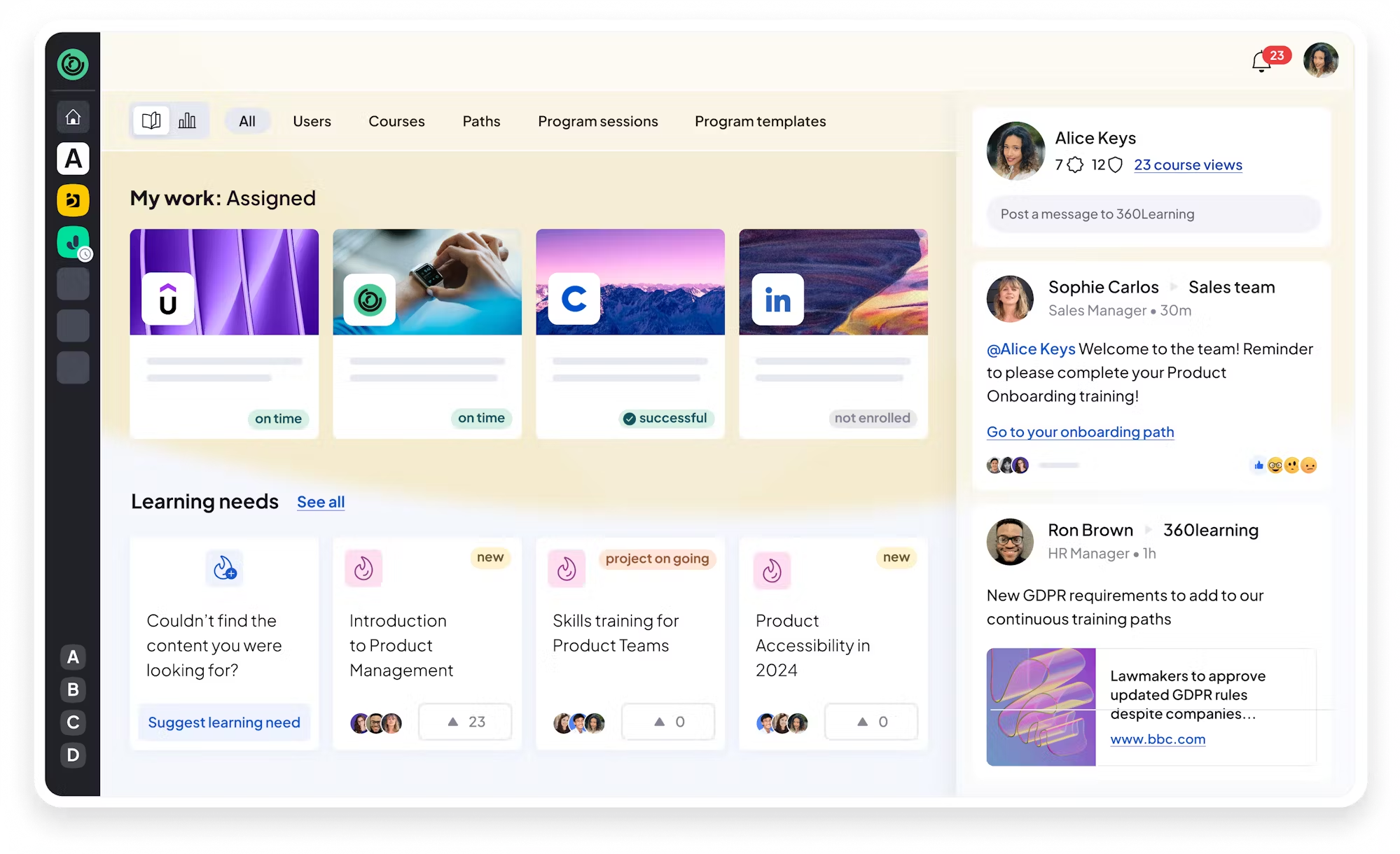
A collaborative LMS that turns subject-matter experts into course creators with real-time social learning.
Why I picked 360Learning
360Learning made the list as a great alternative because it combines user-friendly interface and intuitive authoring with engaging social learning features.
360Learning is ideal for:
Small to mid-market teams and scalable to enterprise

3. Absorb LMS
4.6 (1443)
Best for scalable, AI-powered strategic learning
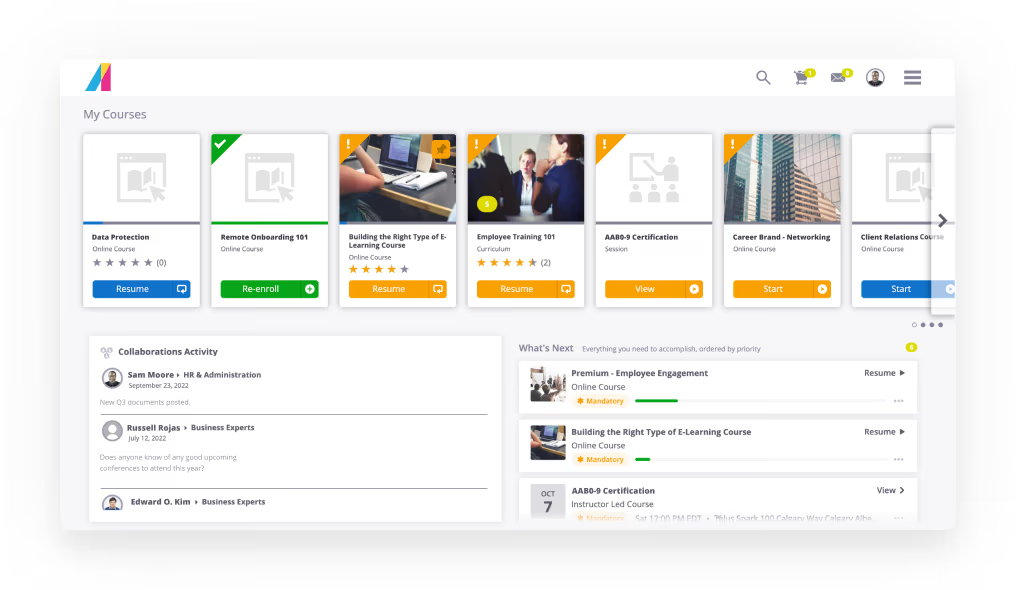
A cloud-based LMS combining AI-driven skills, personalized paths and multi-tenancy for global training.
Why I picked Absorb LMS
Absorb LMS is a solid choice thanks to its user-friendly interface and intuitive navigation and comprehensive features including advanced reporting, content library and eCommerce.
Absorb LMS is ideal for:
Businesses of all sizes, especially SMBs and enterprises

4. Docebo

4.4 (1126)
Best for enterprise organizations training internal and external teams
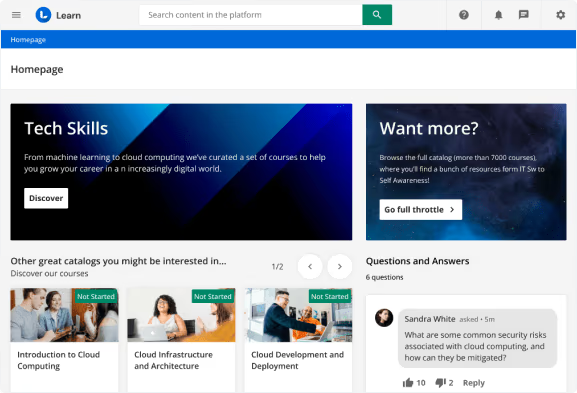
An AI-powered enterprise suite that automates personalized training delivery across multiple audiences
Why I picked Docebo
Docebo is a solid choice thanks to its enterprise-grade, highly customizable, scalable platform, and AI-driven automation.
Docebo is ideal for:
Mid-size to large enterprises with 250+ active learners

5. CYPHER Learning
4.5 (458)
Best for personalized, user-friendly skills-based learning
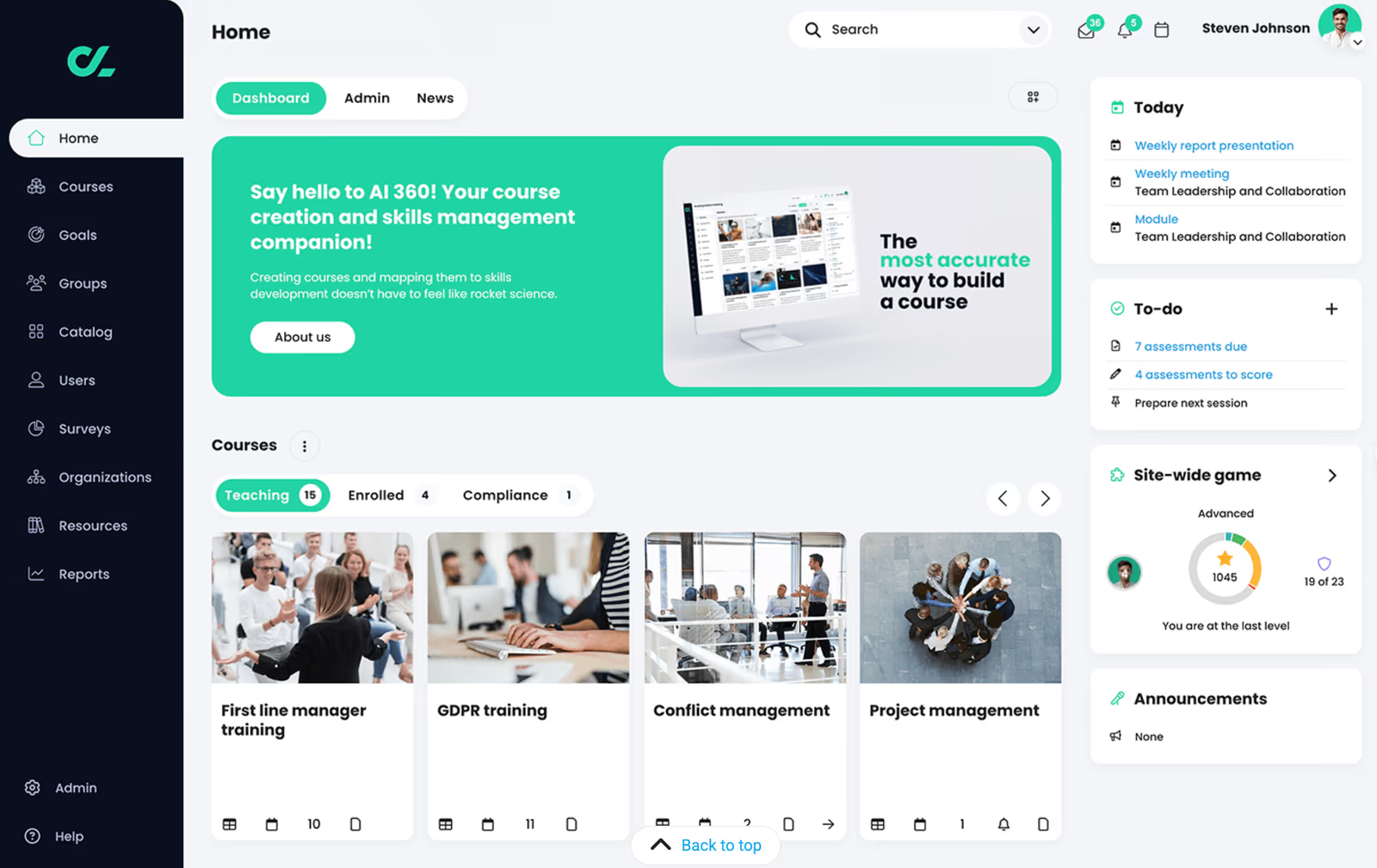
A unified platform merging LMS, LXP and AI content development with adaptive learning paths
Why I picked CYPHER Learning
CYPHER Learning made the list as a great alternative because it combines AI-powered adaptive learning and personalized recommendations engage learners with all-in-one platform.
CYPHER Learning is ideal for:
Mid-sized to large enterprises and academic institutions

6. iSpring Learn
4.4 (296)
Best for rapid LMS deployment with compliance and assessment features
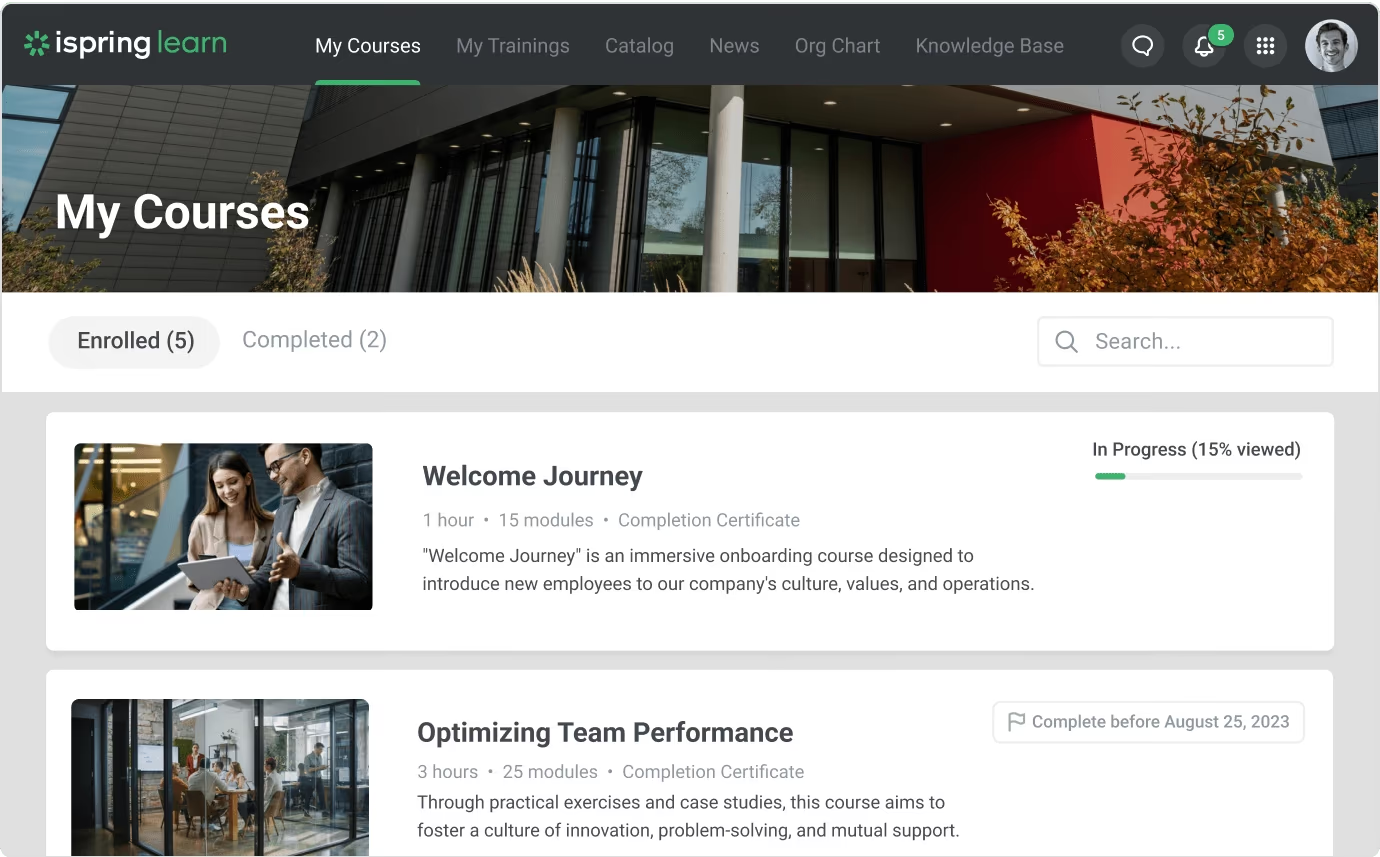
An all-in-one LMS with PowerPoint-based course authoring and offline mobile learning
Why I picked iSpring Learn
iSpring Learn ranks as a decent option for its seamless integration and flexible pay-per-active-user pricing and responsive customer support.
iSpring Learn is ideal for:
Small to mid-sized organizations needing scalable training
7. TalentLMS
4.6 (1982)
Best for cheap, scalable, and user-friendly learning management
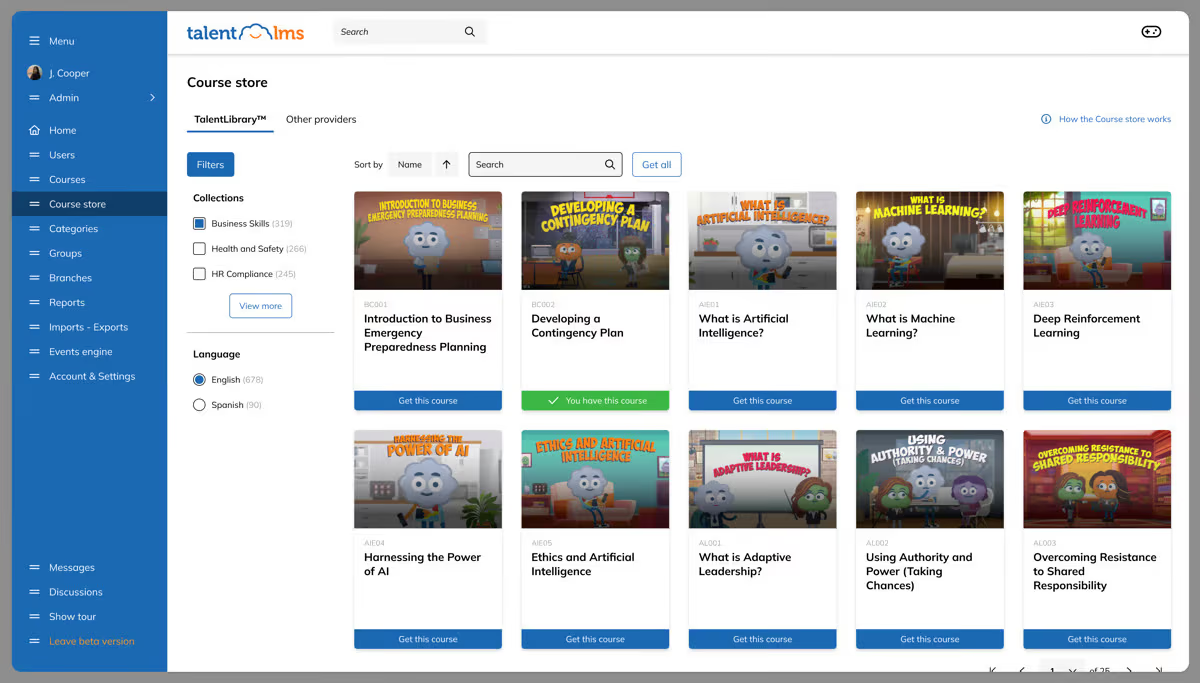
A cloud LMS with a forever free plan, AI course builder and built-in content library
Why I picked TalentLMS
TalentLMS is an excellent option for teams seeking affordable pricing and responsive customer support and large course library/AI course builder.
TalentLMS is ideal for:
Small to mid-sized teams (5–500 users) and growing businesses

8. Litmos
4.5 (659)
Best for quick implementation and ease of use
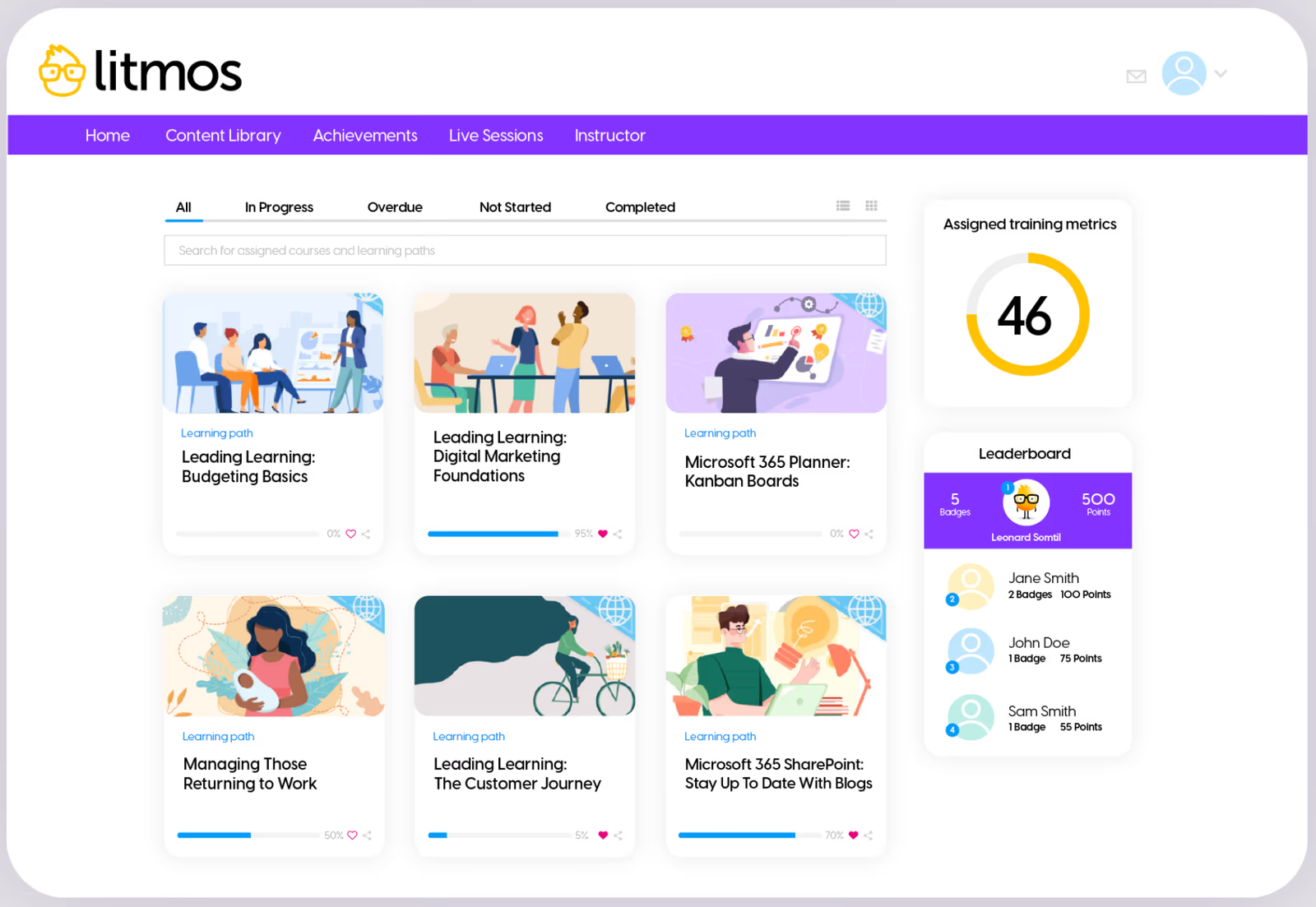
Litmos is a cloud-based LMS offering pre-built training content, gamification, and mobile access.
Why I picked Litmos
Litmos is a good alternative that delivers feature-rich platform while providing user-friendly interface and mobile access.
Litmos is ideal for:
Mid-market and enterprise organizations
9. Bridge LMS
4.3 (413)
Best for cloud-based employee development and skills-mapping
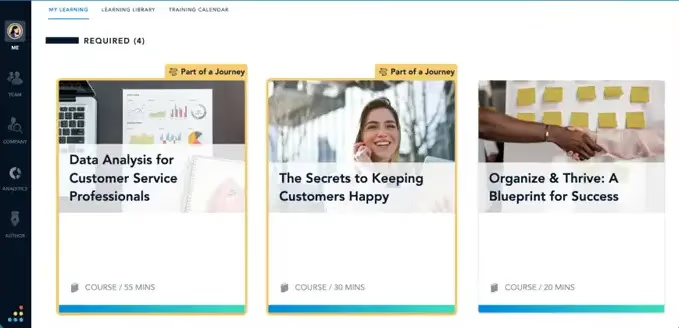
A cloud platform combining learning with 32,000+ skills mapped to job market data for gap analysis.
Why I picked Bridge LMS
Bridge LMS made the cut by combining integrated skills database with a wide range of training types and external learners.
Bridge LMS is ideal for:
Mid-market to enterprise
10. Sana
4.9 (104)
Best for AI-native, unified learning needs
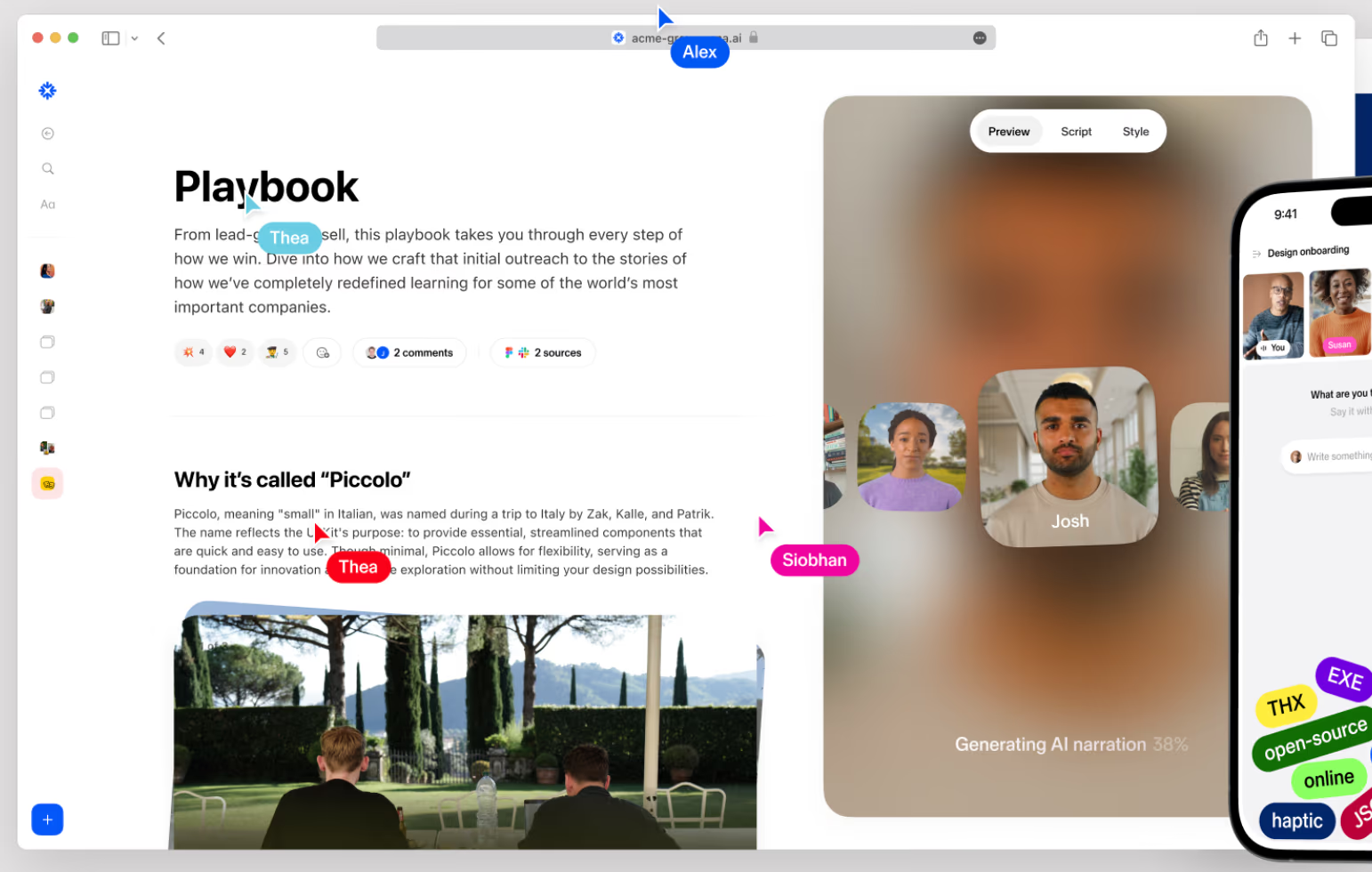
An AI-native platform consolidating LMS, LXP, authoring and virtual classrooms with generative content
Why I picked Sana
Sana is a solid choice thanks to its intuitive AI-native interface, powerful AI-driven search, and personalization delivering relevant content quickly.
Sana is ideal for:
Mid‑market and large organizations (300+ users) looking for AI-powered learning
Making the Switch from LearnUpon
LearnUpon established itself as a user-friendly option for multi-audience training, but it's not the only platform delivering AI-assisted learning capabilities—and often not the best fit for growing organizations.
The alternatives above offer similar ease of use at lower price points, with deeper customization, transparent pricing, and better mobile performance.
Organizations switching from LearnUpon typically achieve:
- 40-60% cost savings with transparent per-user pricing
- Faster implementation timelines with comparable support quality
- Higher admin productivity through more flexible workflows
- Better learner adoption through native mobile experiences
Your best alternative depends on your specific priorities:
For most organizations focused on business outcomes: Continu
Continu delivers AI-powered conversational learning across Slack and Teams with transparent pricing and extensive customization—addressing LearnUpon's core limitations while advancing beyond traditional LMS functionality with features like Eddy, the AI learning agent that provides instant answers from your training content.
For teams prioritizing budget and simplicity: TalentLMS
TalentLMS offers published per-user pricing starting at $69/month with full feature access and strong mobile performance that LearnUpon restricts to premium tiers.
For companies focusing on compliance and scale: Absorb LMS
Absorb LMS provides advanced compliance tracking, deep analytics, and native mobile apps that extend beyond LearnUpon's mid-market focus.
Ready to explore better alternatives?
Use our comparison table above to shortlist 2-3 platforms that match your requirements.
Schedule demos focusing on your specific pain points with LearnUpon.
Request transparent pricing for your team size to avoid surprises.
Run trials with your actual admin team and learners before committing.
The right platform delivers learning impact without the customization constraints.
Frequently Asked Questions
What is the best alternative to LearnUpon?
Why would an organization switch from LearnUpon to another platform?
What is the most commonly mentioned problem with LearnUpon?
What do organizations typically see when they switch from LearnUpon?