The 10 Best Alternatives to Sana in 2026

By Keith Martin | Updated on April 23, 2026
Sana alternatives are ranked using first-hand research from our advisory team and data from G2, Capterra, and Gartner Peer Insights. No paid placements.
Quick Summary
As a B2B GTM leader who's evaluated 50+ enterprise learning platforms, I've analyzed the best Sana alternatives to help you find AI-powered learning platforms that fit your budget, technical requirements, and training goals without the 300-user minimums, limited configurability, or sparse integration ecosystem that frustrate growing teams.
Organizations switching from Sana avoid expensive user minimums and limited customization while gaining deeper compliance capabilities, extensive integration options, and more flexible pricing models—without sacrificing the AI-powered personalization that drives results.
Table of Contents
Top 5 Alternatives Shortlist
If you’re thinking of switching from Sana, here are the top options based on features, overall ratings, and user reviews:
1. Continu — Best for AI-powered, enterprise-scale learning focused on business results
2. Workramp — Best for AI-first, intuitive learning experiences
3. Docebo — Best for enterprise organizations training internal and external teams
4. Absorb LMS — Best for scalable, AI-powered strategic learning
5. 360Learning — Best for AI-powered collaborative learning
Sana has built a strong reputation as an AI-native learning platform.
With 4.9 stars across 104+ reviews, a unified platform approach that consolidates LMS, LXP, authoring tools, and virtual classrooms, and powerful AI-driven search and personalization, it's a solid platform for teams prioritizing next-generation learning experiences.
But here's what we discovered after analyzing hundreds of user reviews and interviewing L&D leaders who've migrated away:
- High user minimums create budget barriers: The 300-user minimum at $13/user/month means teams below this threshold face $46,800 annual commitments regardless of actual headcount. Growing organizations need flexibility to scale gradually without massive upfront investments.
- Limited configurability restricts workflows: Teams with complex compliance requirements, custom certification paths, or specialized training workflows find Sana's streamlined approach too rigid. Enterprise organizations need the ability to customize workflows, create unique learning paths, and configure the platform to match existing processes.
- Sparse integration ecosystem limits connectivity: Compared to established LMS platforms with hundreds of native integrations, Sana's smaller third-party ecosystem means more manual workarounds. Organizations using specialized HRIS systems, industry-specific content libraries, or niche enterprise tools struggle to create a seamlessly connected learning environment.
The good news?
The LMS landscape has evolved dramatically.
Modern platforms deliver AI-powered learning capabilities at 40-60% lower costs, with faster implementation, deeper customization, and more stable performance.
Below, you'll find 10 alternatives to Sana Learn ranging from affordable team solutions to enterprise platforms—each evaluated across pricing transparency, migration ease, feature completeness, and user experience.
Whether you're a 50-person startup or a 5,000-employee enterprise, there's a better-fit option here.
What is Sana Learn?
Sana is an AI-native learning platform that consolidates the corporate learning stack into one system. It blends LMS, LXP, course authoring, and virtual classrooms with AI-driven automation to deliver personalized learning journeys, smart search, and generative content. Learners and admins benefit from intuitive interfaces, polls, quizzes, reflection cards, and real-time analytics that free up administrators by automating enrollment and reminders.
Founded with backing from world-leading investors, the platform serves organizations across tech, finance, healthcare, and professional services.
Core Philosophy
Sana emphasizes personalized, interactive, and collaborative learning experiences while automating training initiatives and centralizing organizational knowledge management. The platform is built on AI technology to enhance engagement and learning outcomes through a unified, next-generation approach.
Key Features and Capabilities
AI-Powered Course Authoring & Content Generation: Sana's generative AI capabilities allow L&D teams to create engaging courses quickly by automatically generating content, quizzes, and interactive elements. This dramatically reduces course development time while maintaining high-quality, personalized learning experiences that adapt to individual learner needs.
Personalized Adaptive Learning & Smart Search: The platform's intelligent search and recommendation engine analyzes learner behavior, preferences, and knowledge gaps to deliver relevant content proactively. Employees discover the right training at the right time without manual curation, increasing engagement and knowledge retention across the organization.
End-to-End Automation & Analytics: Automated enrollment workflows, smart reminders, and real-time dashboards eliminate repetitive administrative tasks while providing visibility into learning progress, completion rates, and knowledge gaps. L&D teams can focus on strategic initiatives rather than manual data entry and tracking.
The platform integrates with Slack, HRIS systems, SCORM/xAPI, Zoom, and Google Workspace to enable knowledge sharing and streamline learning workflows.
Common Use Cases
Organizations typically deploy Sana for:
Employee Onboarding and Development: Fast-growing tech companies and professional services firms leverage Sana's AI-powered authoring to create personalized onboarding journeys that adapt to different roles and departments. New hires receive relevant content automatically based on their position, location, and learning pace.
Knowledge Management and Self-Service Learning: Organizations with distributed teams use Sana's smart search capabilities to centralize company knowledge and enable employees to find answers instantly. The AI-driven recommendations surface relevant documentation, training modules, and best practices without manual searching.
Compliance and Skills Training: Healthcare organizations and financial services firms deploy Sana for mandatory compliance training with automated reminders and tracking. The platform's analytics dashboards provide real-time visibility into completion rates and identify knowledge gaps before audits.
Sana's Biggest Strengths
Sana excels in three key areas that set it apart:
1. Intuitive AI-Native Interface: The platform makes content creation and navigation simple through a modern, clean interface that feels natural to both learners and administrators. Teams report significantly shorter learning curves compared to traditional LMS platforms, with minimal training required for adoption.
2. Powerful AI-Driven Search and Personalization: Sana's intelligent search engine delivers relevant content quickly by understanding context and learner intent. The system proactively recommends courses, documents, and resources based on role, recent activities, and knowledge gaps—creating a Netflix-like discovery experience for learning.
3. Responsive, Proactive Customer Support: Users consistently highlight Sana's customer success team as a differentiator, noting quick response times, proactive check-ins, and genuine partnership throughout implementation and beyond. The support team helps organizations maximize platform value rather than simply answering technical questions.
Sana Learn Pricing
Sana operates on a per-user subscription model with two primary tiers:
Core Plan: Starting at $13/user/month with a 300-user minimum ($46,800 annually). This plan includes AI-powered course authoring, personalized learning paths, smart search, automated workflows, analytics dashboards, and standard integrations.
Enterprise Plan: Custom pricing for organizations requiring advanced features, dedicated support, enhanced security controls, and additional customization options. Contact Sana sales for detailed quotes based on specific requirements.
Important Considerations: The 300-user minimum requirement means smaller organizations or teams with phased rollout plans will pay for unused licenses. There is no free trial available, requiring organizations to commit based on demos and sales conversations rather than hands-on evaluation.
Sana Review Platform Source
 View Sana’s reviews on G2 →
 View Sana’s reviews on Capterra →
 View Sana’s reviews on Gartner Peer Insights →
*Sana’s overall rating and reviews pulled from these sources may have changed since this article was created. Data was pulled early December 2025 and will be updated quarterly.
Why Look for a Sana Alternative?
Organizations don't casually research Sana alternatives.
You're here because something isn't working—whether it's technical requirements, 300-user minimums, limited configurability, or sparse integration ecosystem slowing down your training programs.
After analyzing 100+ user reviews across G2, Capterra, and Gartner Peer Insights, clear patterns emerge.
Here's what drives L&D teams to evaluate other platforms:
1. Pricing Can Be Expensive for Smaller Teams
Sana's $13/user/month pricing appears reasonable at first glance. The catch? A mandatory 300-user minimum creates a $46,800 annual commitment regardless of your actual headcount.
This pricing barrier forces growing organizations into an impossible choice: pay for licenses you don't need or delay implementing a learning platform until you reach arbitrary user thresholds. For teams with 100-200 employees, nearly half the annual spend goes toward unused seats.
"We're a growing startup with 150 employees and couldn't justify paying for 150 unused licenses just to access the platform. Our learning needs were real, but the pricing structure forced us to look elsewhere until we could scale."
The absence of a free trial compounds this challenge. Organizations must commit tens of thousands of dollars based solely on sales demos rather than hands-on evaluation with their own content and workflows.
Better Alternative: Platforms like TalentLMS and 360Learning offer flexible pricing models that scale with actual usage. Organizations can start with smaller user counts and expand gradually as training programs mature, avoiding the financial waste of unused licenses.
2. Limited Configurability and Compliance Features
Sana's streamlined interface prioritizes simplicity over depth. While this works for straightforward training programs, organizations with complex compliance requirements or specialized workflows encounter significant constraints.
The platform's modern, AI-first architecture trades granular control for user-friendliness. Teams in regulated industries—healthcare, finance, manufacturing—find Sana lacks the detailed configuration options needed to meet strict regulatory requirements and audit standards.
"Our pharmaceutical company needed detailed audit trails, custom certification expiration workflows, and the ability to lock down specific compliance modules. Sana's modern interface was beautiful, but we couldn't configure it to meet our FDA and HIPAA training requirements without extensive workarounds."
These limitations force L&D teams to choose between manual workarounds that increase administrative burden or accepting compliance risks by simplifying required training processes to fit Sana's capabilities.
Better Alternative: Continu provides enterprise-grade compliance features with detailed audit trails, customizable certification workflows, and flexible permission structures. Organizations in regulated industries can configure these platforms to meet specific requirements while maintaining intuitive interfaces for learners and administrators.
3. Limited Third-Party Integrations
The sparse integration ecosystem means organizations using specialized enterprise tools often face manual workarounds or custom development projects. Unlike mature platforms with extensive app marketplaces, Sana offers basic connections to popular tools but lacks the depth required for complex enterprise environments.
"We needed to integrate with our industry-specific HRIS, safety management system, and content library providers. Sana had Slack and basic HRIS connections, but we ended up building five custom integrations ourselves because the ecosystem didn't include our specialized tools."
Organizations must choose between disconnected systems that require duplicate data entry or investing in custom development that increases total cost of ownership beyond the base subscription price.
Better Alternative: Docebo offers extensive integration ecosystems with 30+ native connectors and robust third-party marketplaces. The larger user communities provide extensive documentation, forums, and community-built resources that reduce implementation complexity and ongoing maintenance burden.
Sana's Acquisition by Workday
In November 2025, Workday acquired Sana and integrated it into the Workday Learning suite. While this brings financial backing, it introduces concerns for organizations evaluating Sana:
- Uncertain product roadmap as Workday consolidates Sana's features into existing workforce management offerings
- Workday-centric development priorities that may deprioritize standalone LMS users not in the Workday ecosystem
- Limited external training focus since Workday specializes in internal workforce management rather than customer and partner education
Organizations needing extended enterprise learning capabilities—training customers, partners, and distributors alongside employees—should evaluate whether Sana's future direction aligns with these requirements.
Sana Alternatives Comparison Table
The table below summarizes our list of the best alternatives, ranked using our advisory team’s first-hand research and data from trusted sources like G2, Capterra, and Gartner Peer Insights.

1. Continu

4.6 (727 reviews)
Yes
Custom quotes based on number of learners and tier
View pricing details →
2. Workramp

4.5 (691)
No
Custom pricing; typically mid-market to enterprise budgets
View pricing details →
7. LearnUpon

4.7 (759)
No
Starts around $800–$1,000/month for up to 100 users; custom pricing for larger teams
View pricing details →
9. EducateMe
4.6 (32)
Yes
Starter from $79/mo for 40 users; pay $3 per active user
View pricing details →The Top 10 Alternatives Reviewed
Explore our in-depth breakdown of the top alternatives to Sana, ranked by their impact on your organization’s learning compared to Sana’s platform.
1. Continu
4.6 (727 reviews)
Best for AI-powered, enterprise-scale learning focused on business results
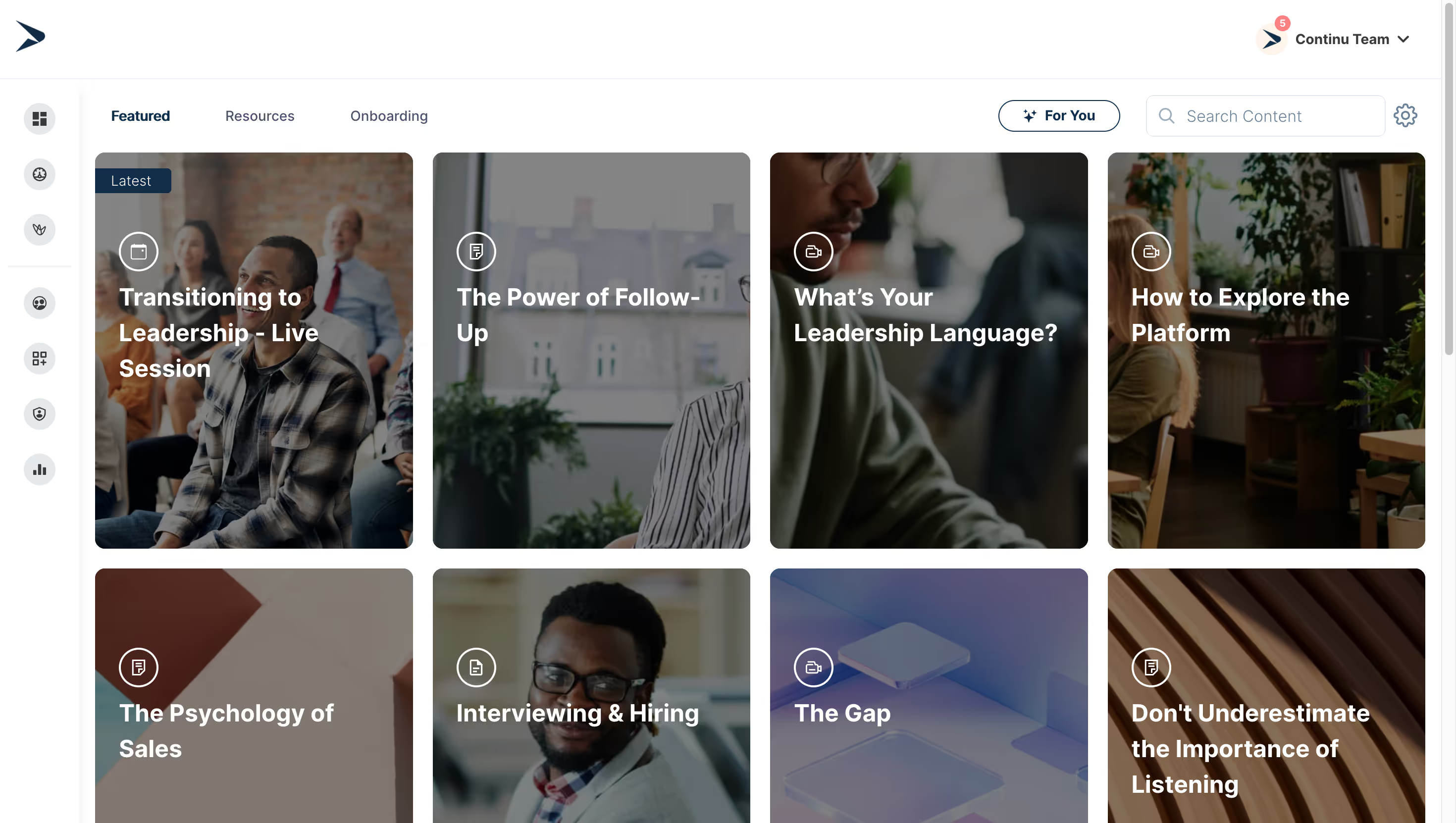
Continu is a modern all-in-one learning platform that helps mid to large-size organizations centralize employee, customer and partner training. It combines content authoring, workshops, journeys and assessments with smart automations and AI-powered analytics to boost engagement, reduce ramp-up time and save administrators hours.
Why I picked Continu
Continu is the top-ranked alternative thanks to its deep integrations with workplace tools, robust AI-powered reporting, ease-of-use for admins and learners, enterprise-grade features, and the ability to centralize learning for employees, customers, and partners into a single platform.
Continu is ideal for:
Mid-market & enterprise organizations training over 500 total users (employees, customers, and/or partners).
2. Workramp
4.5 (691)
Best for AI-first, intuitive learning experiences
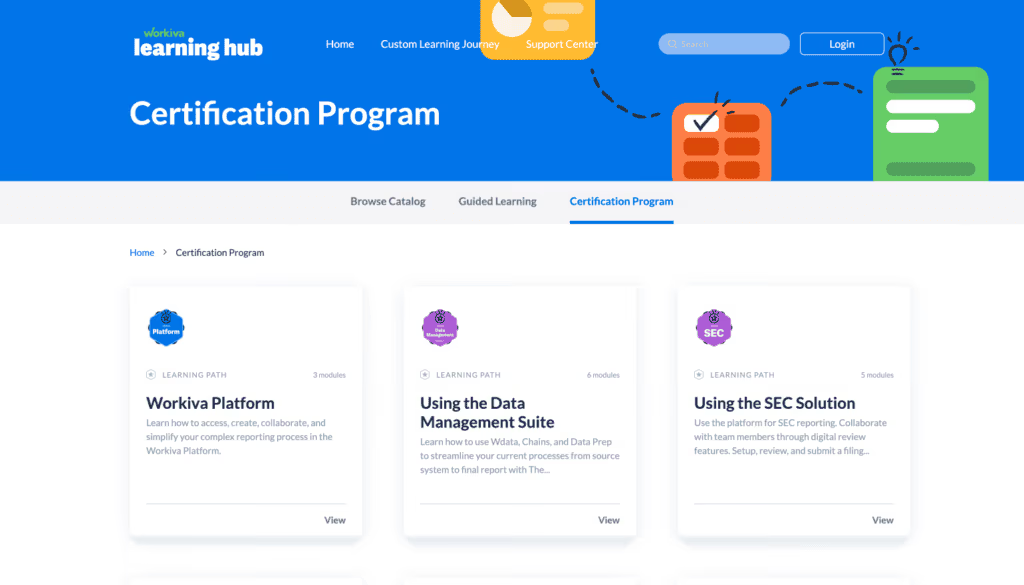
An AI-powered platform unifying employee and customer training with content generation and personalized recommendations
Why I picked Workramp
Workramp deserves consideration as an alternative thanks to easy-to-use, intuitive interface and AI-driven content creation and personalization saves time.
Workramp is ideal for:
Mid-market to enterprise organizations

3. Docebo
4.4 (1126)
Best for enterprise organizations training internal and external teams
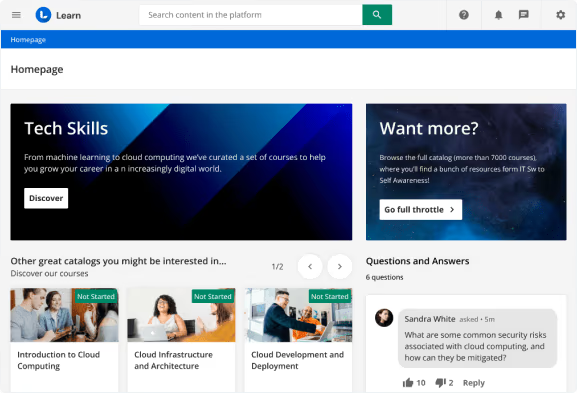
An AI-powered enterprise suite that automates personalized training delivery across multiple audiences
Why I picked Docebo
Docebo is a solid choice thanks to its enterprise-grade, highly customizable, scalable platform, and AI-driven automation.
Docebo is ideal for:
Mid-size to large enterprises with 250+ active learners
4. Absorb LMS
4.6 (1443)
Best for scalable, AI-powered strategic learning
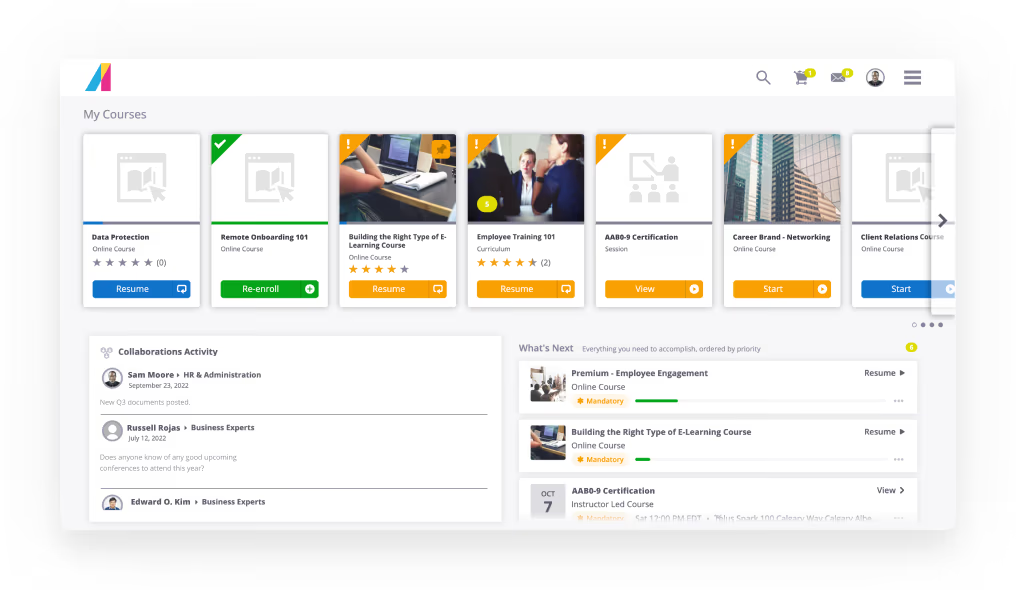
A cloud-based LMS combining AI-driven skills, personalized paths and multi-tenancy for global training.
Why I picked Absorb LMS
Absorb LMS is a solid choice thanks to its user-friendly interface and intuitive navigation and comprehensive features including advanced reporting, content library and eCommerce.
Absorb LMS is ideal for:
Businesses of all sizes, especially SMBs and enterprises
5. 360Learning
4.6 (1106)
Best for AI-powered collaborative learning
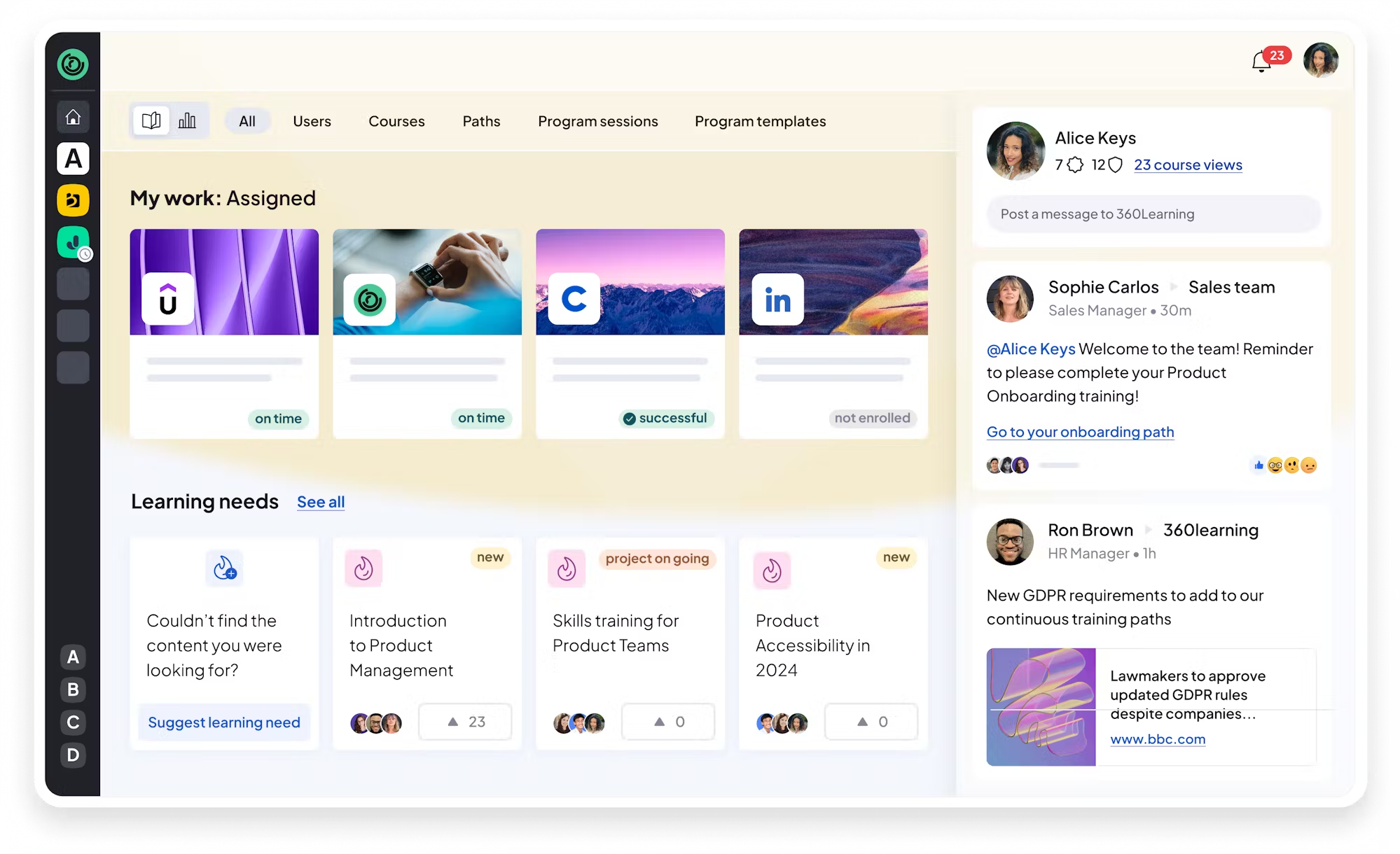
A collaborative LMS that turns subject-matter experts into course creators with real-time social learning.
Why I picked 360Learning
360Learning made the list as a great alternative because it combines user-friendly interface and intuitive authoring with engaging social learning features.
360Learning is ideal for:
Small to mid-market teams and scalable to enterprise

6. CYPHER Learning
4.5 (458)
Best for personalized, user-friendly skills-based learning
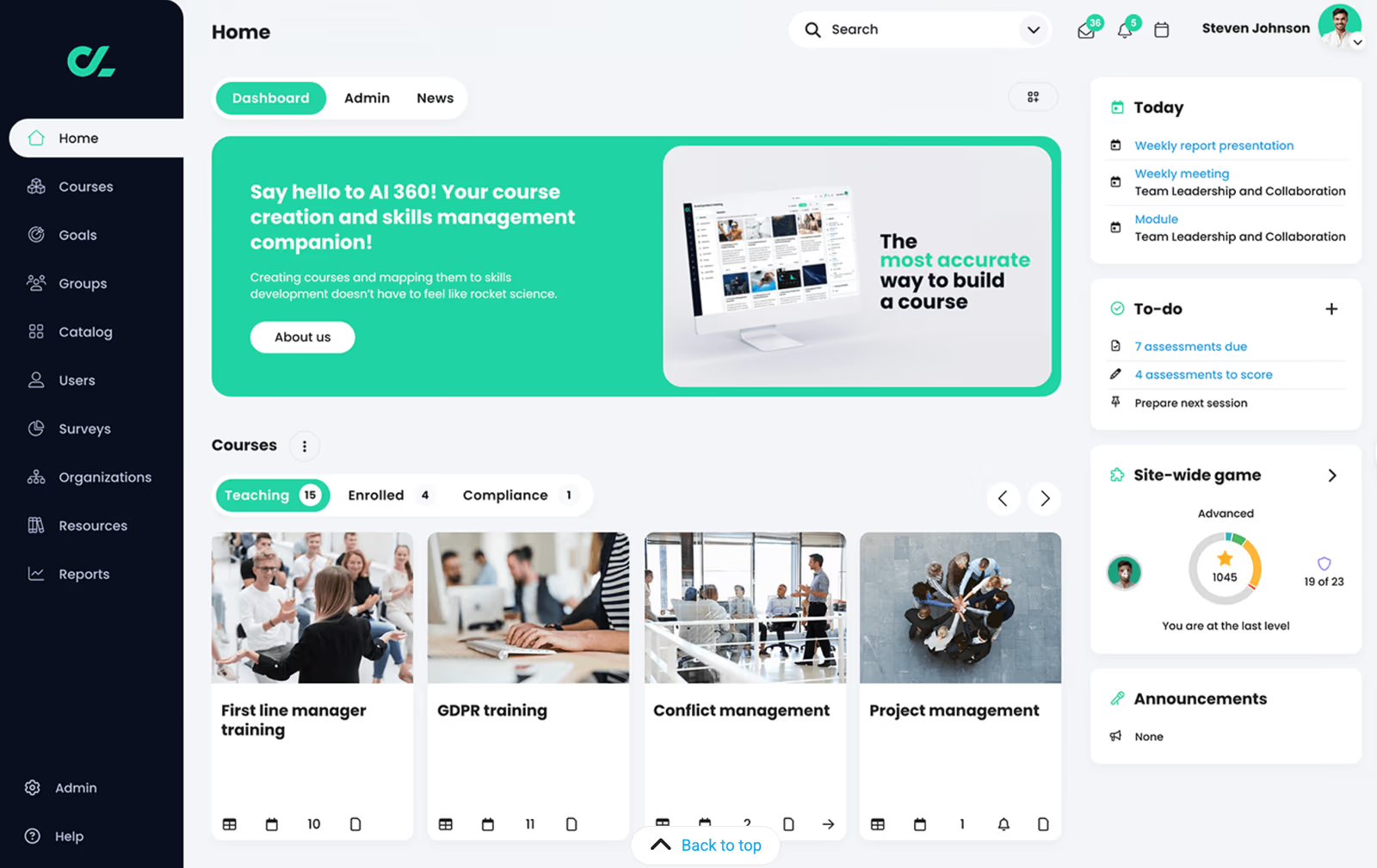
A unified platform merging LMS, LXP and AI content development with adaptive learning paths
Why I picked CYPHER Learning
CYPHER Learning made the list as a great alternative because it combines AI-powered adaptive learning and personalized recommendations engage learners with all-in-one platform.
CYPHER Learning is ideal for:
Mid-sized to large enterprises and academic institutions
7. LearnUpon
4.7 (759)
Best for organizations prioritizing ease of use and excellent support
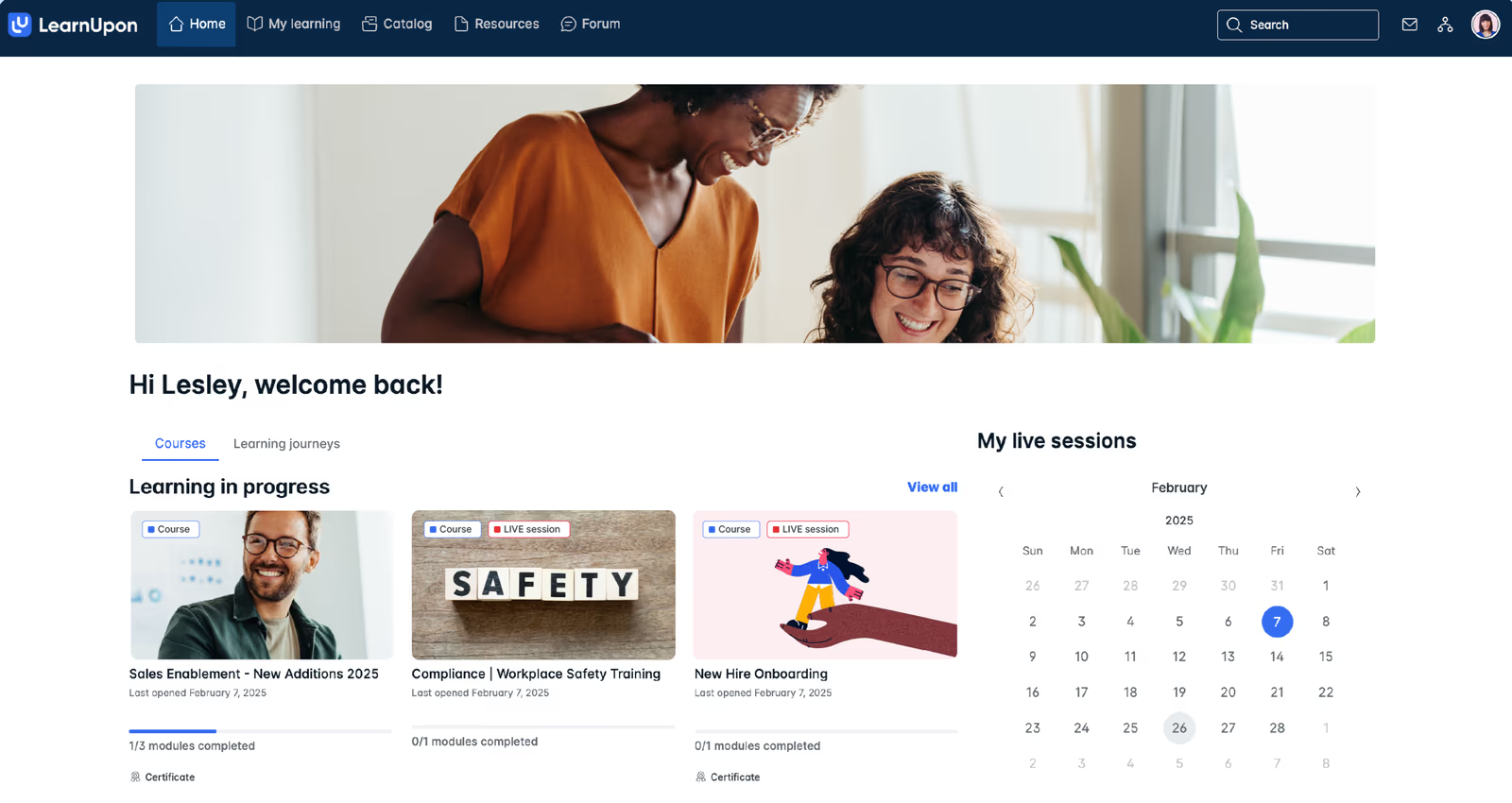
LearnUpon is a scalable LMS with multi-tenant capabilities, automation, and strong customer support.
Why I picked LearnUpon
LearnUpon stands out as a better option for organizations needing user-friendly interface and easy setup and scalable plans and deep integrations.
LearnUpon is ideal for:
Medium to large organizations (150+ users) needing to train employees, customers or partners
8. Tovuti
4.6 (497)
Best for AI-enabled course creation and user-friendly learning management
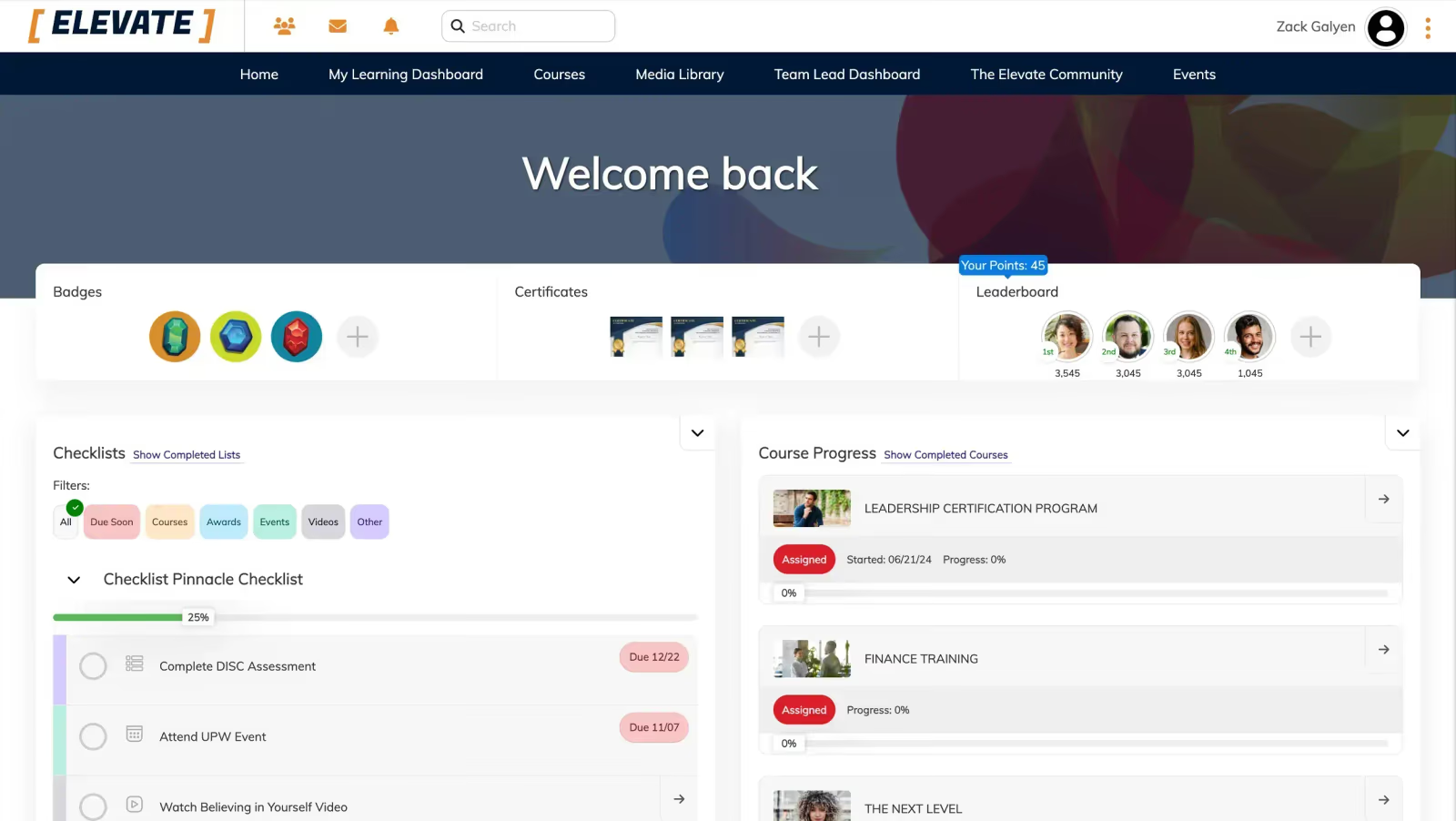
A cloud LMS with built-in authoring offering 40+ interactive content types and social learning
Why I picked Tovuti
Tovuti is a solid choice thanks to its integrated authoring tools and rich content library eliminate need and highly engaging interactive and gamified courses.
Tovuti is ideal for:
Mid-sized to enterprise organizations (50–5,000+ users)
9. EducateMe
4.6 (32)
Best for AI-powered centralized learning hub

An intuitive, customizable LMS that streamlines partner, customer and employee training through white‑label hubs, automated learning paths and robust analytics.
Why I picked EducateMe
EducateMe earns its spot by offering intuitive, Notion‑like interface that's easy alongside automated learning paths and alerts save admins time and keep partners on track.
EducateMe is ideal for:
Small to mid-sized organizations need simple learning management

10. Paradiso LMS

4.2 (250)
Best for AI-powered, customizable learning management

Flexible LMS with multi-tenant architecture, e-commerce and integration options
Why I picked Paradiso LMS
Paradiso LMS deserves consideration as an alternative thanks to highly customizable and multilingual and e-commerce features enable monetization.
Paradiso LMS is ideal for:
SMBs to mid-sized businesses
Making the Switch from Sana Learn
Switching from Sana unlocks three immediate benefits: pricing that scales with your actual team size rather than arbitrary minimums, deeper configurability for complex compliance and workflow requirements, and access to extensive integration ecosystems that connect your learning platform seamlessly with existing enterprise tools.
Organizations report 40-60% cost savings, faster implementations, and significantly better technical fit when they choose platforms purpose-built for comprehensive learning needs over AI-first solutions that prioritize sleek interfaces over operational flexibility.
Here are three alternatives worth evaluating:
For Most Organizations: Continu
Continu delivers the modern, AI-powered learning experience Sana pioneered while eliminating the user minimums, configuration constraints, and integration gaps. The platform combines intelligent course authoring, personalized recommendations, and conversational AI learning assistants with enterprise-grade compliance features, extensive white-labeling, and 50+ native integrations.
Designed for mid-market and eterprise organizaitons, Continu supports both internal employee training and external audiences (customers, partners, distributors) through dedicated portals—something Workday's workforce-focused approach doesn't emphasize. Organizations typically implement Continu in under two weeks with intuitive admin interfaces that require minimal training.
The platform integrates deeply with Workday, Salesforce, Slack, Microsoft Teams, and major HRIS systems while providing access to content libraries like LinkedIn Learning, Udemy Business, and OpenSesame. Teams gain advanced reporting, automated workflows, and dedicated customer success managers.
For Budget-Conscious Teams: 360Learning
360Learning offers a much cheaper entry plan than Sana, starting at $8/month per user for 100 seats, where most organizations could fit. The platform provides AI-powered and collaborative course authoring, gamification, and mobile learning with an intuitive UI. While not being 100% AI-native, it still has enough AI features to be comparable to Sana Learn.
For AI-First Learning: Workramp
WorkRamp positions itself as an AI-first LMS built for high-performing teams, offering advanced AI capabilities for content creation, personalized learning, and analytics. The platform's AI can draft courses from files, generate quizzes automatically, provide captioning and translation, and convert content into optimal learning modalities based on learner preferences. With AI role-play coaching for sales teams and AI-prompted analytics visualizations, WorkRamp excels for organizations prioritizing cutting-edge AI features.
Ready to see the difference?
Book a demo with Continu and experience a learning platform built for your actual needs—not arbitrary user minimums or post-acquisition uncertainty.
Frequently Asked Questions
What is the best alternative to Sana?
Why are companies leaving Sana?
How much does Sana cost compared to alternatives?
Can I migrate my existing content from Sana to another LMS?