The 10 Best Alternatives to Litmos in 2026

By Keith Martin | Updated on April 29, 2026
Litmos alternatives are ranked using first-hand research from our advisory team and data from G2, Capterra, and Gartner Peer Insights. No paid placements.
Quick Summary
As a B2B GTM leader who's evaluated 20+ enterprise learning platforms, I've analyzed the best Litmos alternatives to help you find AI-powered learning management software that delivers modern UX design, extensive customization capabilities, and responsive support without the dated interface, rigid workflows, and inconsistent customer service that frustrate growing teams.
Organizations switching from Litmos avoid outdated user experiences and customization bottlenecks while gaining contemporary platform design, advanced white-labeling capabilities, and predictable support response times—without sacrificing the quick implementation and content library access that drive results.
Table of Contents
Top 5 Alternatives Shortlist
If you’re thinking of switching from Litmos, here are the top options based on features, overall ratings, and user reviews:
1. Continu — Best for AI-powered, enterprise-scale learning focused on business results
2. Workramp — Best for AI-first, intuitive learning experiences
3. Docebo — Best for enterprise organizations training internal and external teams
4. Absorb LMS — Best for scalable, AI-powered strategic learning
5. Sana — Best for AI-native, unified learning needs
Litmos has built a strong reputation in corporate learning technology.
With 4.5 stars across 659+ reviews, ready-made content libraries that reduce course creation time, and mobile access for global training, it's a solid platform for teams prioritizing rapid deployment.
But here's what we discovered after analyzing hundreds of user reviews and interviewing L&D leaders who've migrated away:
- Outdated interface creates learner friction. The platform's UI design hasn't kept pace with modern user expectations, leading to confused learners and frustrated administrators. Navigation feels clunky compared to contemporary SaaS tools, reducing engagement and completion rates.
- Customization limitations force workarounds. Organizations can't fully adapt Litmos to match corporate branding or specific workflows without hitting rigid platform constraints. White-labeling and workflow configuration options are limited compared to newer alternatives built for enterprise flexibility.
- Inconsistent support responses delay projects. Customer support response times vary significantly based on subscription tier and channel. Critical implementation questions or urgent bugs can wait days for resolution, putting training deadlines at risk.
The good news?
The LMS landscape has evolved dramatically.
Modern platforms deliver AI-powered learning capabilities at lower costs, with faster implementation, deeper customization, and more stable performance.
Below, you'll find 10 alternatives to Litmos ranging from affordable team solutions to enterprise platforms—each evaluated across pricing transparency, migration ease, feature completeness, and user experience.
Whether you're a 50-person startup or a 5,000-employee enterprise, there's a better-fit option here.
What is Litmos?
Litmos is an AI-powered learning management system trusted by thousands of companies for employee, partner, and customer training. The platform is known for quick deployment, easy-to-use interface, and a robust library of off-the-shelf content that can supplement custom learning programs.
The platform serves organizations across retail, service, technology, and healthcare industries.
Core Philosophy
Litmos focuses on AI-empowered learning through rapid deployment and extensive pre-built content libraries, enabling organizations to launch training programs quickly without extensive development work.
Key Features and Capabilities
Extensive Pre-Built Course Library: Litmos includes thousands of ready-made courses covering compliance, sales, customer service, and professional development. This eliminates months of course development time and allows L&D teams to assign professionally-produced training immediately without hiring instructional designers.
Mobile-Friendly Platform with Multi-Language Support: The system provides mobile accessibility across iOS and Android devices while supporting multiple languages for global training. International teams access consistent learning experiences regardless of location or device, enabling customer education and partner training across distributed networks.
E-Commerce and Certification Management: Built-in e-commerce functionality allows organizations to monetize training through course sales and subscription models. The platform automatically tracks certifications, sends renewal reminders, and maintains compliance records crucial for regulated industries.
Litmos integrates with Salesforce, Zendesk, Zoom, Okta, and Shopify, connecting learning data with CRM systems, support platforms, and authentication services.
Common Use Cases
Organizations typically deploy Litmos for:
Customer Education: Retail and technology companies train customers on product usage through Litmos's e-commerce-enabled learning portals. The platform reduces support tickets and increases product adoption while generating revenue through paid certification programs.
Partner Enablement: Service organizations leverage the platform to train partners, resellers, and franchisees on sales techniques and compliance requirements. Multi-language support ensures consistent training across global partner networks without managing separate regional systems.
Compliance and Skills Training: Healthcare and retail industries deploy Litmos for mandatory compliance training and ongoing skills development. The pre-built content library includes workplace safety, data privacy, harassment prevention, and industry-specific regulatory courses that meet legal requirements.
Biggest Strengths
Organizations can expect to see the following benefits of using Litmos:
Ready-Made Content Library Reduces Course Creation Time: The extensive off-the-shelf course library saves L&D teams hundreds of development hours, allowing immediate deployment of professionally-produced courses without creating content from scratch.
Easy to Use with Mobile Access: Learners complete training on smartphones and tablets with full functionality, supporting field workers, remote teams, and customer education scenarios where desktop access is impractical.
Supports E-Commerce and Global Training: Built-in monetization capabilities and multi-language support enable organizations to generate revenue from customer training while scaling partner enablement across international markets.
Pricing and Free Trial
Pricing Structure:
- Subscription per user with optional content library add-ons
- Custom quote based on tiers and number of learners
- Pricing typically starts around $4-8 per user per month for basic plans
- Additional costs for premium content library subscriptions, advanced reporting modules, and extended support packages
Free Trial: Trial available (limited duration, contact sales for access)
Important Note: Pricing requires custom quotes, and several users report total costs escalating significantly when adding necessary features like advanced analytics, premium content access, or dedicated support—features that may be included in competitors' base pricing.
Litmos Review Platform Source
 View Litmos’s reviews on G2 →
 View Litmos’s reviews on Capterra →
 View Litmos’s reviews on Gartner Peer Insights →
*Litmos’s overall rating and reviews pulled from these sources may have changed since this article was created. Data was pulled early December 2025 and will be updated quarterly.
Why Look for a Litmos Alternative?
Organizations don't casually research Litmos alternatives.
You're here because something isn't working—whether it's budget constraints, customization limitations, or technical friction slowing your training programs.
After analyzing 659+ user reviews across G2, Capterra, and Gartner Peer Insights, clear patterns emerge.
Here's what drives L&D teams to evaluate other platforms:
The 3 Biggest Litmos Limitations
1. Outdated User Interface Creates Navigation Friction
The Problem:
Litmos's interface design feels stuck in 2015.
While the platform markets itself as "easy to use," actual user experiences reveal significant UX friction. The dated design creates navigation confusion, forces excessive admin clicks for simple tasks, and delivers poor mobile experiences despite claims of mobile optimization.
What Users Report:
"The interface looks and feels dated compared to modern SaaS tools we use daily," shared an L&D Director at a mid-size technology company. "Our learners kept complaining that the platform felt clunky and confusing. We were getting support tickets about basic navigation."
"Administrative tasks that should take two or three steps require seven or ten clicks through multiple screens," explained a Training Manager at a retail organization. "Course creation, user management, and reporting all involve unnecessarily complex processes that waste hours of admin time every week."
Organizations report 15-25% lower course completion rates compared to modern LMS alternatives simply because the interface frustrates learners who abandon training halfway through.
Better Alternative:
Platforms like Continu and LearnUpon deliver contemporary, intuitive interfaces designed for today's user expectations. Admin tasks that require 10 clicks in Litmos take 2-3 clicks in modern platforms—saving teams hundreds of hours annually while improving learner satisfaction and completion rates.
2. Limited Customization and Branding Options
The Problem:
Litmos positions itself as customizable, but organizations quickly hit rigid constraints.
Visual branding restricts beyond basic logo and color changes, requiring developer intervention through fragile CSS workarounds that break with platform updates. Workflow inflexibility forces organizations to adapt processes to Litmos's predefined structures rather than configuring the platform to match their needs.
What Users Report:
"We couldn't match our corporate branding without extensive CSS workarounds," explained a Training Manager at a multi-brand retail organization. "Each time Litmos updated their platform, our custom CSS broke. We spent more time maintaining branding than actually improving our training programs."
"Companies training multiple audiences—employees, customers, partners—struggle to create distinct branded experiences for each group," noted an L&D Consultant. "The multi-tenant capabilities are basic compared to competitors designed for extended enterprise scenarios."
Teams either accept generic-looking training portals that don't match brand standards or invest significant development resources in fragile customizations requiring constant maintenance.
Better Alternative:
Platforms like Continu and Absorb LMS offer extensive white-labeling and workflow customization without requiring developer resources. You can create fully-branded learning portals for different audiences—each with custom domains, unique designs, and tailored content—all managed from a single admin interface.
3. Inconsistent Customer Support Response Times
The Problem:
Litmos's customer support receives mixed reviews, with response times and expertise varying significantly based on subscription tier and support channel.
Standard support tickets often wait 24-48 hours for initial responses, with resolution taking days or weeks. Limited implementation guidance extends deployment time, and knowledge base gaps leave complex questions unanswered.
What Users Report:
"When we hit a critical bug during our annual compliance training rollout, it took three days to get a response from support," shared a Compliance Manager at a financial services company. "We couldn't extend the deadline, so we manually tracked completions in spreadsheets. The whole experience undermined confidence in the platform."
"Organizations without extensive LMS experience receive minimal hands-on support during initial setup," noted an HR Technology Consultant. "Many report learning the platform through trial-and-error rather than guided onboarding, which extends the implementation timeline significantly."
Organizations lose weeks of productivity during implementations when support is slow to respond, especially problematic in regulated industries where compliance deadlines are non-negotiable.
Better Alternative:
Platforms like Continu and TalentLMS include dedicated customer success managers who provide proactive guidance throughout implementation and ongoing use. Response times average 2-4 hours rather than 2-4 days, with comprehensive knowledge bases and transparent SLAs that remove unpredictability.
The Bottom Line
If you're experiencing any of these challenges, the alternatives below address these specific pain points.
Use our comparison table to identify which platforms solve your unique concerns while maintaining the ready-made content libraries and quick implementation features that drew you to Litmos initially.
The right alternative delivers modern user experiences, extensive customization, and responsive support without sacrificing the AI-powered learning capabilities your team values.
Litmos Alternatives Comparison Table
The table below summarizes our list of the best alternatives, ranked using our advisory team’s first-hand research and data from trusted sources like G2, Capterra, and Gartner Peer Insights.

1. Continu

4.6 (727 reviews)
Yes
Custom quotes based on number of learners and tier
View pricing details →
2. Workramp

4.5 (691)
No
Custom pricing; typically mid-market to enterprise budgets
View pricing details →
5. Sana

4.9 (104)
No
$13/user/month with 300-user minimum; enterprise custom pricing
View pricing details →
6. TalentLMS

4.6 (1982)
Yes
Plans start at $69/month (annual) for 40 users; Core plan $119/month; Pro plan $449/month
View pricing details →
10. LearnUpon
4.7 (759)
No
Starts around $800–$1,000/month for up to 100 users; custom pricing for larger teams
View pricing details →The Top 10 Alternatives Reviewed
Explore our in-depth breakdown of the top alternatives to Litmos, ranked by their impact on your organization’s learning compared to Litmos’s platform.
1. Continu
4.6 (727 reviews)
Best for AI-powered, enterprise-scale learning focused on business results
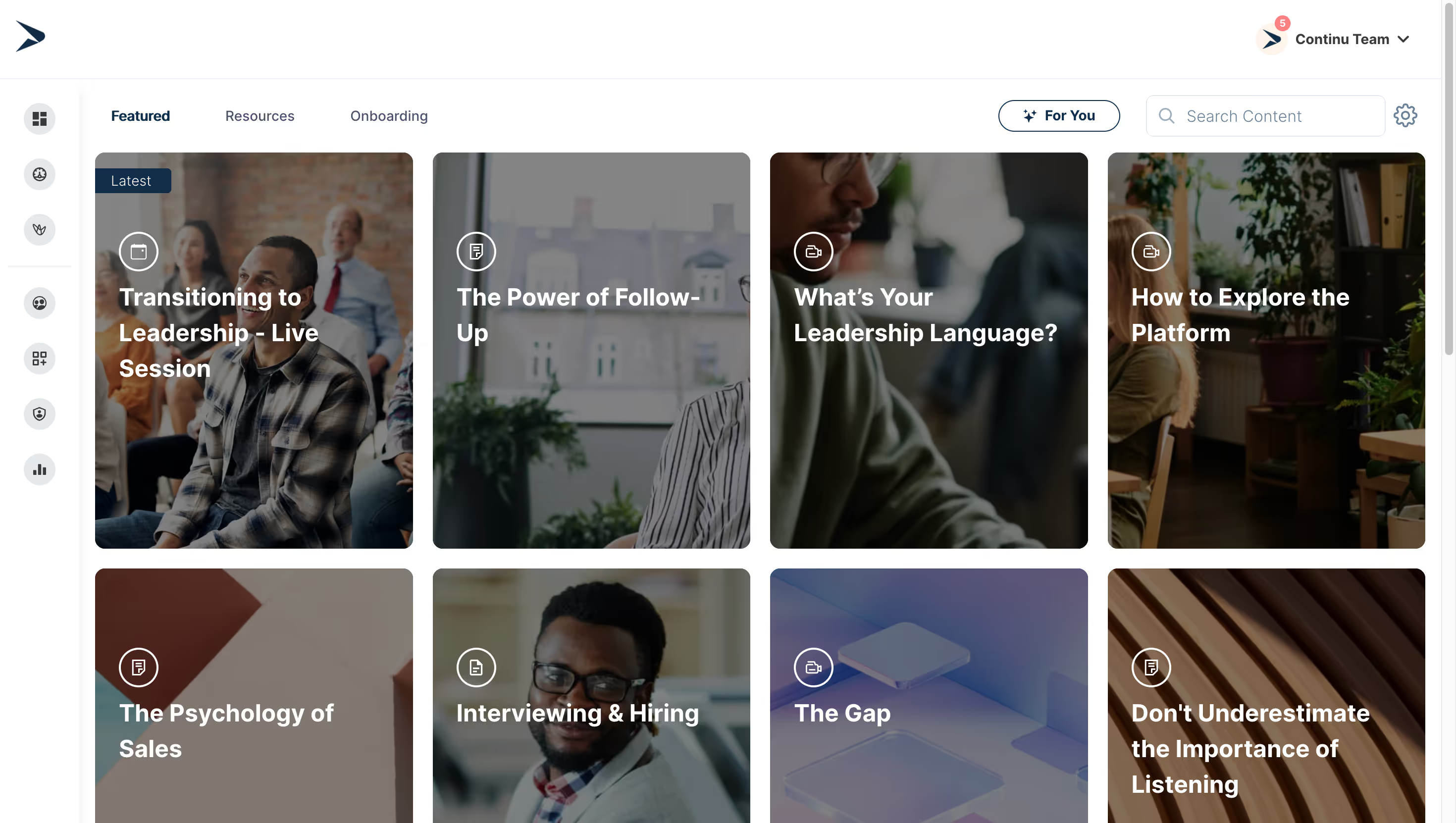
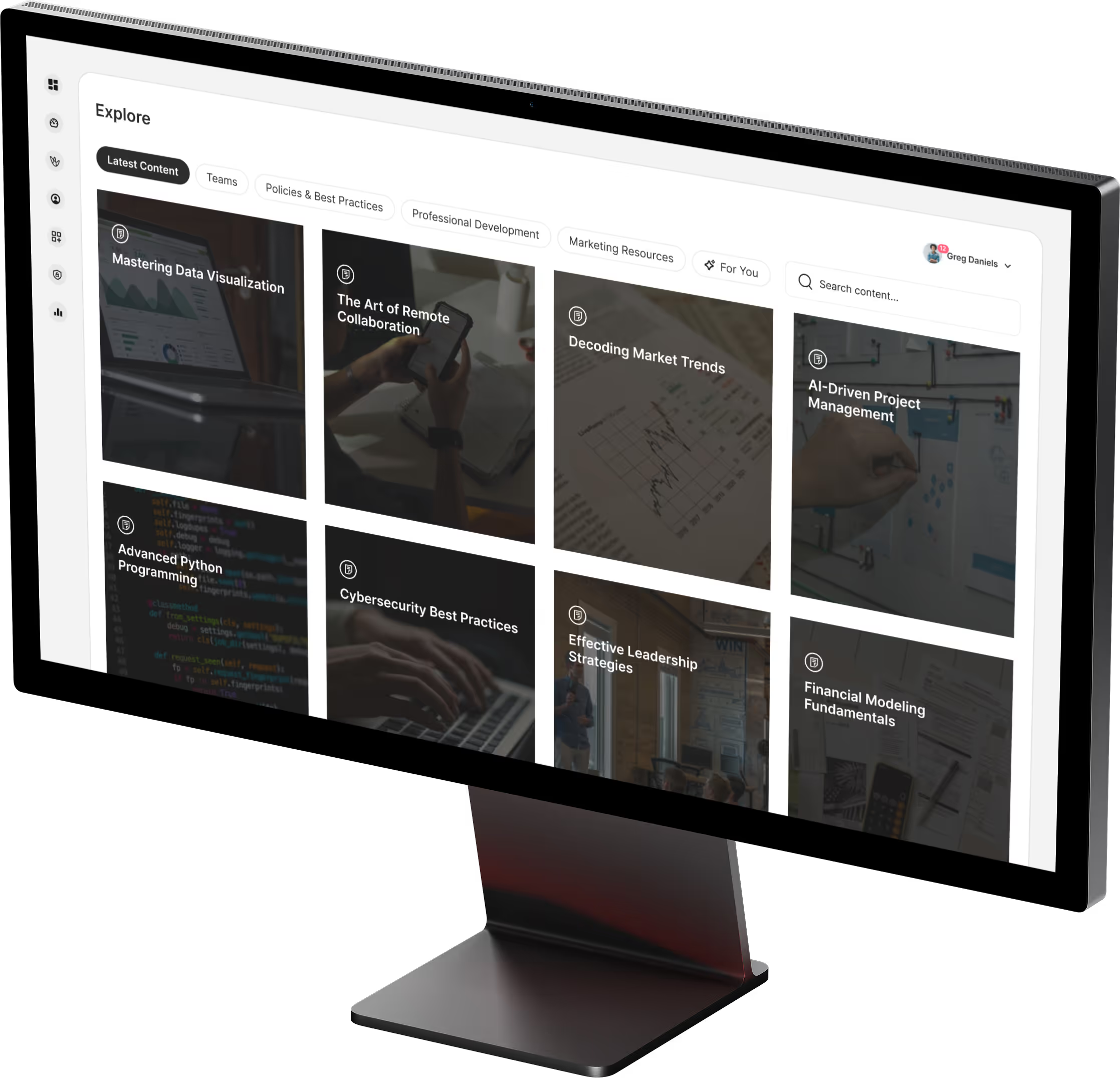
Continu is a modern all-in-one learning platform that helps mid to large-size organizations centralize employee, customer and partner training. It combines content authoring, workshops, journeys and assessments with smart automations and AI-powered analytics to boost engagement, reduce ramp-up time and save administrators hours.
Why I picked Continu
Continu is the top-ranked alternative thanks to its deep integrations with workplace tools, robust AI-powered reporting, ease-of-use for admins and learners, enterprise-grade features, and the ability to centralize learning for employees, customers, and partners into a single platform.
Continu is ideal for:
Mid-market & enterprise organizations training over 500 total users (employees, customers, and/or partners).
2. Workramp
4.5 (691)
Best for AI-first, intuitive learning experiences
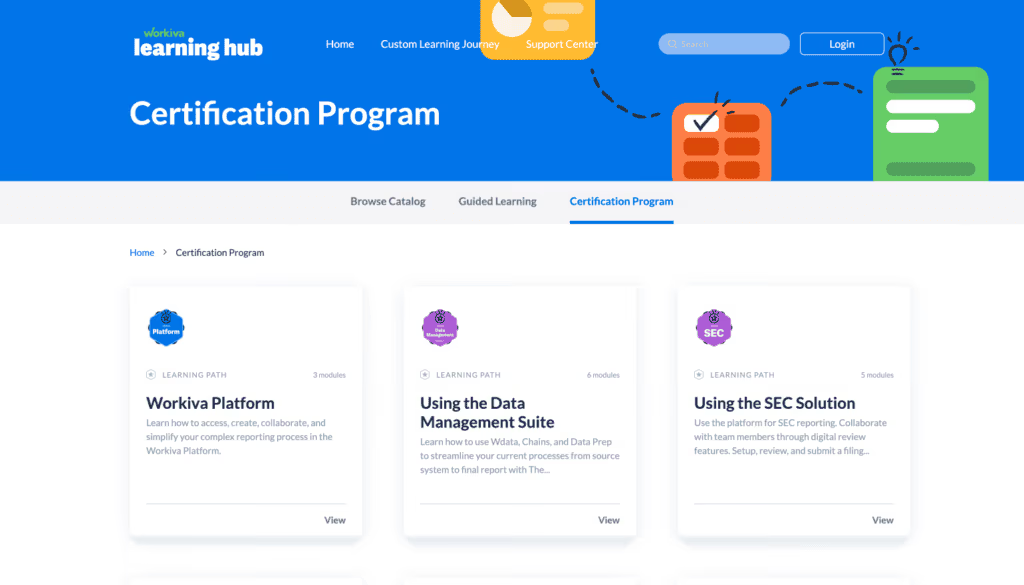
An AI-powered platform unifying employee and customer training with content generation and personalized recommendations
Why I picked Workramp
Workramp deserves consideration as an alternative thanks to easy-to-use, intuitive interface and AI-driven content creation and personalization saves time.
Workramp is ideal for:
Mid-market to enterprise organizations

3. Docebo
4.4 (1126)
Best for enterprise organizations training internal and external teams
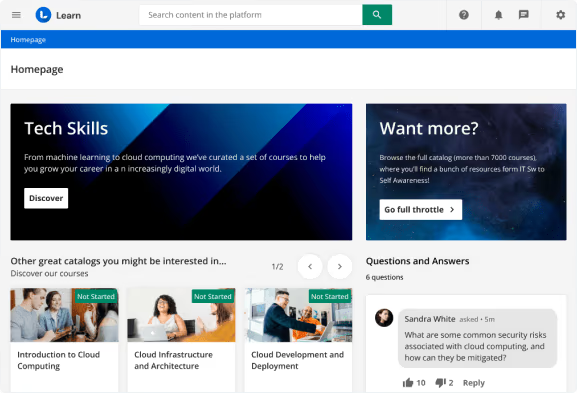
An AI-powered enterprise suite that automates personalized training delivery across multiple audiences
Why I picked Docebo
Docebo is a solid choice thanks to its enterprise-grade, highly customizable, scalable platform, and AI-driven automation.
Docebo is ideal for:
Mid-size to large enterprises with 250+ active learners
4. Absorb LMS
4.6 (1443)
Best for scalable, AI-powered strategic learning
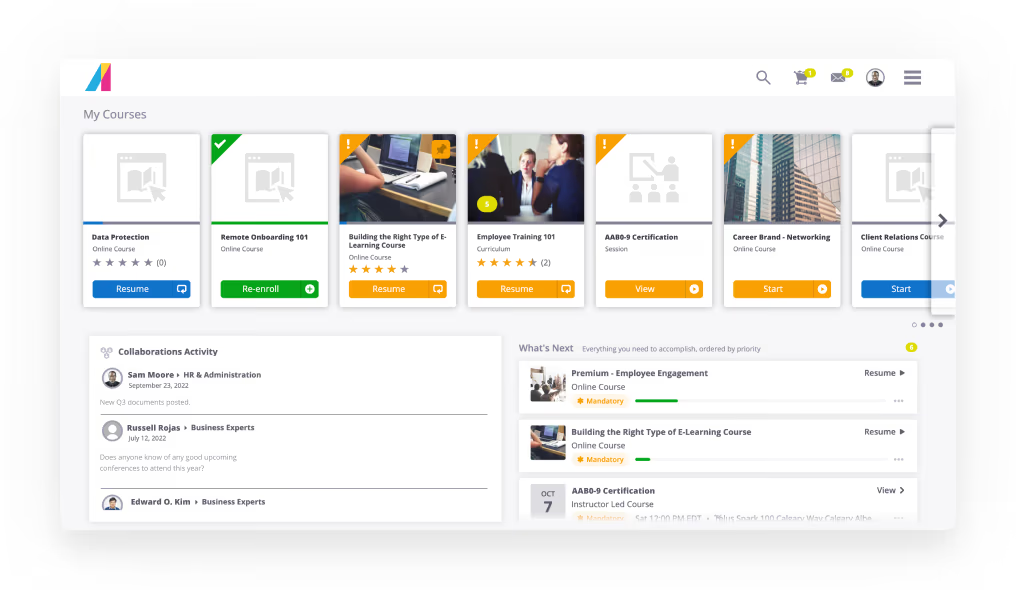
A cloud-based LMS combining AI-driven skills, personalized paths and multi-tenancy for global training.
Why I picked Absorb LMS
Absorb LMS is a solid choice thanks to its user-friendly interface and intuitive navigation and comprehensive features including advanced reporting, content library and eCommerce.
Absorb LMS is ideal for:
Businesses of all sizes, especially SMBs and enterprises
5. Sana
4.9 (104)
Best for AI-native, unified learning needs
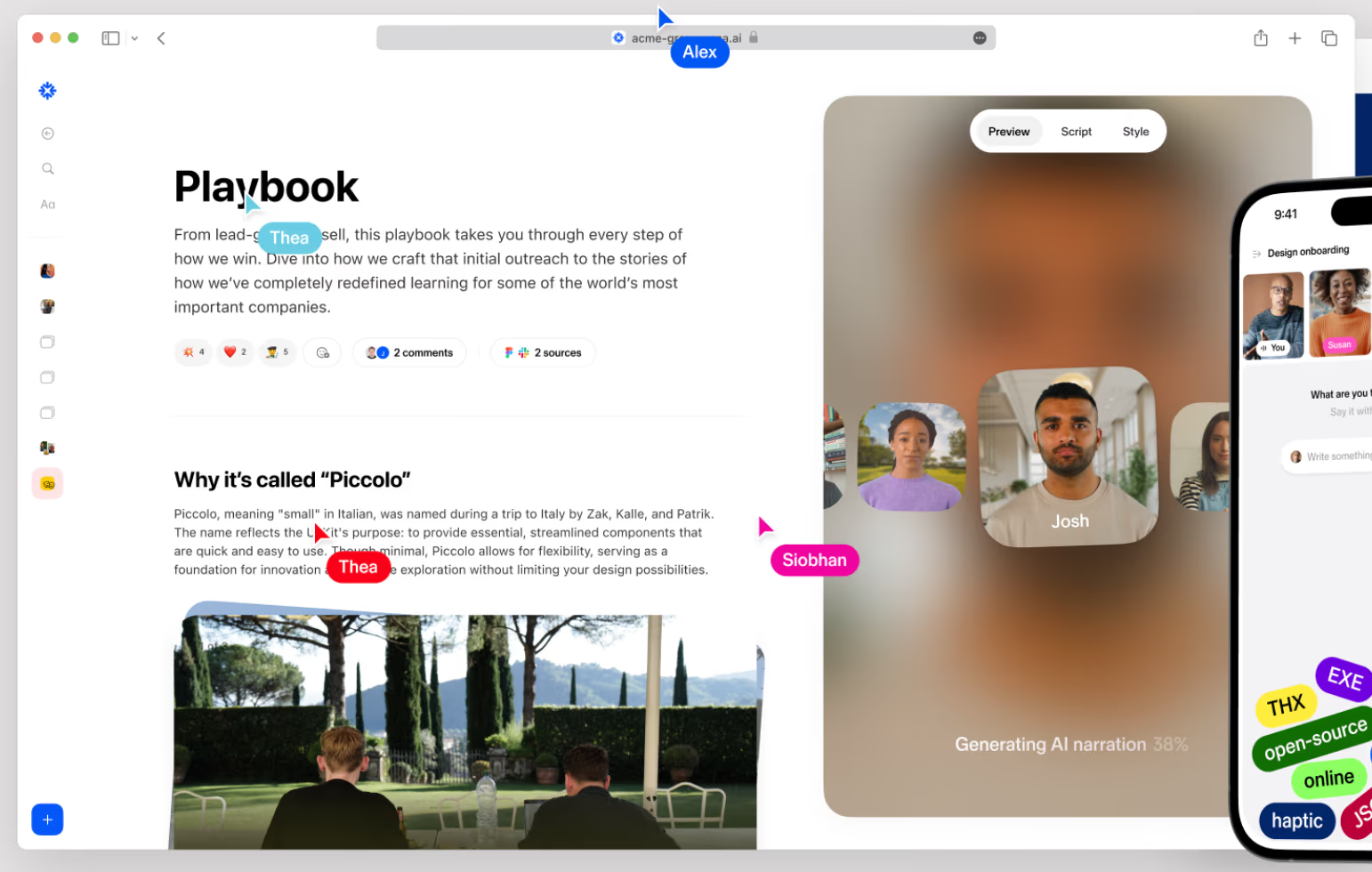
An AI-native platform consolidating LMS, LXP, authoring and virtual classrooms with generative content
Why I picked Sana
Sana is a solid choice thanks to its intuitive AI-native interface, powerful AI-driven search, and personalization delivering relevant content quickly.
Sana is ideal for:
Mid‑market and large organizations (300+ users) looking for AI-powered learning
6. TalentLMS
4.6 (1982)
Best for cheap, scalable, and user-friendly learning management
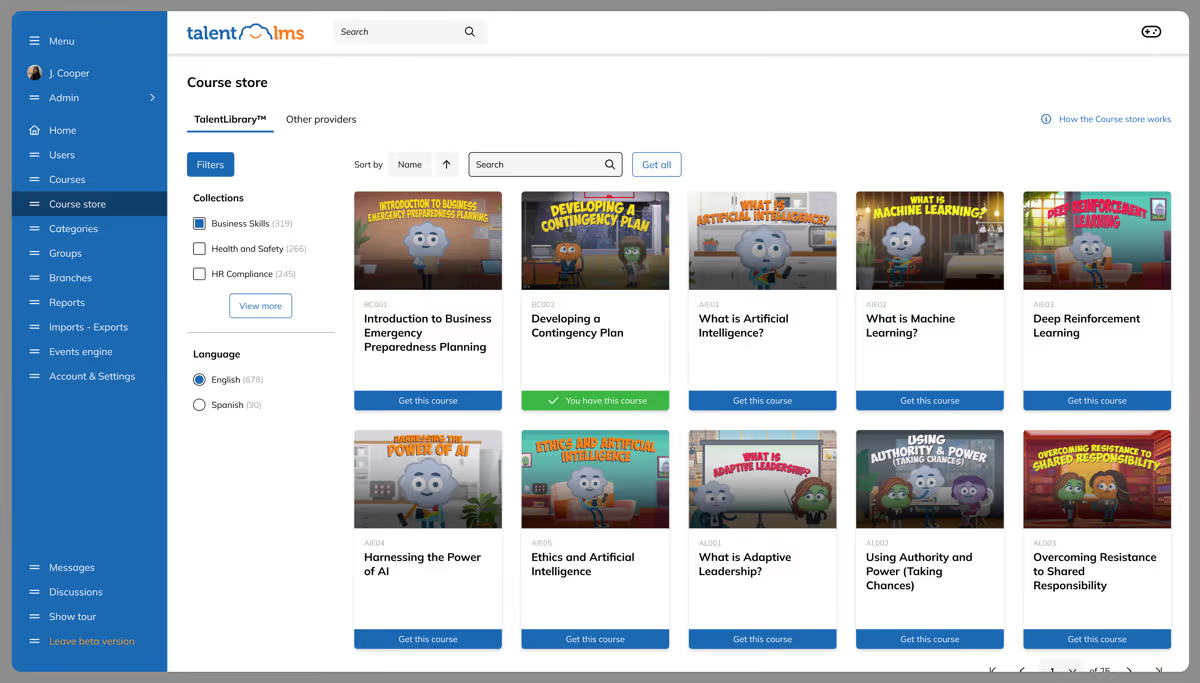
A cloud LMS with a forever free plan, AI course builder and built-in content library
Why I picked TalentLMS
TalentLMS is an excellent option for teams seeking affordable pricing and responsive customer support and large course library/AI course builder.
TalentLMS is ideal for:
Small to mid-sized teams (5–500 users) and growing businesses
7. 360Learning
4.6 (1106)
Best for AI-powered collaborative learning
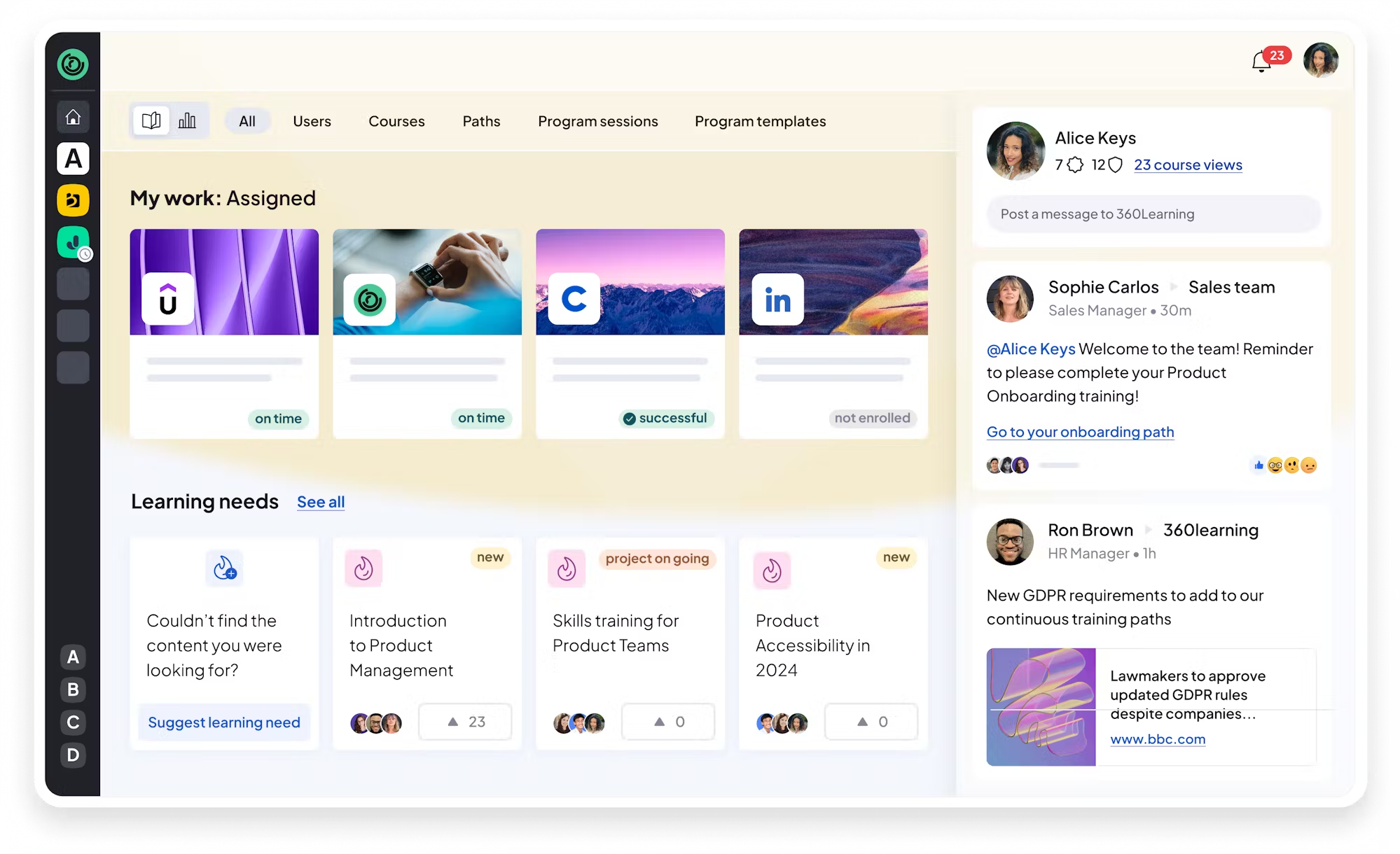
A collaborative LMS that turns subject-matter experts into course creators with real-time social learning.
Why I picked 360Learning
360Learning made the list as a great alternative because it combines user-friendly interface and intuitive authoring with engaging social learning features.
360Learning is ideal for:
Small to mid-market teams and scalable to enterprise

8. CYPHER Learning
4.5 (458)
Best for personalized, user-friendly skills-based learning
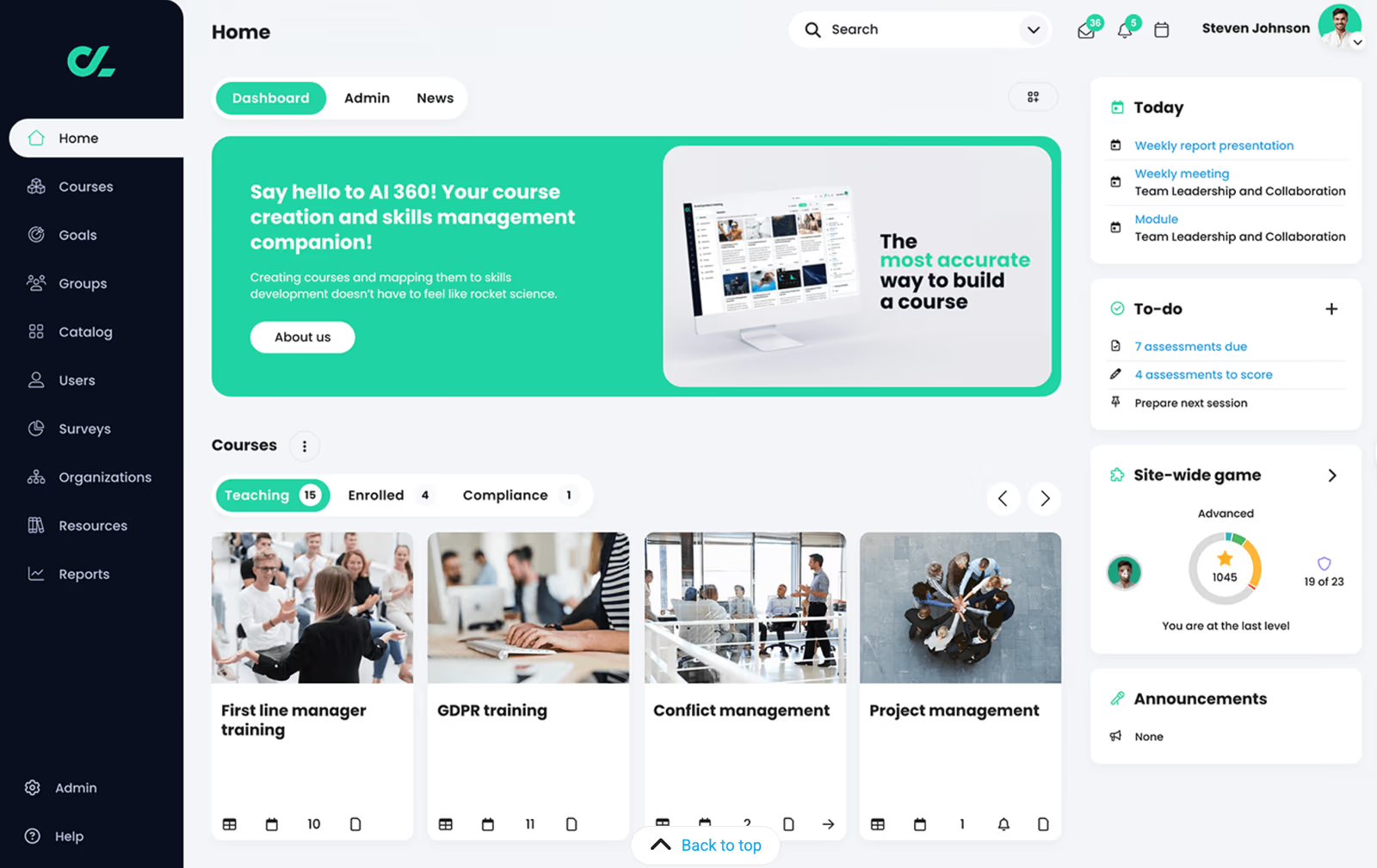
A unified platform merging LMS, LXP and AI content development with adaptive learning paths
Why I picked CYPHER Learning
CYPHER Learning made the list as a great alternative because it combines AI-powered adaptive learning and personalized recommendations engage learners with all-in-one platform.
CYPHER Learning is ideal for:
Mid-sized to large enterprises and academic institutions
9. iSpring Learn
4.4 (296)
Best for rapid LMS deployment with compliance and assessment features
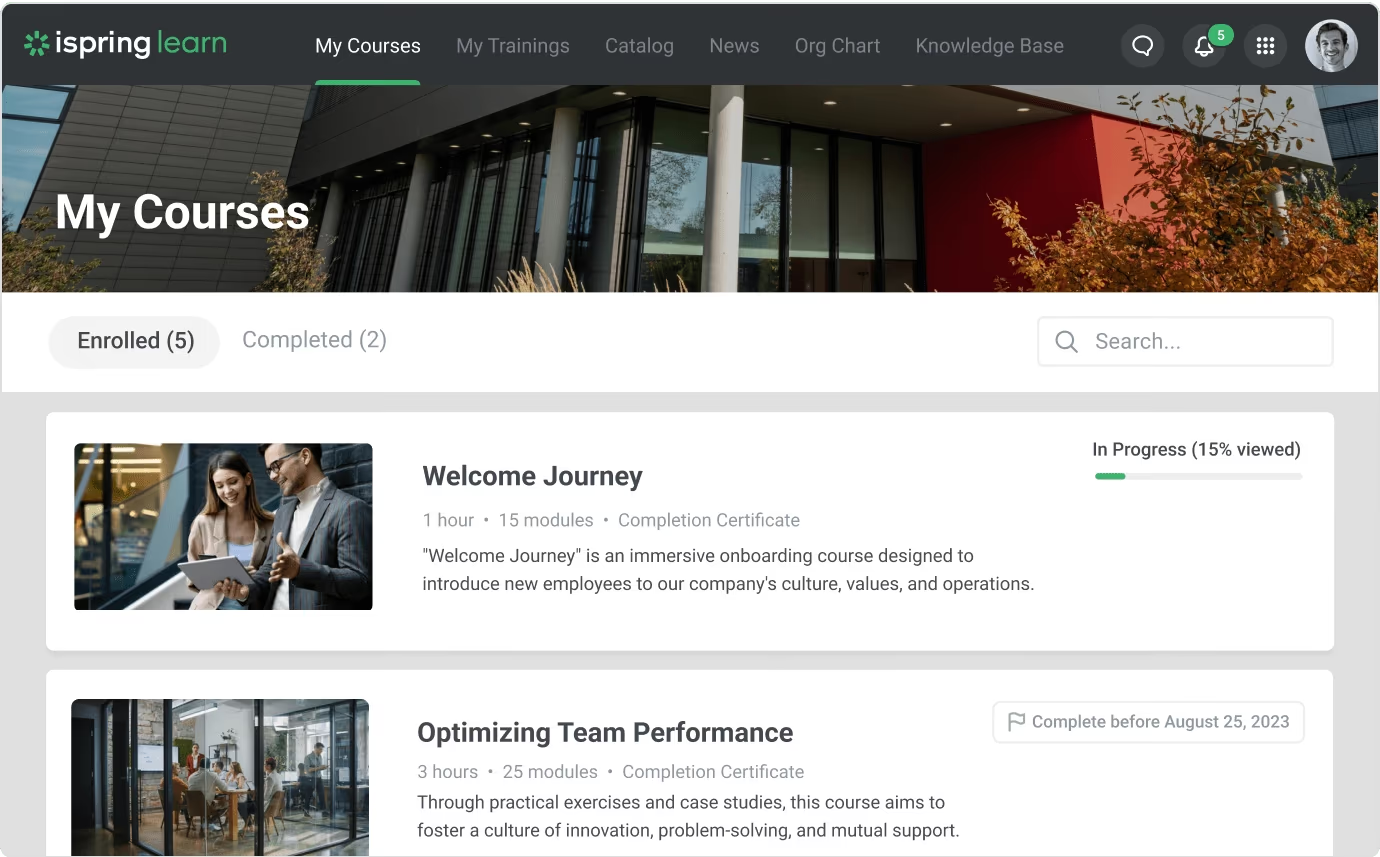
An all-in-one LMS with PowerPoint-based course authoring and offline mobile learning
Why I picked iSpring Learn
iSpring Learn ranks as a decent option for its seamless integration and flexible pay-per-active-user pricing and responsive customer support.
iSpring Learn is ideal for:
Small to mid-sized organizations needing scalable training
10. LearnUpon
4.7 (759)
Best for organizations prioritizing ease of use and excellent support
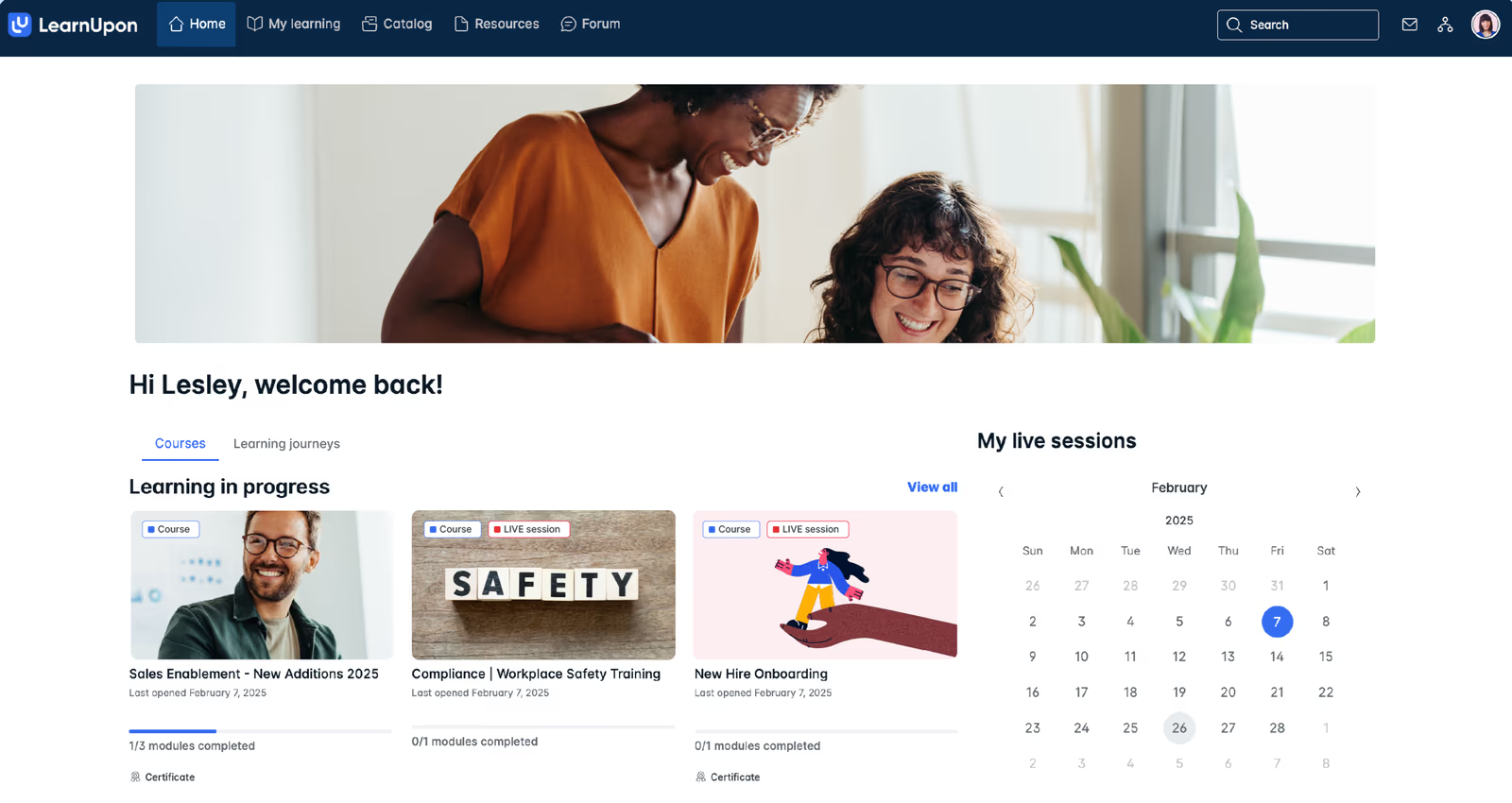
LearnUpon is a scalable LMS with multi-tenant capabilities, automation, and strong customer support.
Why I picked LearnUpon
LearnUpon stands out as a better option for organizations needing user-friendly interface and easy setup and scalable plans and deep integrations.
LearnUpon is ideal for:
Medium to large organizations (150+ users) needing to train employees, customers or partners
Making the Switch from Litmos
Litmos established early market presence in rapid LMS deployment, but it's not the only platform delivering AI-powered learning capabilities—and often not the best fit for growing organizations.
The alternatives above offer similar ready-made content and quick implementation at lower price points, with deeper customization, modern interfaces, and more stable performance.
Organizations switching from Litmos typically achieve:
- 40-60% cost savings through transparent pricing without surprise add-on fees
- 20-30% faster implementation timelines with dedicated success support
- Higher admin productivity with more intuitive interfaces requiring fewer clicks
- Better learner adoption through simplified navigation and contemporary design
Your best alternative depends on your specific priorities:
For most organizations looking to maximize value and innovation:
Continu delivers AI-powered conversational learning through Eddy, an intelligent assistant accessible via Slack, Teams, and SMS—addressing Litmos's outdated interface and rigid workflows while advancing beyond traditional learning management into flow-of-work learning.
The platform provides extensive white-labeling for multiple audiences, Smart Segmentation™ for automated content targeting, and transparent per-user pricing that eliminates the surprise costs common with Litmos. Implementation takes 2-3 weeks with dedicated customer success support.
For teams prioritizing budget and simplicity:
TalentLMS offers straightforward learning management at transparent pricing starting at $59/month for small teams—50-70% less expensive than Litmos. The platform provides intuitive course creation, basic customization, and essential integrations without the dated interface or hidden costs, making it ideal for organizations under 500 users who need reliable core functionality.
For companies requiring enterprise-grade compliance:
Absorb LMS provides advanced compliance tracking, sophisticated reporting, and robust API access that scales from hundreds to tens of thousands of users. The platform handles complex multi-tenant scenarios with extensive white-labeling that creates distinct branded experiences for different audiences—extending beyond Litmos's limited customization capabilities.
Ready to explore better alternatives?
Use our comparison table above to shortlist 2-3 platforms that match your requirements.
Schedule demos focusing on your specific pain points with Litmos.
Request transparent pricing for your team size to avoid surprises.
Run trials with your actual admin team and learners before committing.
The right platform delivers AI-powered learning without the outdated interfaces and rigid customization constraints.
Frequently Asked Questions
What is the best alternative to Litmos?
Why would an organization switch from Litmos to another platform?
What is the most commonly mentioned problem with Litmos?
What do organizations typically see when they switch from Litmos?