The 10 Best Alternatives to Docebo in 2026

By Keith Martin | Updated on May 22, 2026
Docebo alternatives are ranked using first-hand research from our advisory team and data from G2, Capterra, and Gartner Peer Insights. No paid placements.
Quick Summary
- The best Docebo alternative for enterprise teams is Continu — an AI-powered enablement platform that trains employees, customers, and partners on one platform, goes live in 4–6 weeks, and holds a 96% customer satisfaction score.
- Teams switch from Docebo most often because of hidden add-on costs that push total spend 50–70% above initial quotes, a steep admin learning curve, and an inconsistent interface that mixes legacy and modern UI elements.
- Modern alternatives implement in 2–6 weeks vs. Docebo's 3–6 month average.
- The right Docebo replacement depends on your training mix: external training (partner/customer) requires a different platform than pure internal compliance.
- Instacart saves 612 admin hours per year and runs an 82% completion rate on Continu.
Table of Contents
Top 5 Alternatives Shortlist
If you’re thinking of switching from Docebo, here are the top options based on features, overall ratings, and user reviews:
1. Continu — Best for AI-powered, enterprise-scale learning focused on business results
2. Absorb LMS — Best for scalable, AI-powered strategic learning
3. 360Learning — Best for AI-powered collaborative learning
4. CYPHER Learning — Best for personalized, user-friendly skills-based learning
5. LearnUpon — Best for organizations prioritizing ease of use and excellent support
The Short Answer
The best Docebo alternative depends on who you're training. For enterprise teams that train employees, customers, and partners, Continu is the strongest replacement. For budget-conscious teams focused purely on internal training, TalentLMS or LearnUpon are worth a close look. For organizations that prioritize collaborative learning, 360Learning is a serious option.
This guide covers all 10, ranked by real-world performance data and user reviews.
What is Docebo?
Docebo is an AI-powered learning suite designed for enterprises that need to deliver branded training to multiple audiences — employees, customers, and partners — from one platform. Founded in 2005, it serves mid-size to large enterprises in technology, manufacturing, finance, and healthcare. Its core AI tools (Creator and Harmony) automate content creation, course enrollments, and multilingual translation.
Docebo holds 4.4 stars across 1,126+ reviews on G2 and Capterra. It's a capable platform with genuine strengths: broad integration support, AI-driven personalization, and enterprise-scale infrastructure. The criticism isn't about what it does. It's about what it costs and how long it takes to actually do it.
What Docebo Does Well
- Hyper-personalized learning paths for employees, customers, and partners
- AI automation for enrollments, translations, and content categorization
- Real-time dashboards for completion rates, engagement, and skills gaps
- 400+ integrations including Salesforce, SAP, Microsoft, and Okta
- Multi-audience enterprise training at scale
Docebo Pricing
Docebo uses custom, usage-based pricing across two tiers: Elevate (growing teams) and Enterprise (large organizations). Most organizations with 250–500 active users start at $25,000–$35,000 annually before add-ons. Many teams find critical AI features, advanced analytics, and extended enterprise capabilities require premium upgrades not reflected in the initial quote.
No self-service free trial. All evaluations start with a sales demo.
Docebo Review Platform Source
 View Docebo’s reviews on G2 →
 View Docebo’s reviews on Capterra →
 View Docebo’s reviews on Gartner Peer Insights →
*Docebo’s overall rating and reviews pulled from these sources may have changed since this article was created. Data was pulled early December 2025 and will be updated quarterly.
Why Teams Switch From Docebo
After analyzing hundreds of G2 and Capterra reviews and talking to L&D leaders who have migrated off Docebo, three issues come up consistently.
1. Add-On Costs That Inflate the Bill
The core issue: Docebo's base price understates what you'll actually pay. AI content creation, advanced reporting, multi-domain support, and extended enterprise capabilities are often locked behind premium tiers or add-ons not disclosed early in the sales process.
One Learning Director at an 800-person tech company put it plainly: "We budgeted $30,000 annually based on the initial proposal, but ended up paying $52,000 once we added the AI features and reporting tools our team actually needed. The base package felt incomplete, and every solution to our problems required another add-on purchase." (G2 review)
Total cost of ownership regularly runs 50–70% above base pricing, based on aggregated G2 and Capterra reviews. That gap is hard to absorb mid-year.
2. Admin Complexity That Slows Everything Down
Docebo's admin interface is powerful. It's also technical in ways that most L&D teams aren't staffed to handle.
Graphic-level customizations require HTML and CSS knowledge. Course archiving involves multiple unclear steps. Advanced automation rules can take months to master. "Our admin team spent four months learning Docebo's backend before they could confidently build courses and manage workflows," one Training Manager shared on Capterra. "Simple tasks like updating branding or archiving old content became multi-step processes that required developer support."
Most teams expect 4–6 week implementations. With Docebo, 3–6 months is more common.
3. Interface Inconsistency That Hurts Adoption
Docebo's product has evolved over nearly two decades. That history shows. Modern AI-powered features sit alongside legacy UI elements, creating a fragmented experience for both admins and learners. "Our sales team complained that some sections looked like they were built in 2010 while others felt modern," one VP of Sales Enablement noted on G2. "When we surveyed learners, 40% mentioned the 'old-fashioned' interface as a reason they avoided using the LMS."
Inconsistent design isn't just an aesthetics problem. It directly impacts adoption.
Docebo Alternatives Comparison Table
The table below summarizes our list of the best alternatives, ranked using our advisory team’s first-hand research and data from trusted sources like G2, Capterra, and Gartner Peer Insights.

1. Continu

4.6 (727 reviews)
Yes
Custom quotes based on number of learners and tier
View pricing details →
5. LearnUpon

4.7 (759)
No
Starts around $800–$1,000/month for up to 100 users; custom pricing for larger teams
View pricing details →
6. Sana

4.9 (104)
No
$13/user/month with 300-user minimum; enterprise custom pricing
View pricing details →
7. TalentLMS
4.6 (1982)
Yes
Plans start at $69/month (annual) for 40 users; Core plan $119/month; Pro plan $449/month
View pricing details →
4.3 (929)
No
Custom enterprise pricing, very expensive and overkill for most companies
View pricing details →The Top 10 Alternatives Reviewed
Explore our in-depth breakdown of the top alternatives to Docebo, ranked by their impact on your organization’s learning compared to Docebo’s platform.
1. Continu
4.6 (727 reviews)
Best for AI-powered, enterprise-scale learning focused on business results
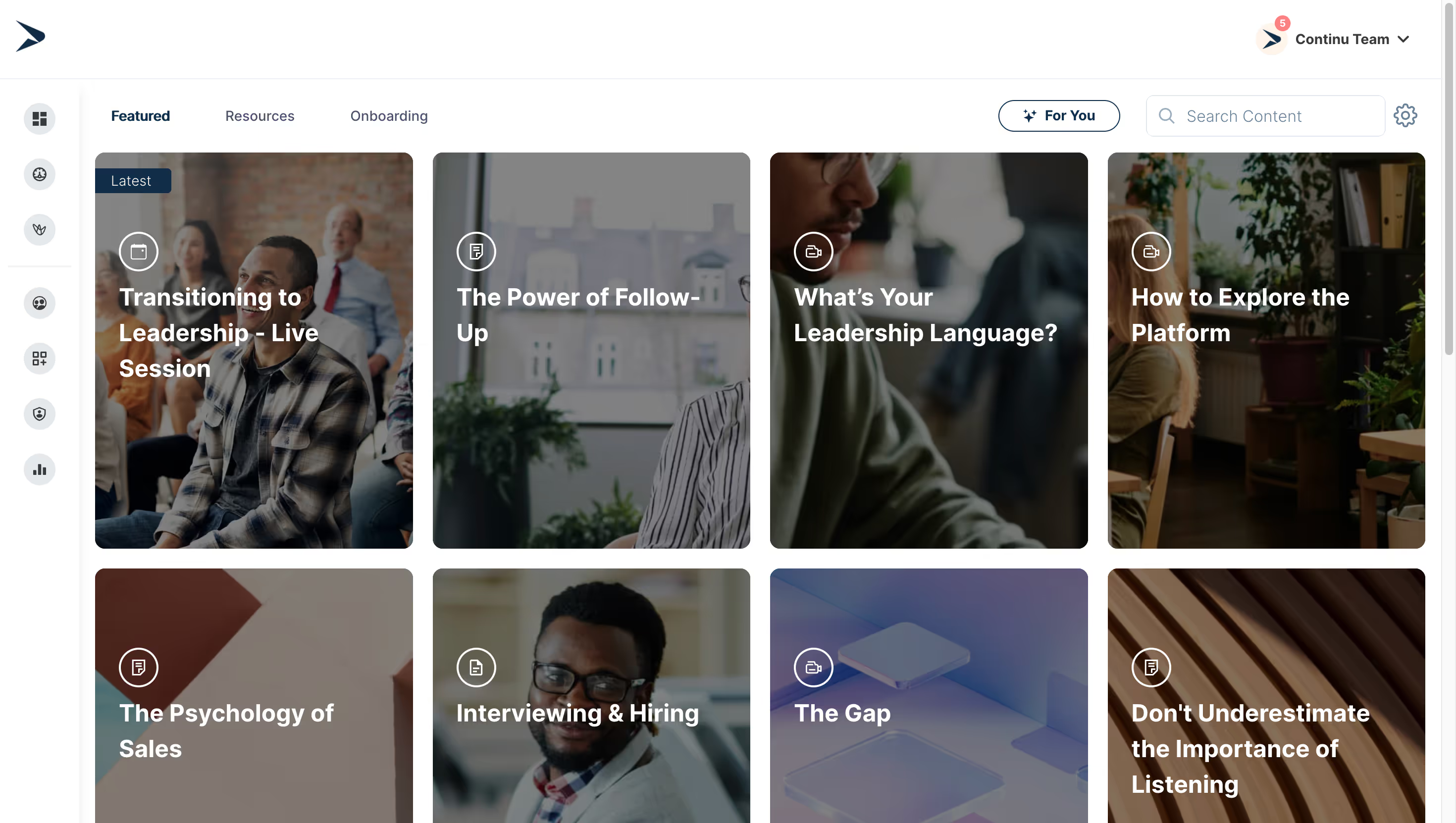
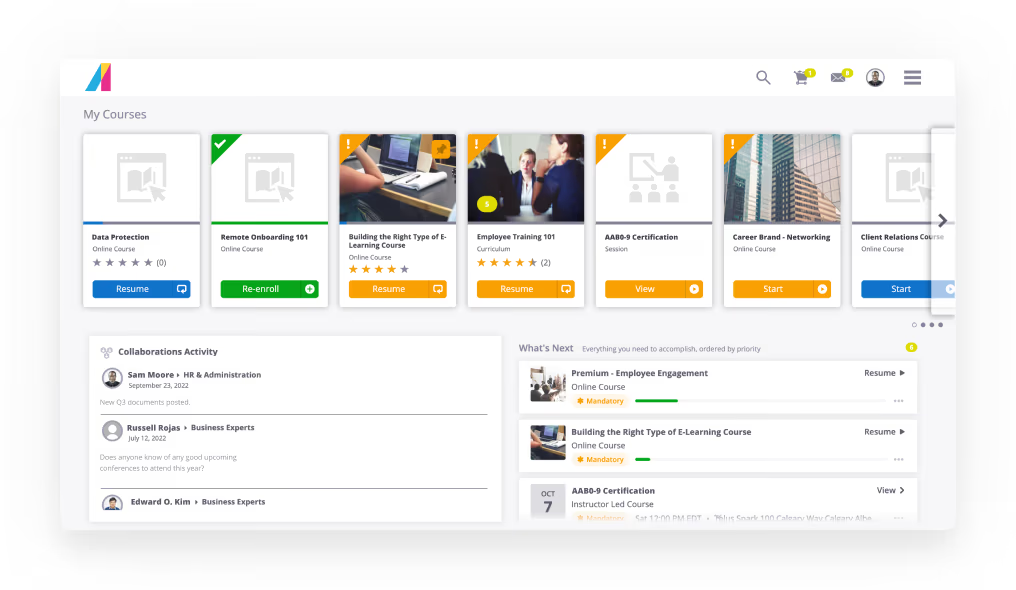
Continu is a modern all-in-one learning platform that helps mid to large-size organizations centralize employee, customer and partner training. It combines content authoring, workshops, journeys and assessments with smart automations and AI-powered analytics to boost engagement, reduce ramp-up time and save administrators hours.
Why I picked Continu
Continu is the top-ranked alternative thanks to its deep integrations with workplace tools, robust AI-powered reporting, ease-of-use for admins and learners, enterprise-grade features, and the ability to centralize learning for employees, customers, and partners into a single platform.
Continu is ideal for:
Mid-market & enterprise organizations training over 500 total users (employees, customers, and/or partners).
2. Absorb LMS
4.6 (1443)
Best for scalable, AI-powered strategic learning
A cloud-based LMS combining AI-driven skills, personalized paths and multi-tenancy for global training.
Why I picked Absorb LMS
Absorb LMS is a solid choice thanks to its user-friendly interface and intuitive navigation and comprehensive features including advanced reporting, content library and eCommerce.
Absorb LMS is ideal for:
Businesses of all sizes, especially SMBs and enterprises
3. 360Learning
4.6 (1106)
Best for AI-powered collaborative learning
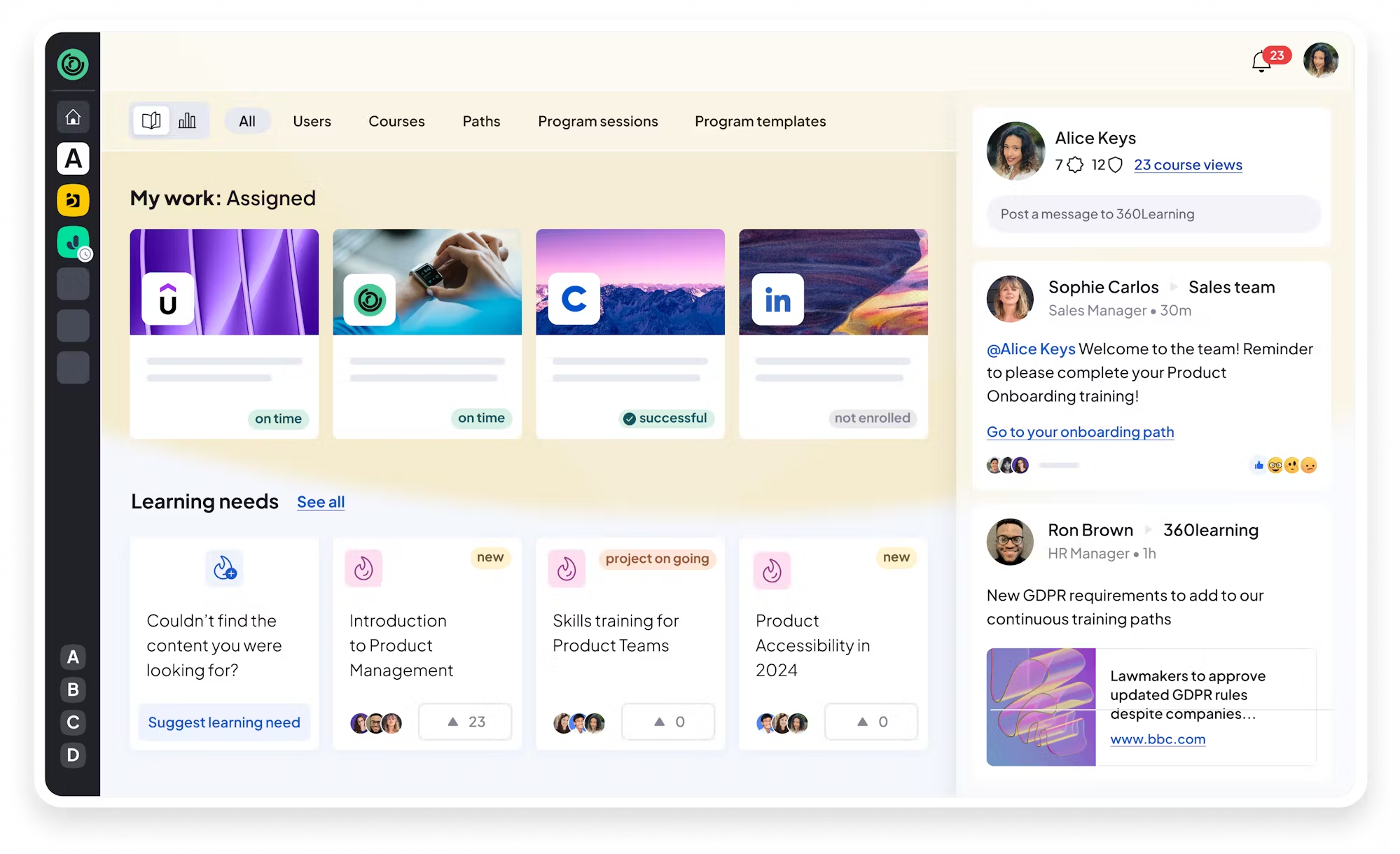
A collaborative LMS that turns subject-matter experts into course creators with real-time social learning.
Why I picked 360Learning
360Learning made the list as a great alternative because it combines user-friendly interface and intuitive authoring with engaging social learning features.
360Learning is ideal for:
Small to mid-market teams and scalable to enterprise

4. CYPHER Learning
4.5 (458)
Best for personalized, user-friendly skills-based learning
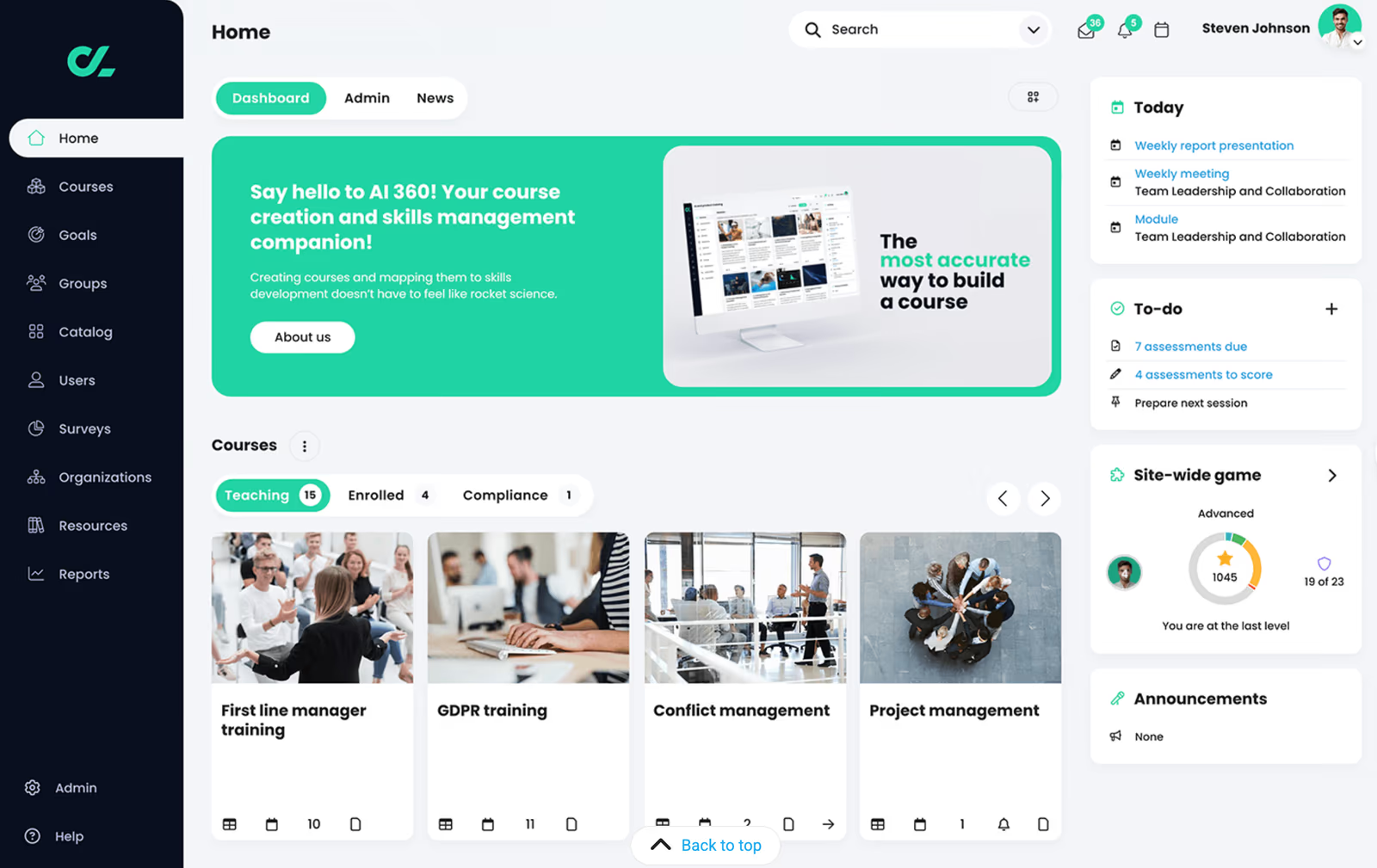
A unified platform merging LMS, LXP and AI content development with adaptive learning paths
Why I picked CYPHER Learning
CYPHER Learning made the list as a great alternative because it combines AI-powered adaptive learning and personalized recommendations engage learners with all-in-one platform.
CYPHER Learning is ideal for:
Mid-sized to large enterprises and academic institutions
5. LearnUpon
4.7 (759)
Best for organizations prioritizing ease of use and excellent support
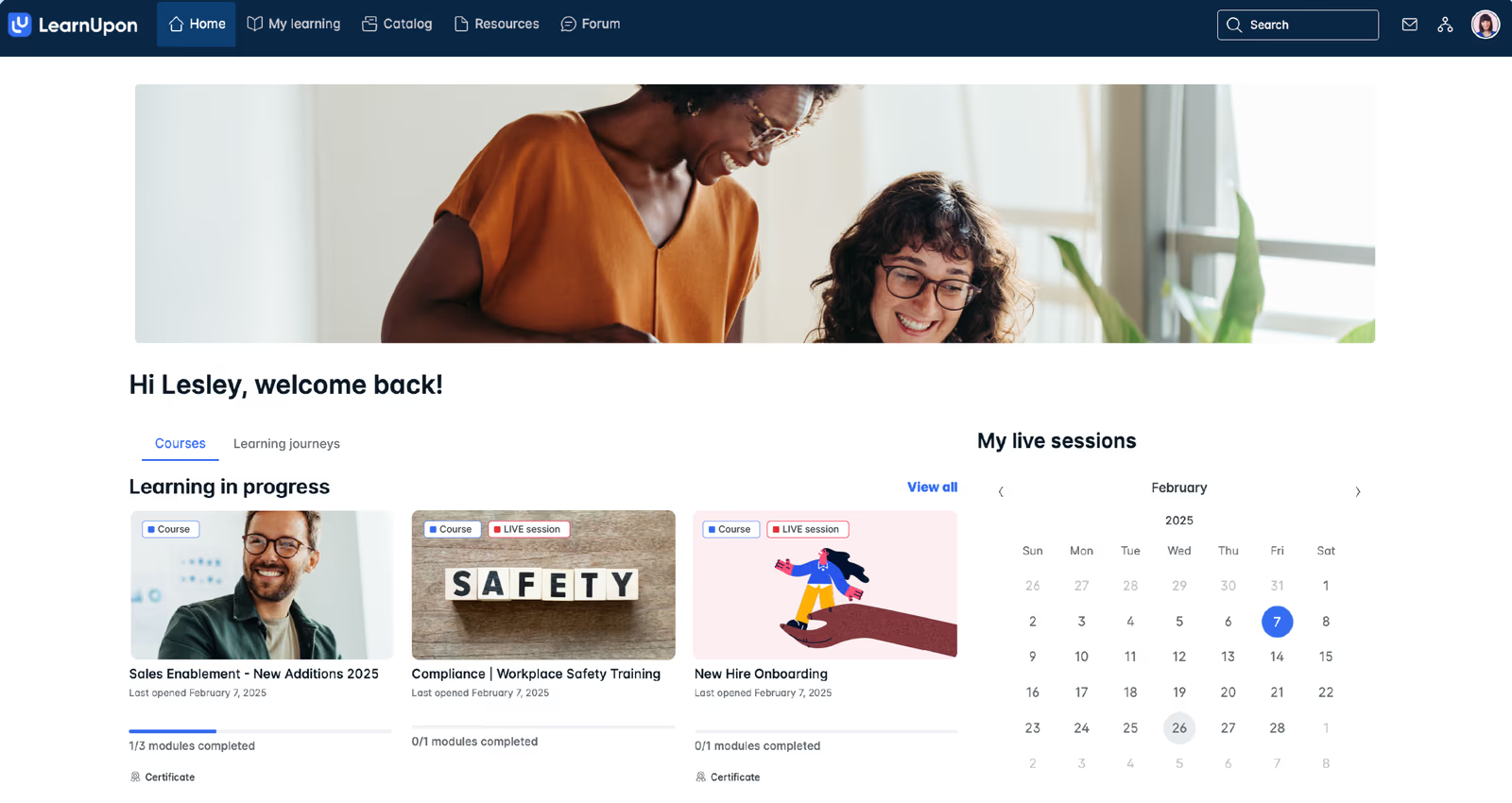
LearnUpon is a scalable LMS with multi-tenant capabilities, automation, and strong customer support.
Why I picked LearnUpon
LearnUpon stands out as a better option for organizations needing user-friendly interface and easy setup and scalable plans and deep integrations.
LearnUpon is ideal for:
Medium to large organizations (150+ users) needing to train employees, customers or partners
6. Sana
4.9 (104)
Best for AI-native, unified learning needs
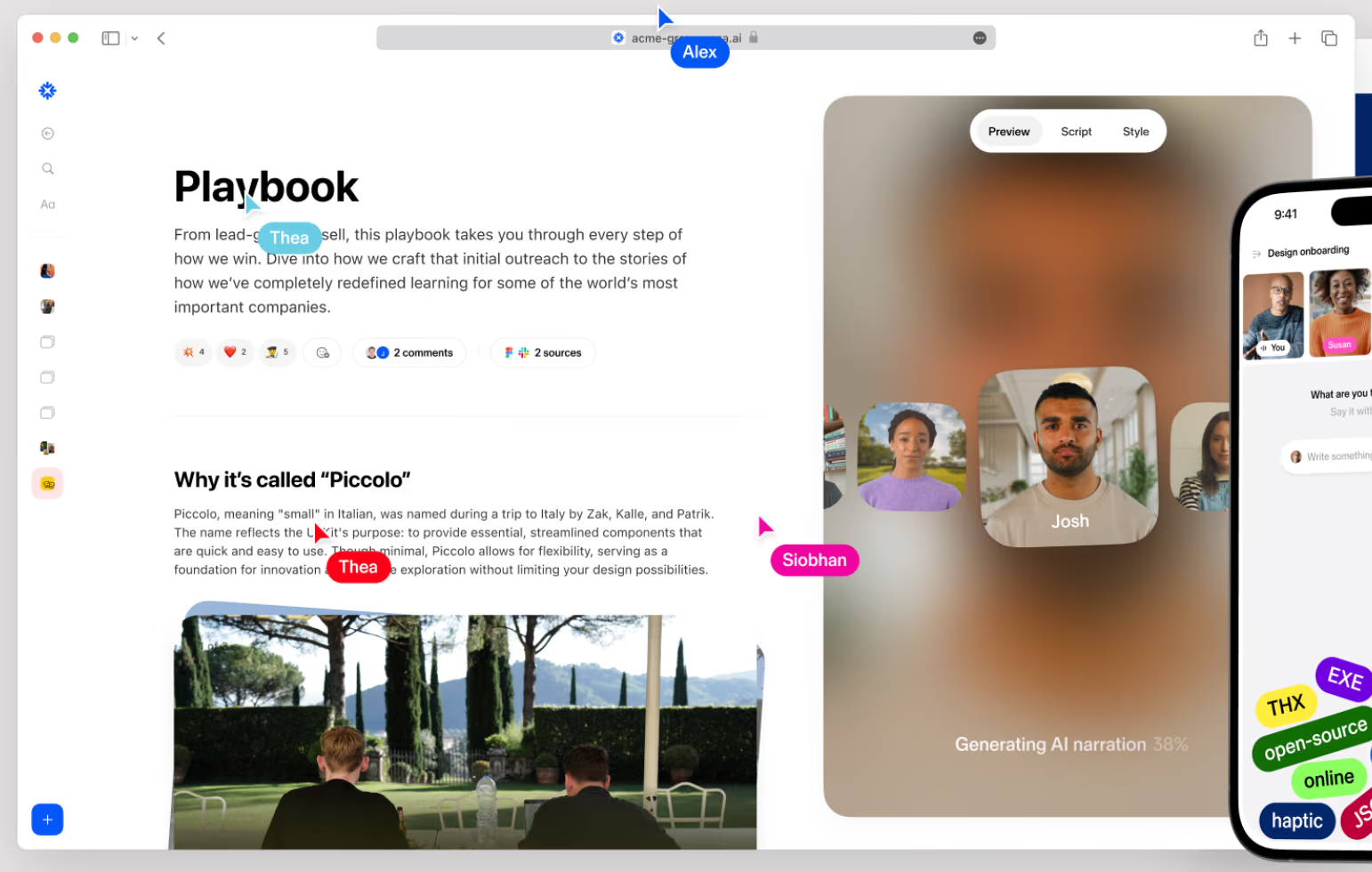
An AI-native platform consolidating LMS, LXP, authoring and virtual classrooms with generative content
Why I picked Sana
Sana is a solid choice thanks to its intuitive AI-native interface, powerful AI-driven search, and personalization delivering relevant content quickly.
Sana is ideal for:
Mid‑market and large organizations (300+ users) looking for AI-powered learning
7. TalentLMS
4.6 (1982)
Best for cheap, scalable, and user-friendly learning management
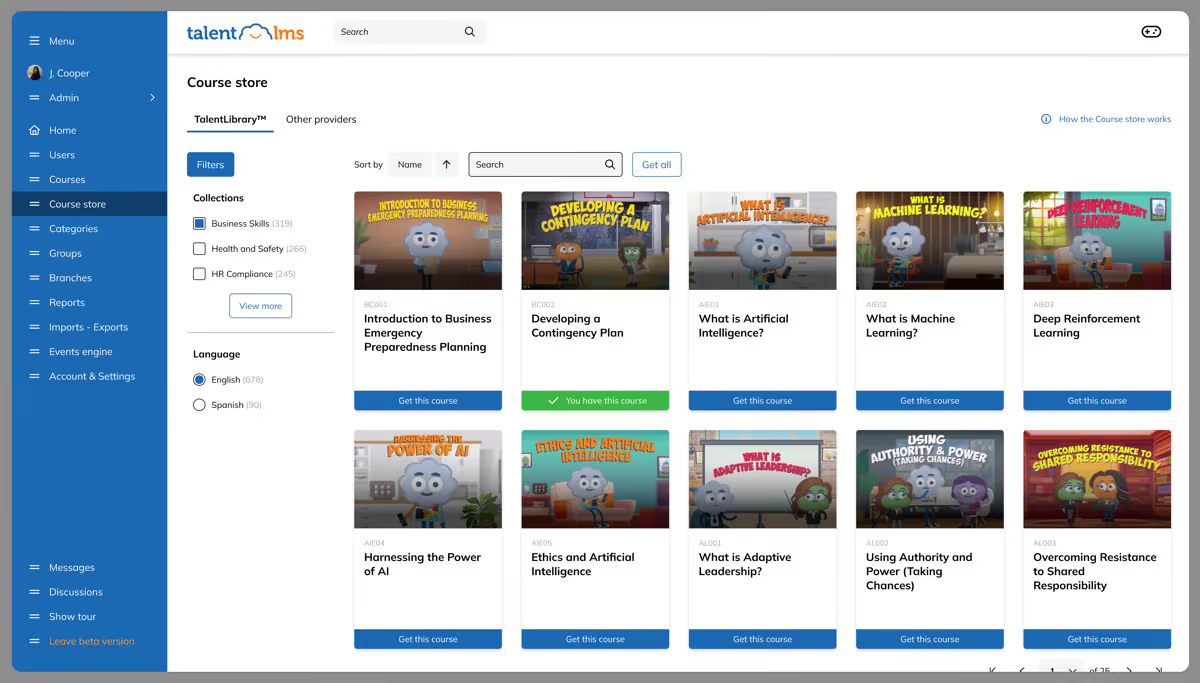
A cloud LMS with a forever free plan, AI course builder and built-in content library
Why I picked TalentLMS
TalentLMS is an excellent option for teams seeking affordable pricing and responsive customer support and large course library/AI course builder.
TalentLMS is ideal for:
Small to mid-sized teams (5–500 users) and growing businesses
8. Cornerstone onDemand
4.3 (929)
Best for enterprise-scale talent development and learning management
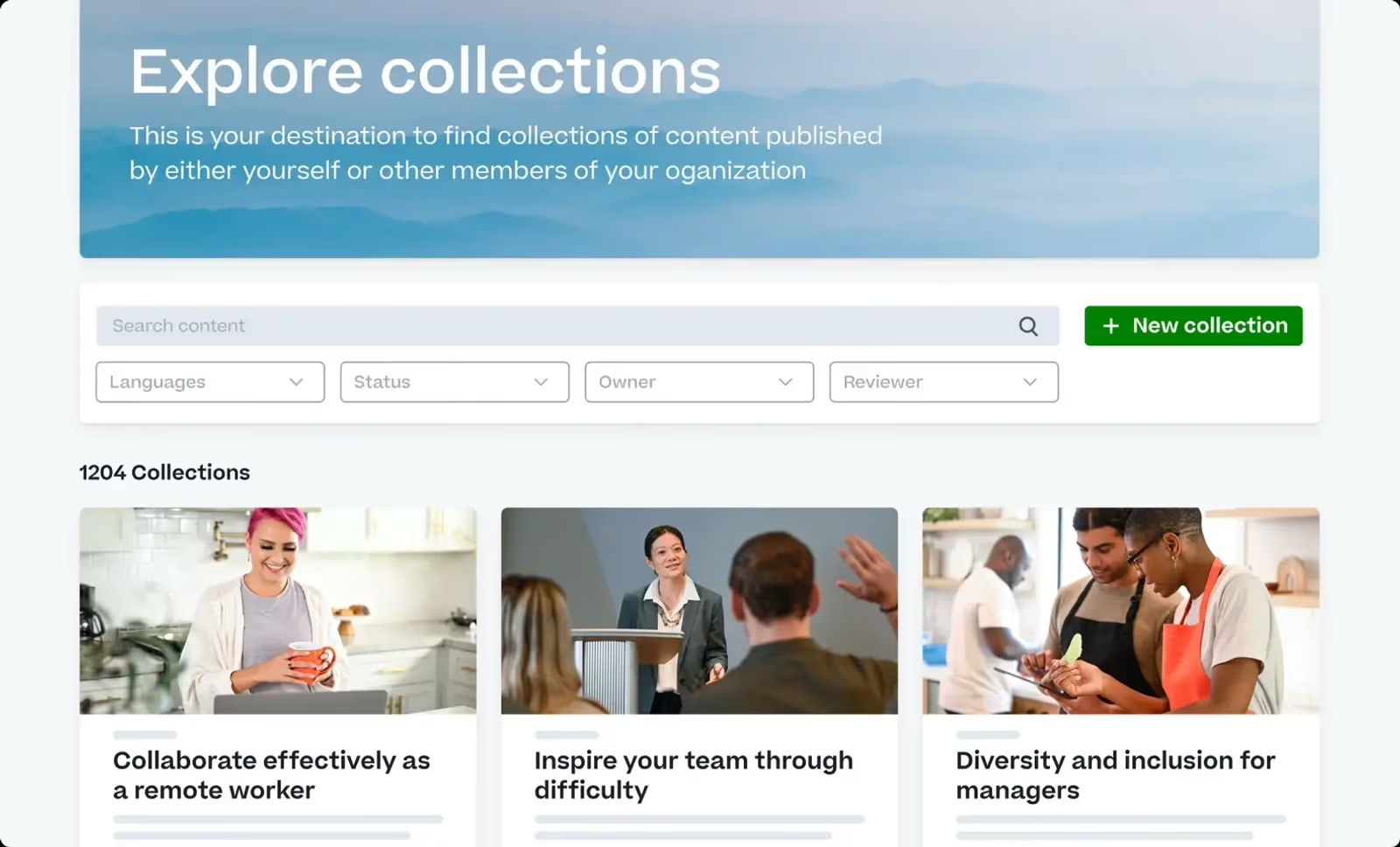
An enterprise LMS integrated with talent management for recruiting, performance and succession planning.
Why I picked Cornerstone onDemand
Cornerstone onDemand is a solid alternative because of its comprehensive feature set spanning learning and talent management, strong compliance and reporting capabilities.
Cornerstone onDemand is ideal for:
Large enterprises
9. iSpring Learn
4.4 (296)
Best for rapid LMS deployment with compliance and assessment features
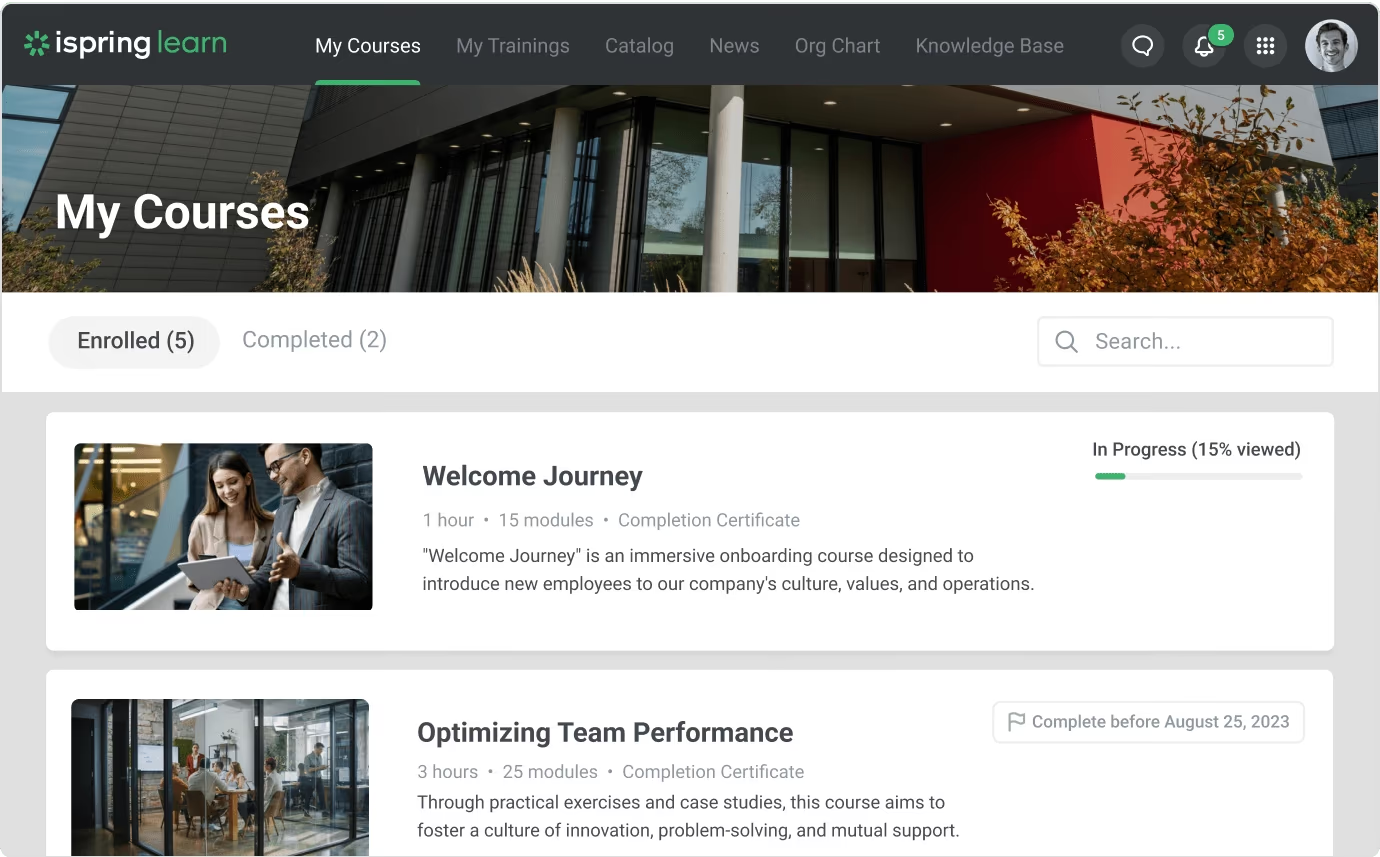
An all-in-one LMS with PowerPoint-based course authoring and offline mobile learning
Why I picked iSpring Learn
iSpring Learn ranks as a decent option for its seamless integration and flexible pay-per-active-user pricing and responsive customer support.
iSpring Learn is ideal for:
Small to mid-sized organizations needing scalable training
10. Tovuti
4.6 (497)
Best for AI-enabled course creation and user-friendly learning management
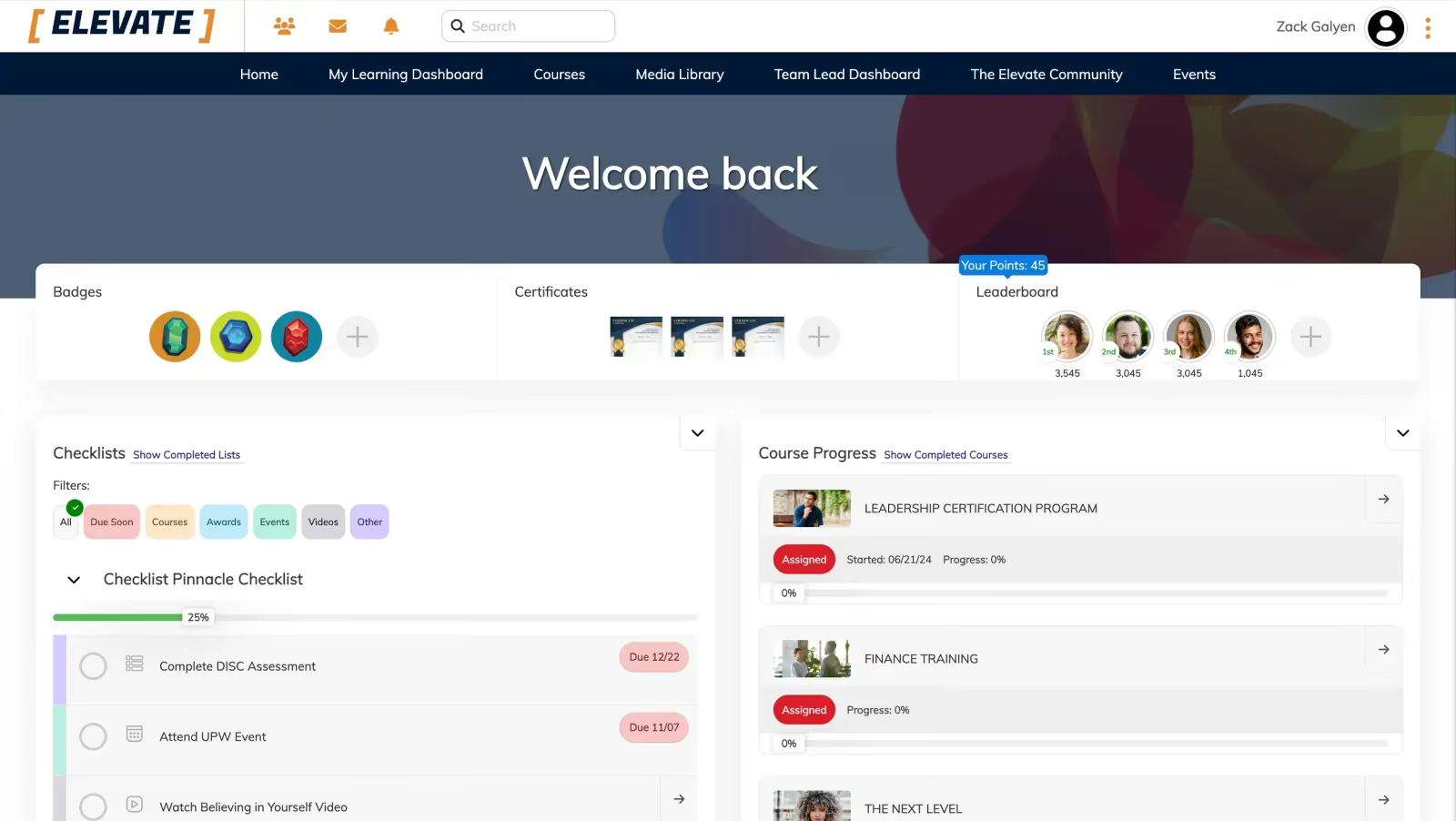
A cloud LMS with built-in authoring offering 40+ interactive content types and social learning
Why I picked Tovuti
Tovuti is a solid choice thanks to its integrated authoring tools and rich content library eliminate need and highly engaging interactive and gamified courses.
Tovuti is ideal for:
Mid-sized to enterprise organizations (50–5,000+ users)
Making the Switch from Docebo
Switching LMS platforms is a significant decision. Here's what the process looks like in practice.
Content Migration
Most platforms support SCORM package imports, video transfers, user data provisioning, and completion history preservation. Expect 1–3 weeks for basic course libraries. Complex migrations with thousands of courses, custom metadata, and detailed reporting take 4–6 weeks. Most vendors offer dedicated migration support.
Top 3 Recommendations By Use Case
Best overall: Continu For enterprise teams training employees, customers, and partners, Continu addresses Docebo's main weaknesses directly. Transparent pricing. Fast implementation. Eddy in Slack. Unlimited external portals. 96% customer satisfaction. And everything included — no add-ons.
Best for budget-conscious internal teams: TalentLMS: Core LMS functionality at a fraction of enterprise pricing. Handles employee onboarding, compliance, and skills development well. Not built for complex external training.
Best for speed: LearnUpon: Pre-built templates, guided setup, and responsive support get most teams live in under 3 weeks. A strong fit for organizations that need to launch quickly without sacrificing quality.
The Bottom Line
Docebo is a capable platform. But it's built for a world where LMS success meant high completion rates and extensive configuration. The teams switching away aren't doing it because Docebo fails — they're doing it because the market has moved.
The best enterprise training platforms now connect learning directly to revenue. They run in Slack. They certify partners across 14 languages without adding headcount. They go live in weeks, not months.
If your team trains customers, partners, and employees, Continu was built for that exact problem. GoPro, Instacart, and 500+ other enterprise organizations use it to turn training into a measurable business outcome.
Ratings and review counts sourced from G2, Capterra, and Gartner Peer Insights. Data pulled early 2026 and updated quarterly. Product information for alternatives sourced from each vendor's public website and review profiles.
Frequently Asked Questions
What is the best alternative to Docebo?
Is Docebo worth the cost?
How long does it take to implement a Docebo alternative?
Can I migrate my content from Docebo to another LMS?