How to Evaluate the ROI of Customer Training Programs

VP of Product & Customer Success
December 18, 2024



Developing a strong customer onboarding process can be challenging for many companies. Without a structured approach, customers struggle to familiarize themselves with your product or services, which in turn leads to frustration, more support requests, and missed opportunities for engagement.
These inefficiencies drain resources and can ruin the overall customer experience, which is a critical driver of business success.
In fact, Forrester reports that companies prioritizing customer experience see 41% faster revenue growth and 51% higher retention than their competitors. However, customer training programs don’t always deliver an immediate return on investment.
Here's how to accurately evaluate the ROI of customer training programs and optimize the user experience:
1. Define your customer training ROI framework
First of all, develop a clear framework for measuring ROI that connects your training efforts to business goals.
To do this, you'll have to identify the training metrics that matter the most for your business, such as time to value (TTV) and customer retention. Then define your goals, like reduced support costs, increased renewal rates, or an improved customer experience. Make sure the metrics you're tracking are directly related to the goals you're pursuing with your training program.
These kinds of parameters let you discover real ROI rather than vanity metrics.
2. Track customer success metrics
Customer success metrics reveal how effectively training supports your user onboarding and engagement efforts.
User adoption rates
Measure how many users are actively interacting with various features.
Customer journey milestones
Monitor progress through the onboarding process. These milestones can include key points in the journey, such as completing account setup, accessing the first training module, achieving a defined "first success" with your product, or adopting a critical feature.
Success tracking
Look at churn rates or renewal percentages to see how training supports long-term value.
Effective tracking that ensures user success generally requires tools like onboarding automation platforms to collect and analyze data on these metrics in real-time.
3. Measure the business impact of customer training
Your third step will be to connect training programs to measurable business outcomes. For instance, analyze how well training guarantees implementation success or improves user enablement.
You can also evaluate the financial impacts of a customer training program by calculating how much revenue trained customers generate compared to untrained ones. Additionally, look for operational benefits, such as a reduction in support ticket volumes or faster resolution times.
4. Monitor learning effectiveness
Next you'll need to make sure you understand how well your training meets customer needs. Three of the top ways to do this are to:
- Collect user feedback through surveys or net promoter scores (NPS), meaning how often your customers say they'll recommend your product to someone else, to determine whether customers are satisfied.
- Use completion rates and quiz results to evaluate training effectiveness.
- Analyze engagement patterns to identify areas where the training workflow could be improved.
When you refine content based on user insights, you can ensure better outcomes in the future.
5. Calculate cost efficiency
Cost efficiency should be one of the biggest goals of measuring and improving ROI. To evaluate how cost-effective your program is, compare the costs of delivering training, like subscriptions for onboarding strategy tools, trainer wages, and digital or print resources, to the financial benefits it generates.
6. Report training value
Naturally, there will come a time when your executives will want to see results. When presenting customer training ROI reports to higher-ups, focus on the metrics that matter most to business goals.
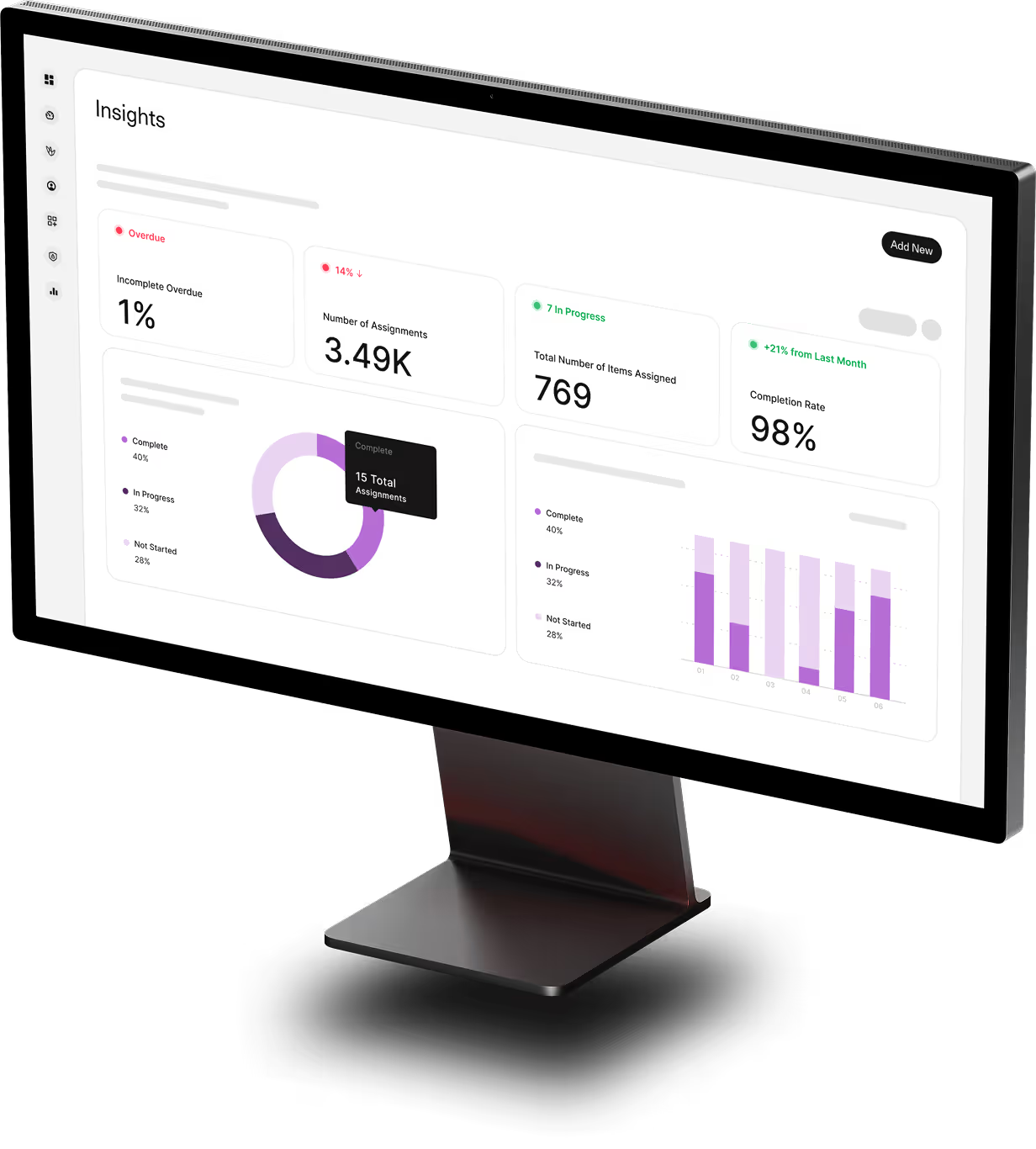
Most importantly, use data visualizations like charts and graphs to simplify complex information and provide concrete examples of how user training has contributed to customer success. Reports should be concise and clear, allowing decision-makers to understand the value of customer training at a glance.
7. Optimize customer training programs based on data
Once you have a clear view of your ROI, make sure you're continuously improving and that your training workflow can match customer needs on an ongoing basis. For example:
- Use success tracking to identify gaps in the onboarding process or areas where users struggle.
- Experiment with onboarding automation tools to streamline repetitive tasks.
- Update training content based on feedback and emerging trends to support ongoing user adoption and satisfaction.
Regularly reviewing performance data lets you guarantee your programs will stay relevant and effective.
ROI and the customer journey
Measuring the ROI of customer training programs can help you significantly improve the customer journey. A systematic approach that starts with success tracking, meaningful metrics, and continuous onboarding optimization, puts user enablement and customer success at the center of your strategy. This in turn drives real value for your business.
Frequently Asked Questions
What metrics best demonstrate training ROI?
Metrics like customer retention rates, product adoption rates, net promoter scores, and increased revenue from trained customers are strong indicators of training ROI.
How soon can you measure training impact?
You can usually measure training impact and customer education success within 30–90 days by analyzing changes in customer behavior, such as engagement with the product or reduced support inquiries.
What tools help track training effectiveness?
Learning management systems (LMS), customer training software, and analytics tools integrated with CRM systems help track engagement, performance, and outcomes from training programs.
How do you tie training to business outcomes?
Link training data to key business metrics like customer churn, upsell rates, and support ticket volumes to demonstrate how training influences bottom-line results.
What's the best way to report ROI to executives?
Present ROI to executives with clear visuals so you can show measurable outcomes like increased customer lifetime value (CLV), reduced support costs, or higher renewal rates.
How often should you measure training impact?
Evaluate training impact quarterly to track ongoing trends while also conducting annual reviews.
What's a good ROI for customer training?
A good monetary ROI for customer training typically ranges from 2:1 to 5:1, depending on the complexity of the product and the industry.
How do you prove training reduces support costs?
Show a direct correlation between trained customers and lower support ticket volumes, shorter resolution times, or fewer escalations, supported by historical data.
Smarter training. Stronger teams.
See how thousands of enablement leaders around the world are automating delivery, increasing ROI, and creating real business impact with Continu.